Why Seasonal Timing Matters for Home Systems
Most home system problems don't appear overnight. A clogged HVAC filter, a water heater building sediment, or a slow drain quietly degrade over months before they become emergencies. Organizing maintenance by season-rather than by a vague "when I get around to it" schedule-helps ensure each system gets attention before it faces peak demand.
To understand how your heating, cooling, and ventilation systems actually move air and regulate temperature, see our guide to how HVAC systems work. If you're also curious about how plumbing supply and drain systems connect throughout your home, our plumbing overview is a useful companion read.
This checklist is organized into four seasonal passes. Each covers the rooms and systems most likely to need attention during that time of year. Work through it once per season, note what you've done, and flag anything that needs a professional follow-up.
Gas Lines and Electrical Panels: Leave These to Professionals
This checklist includes visual inspections near gas appliances and electrical panels, but it does not include hands-on work inside either system. Gas line repairs, panel wiring, and any work requiring a permit must be performed by a licensed professional in virtually all US jurisdictions. If you smell gas, leave the home immediately and contact your utility provider from outside.
What You'll Need Before You Start
Gathering the right tools and supplies before beginning each seasonal pass saves time and keeps you from skipping steps. Most items below are low-cost and widely available at hardware stores.
Replacement HVAC filters
Swap out dirty filters to maintain airflow and indoor air quality across all seasons.
Flashlight or headlamp
Inspect dark areas including attics, crawl spaces, and behind appliances safely.
Bucket and garden hose
Flush sediment from the water heater drain valve as part of annual maintenance.
GFCI outlet tester
Quickly verify that ground-fault circuit interrupter outlets in wet areas are functioning correctly.
Wet/dry vacuum
Clear debris from window wells, drain pits, and around appliance coils.
Pipe insulation foam sleeves
Wrap exposed pipes in unheated areas before winter to reduce freeze risk.
Maintenance log or notebook
Record completed tasks, dates, and observations to build a reliable home maintenance history.
Before starting any work near electrical panels, gas lines, or structural elements, review your local permit requirements. Our article on permits, inspections, and codes explains when formal sign-off is typically needed and why skipping it can create costly problems down the road.
Seasonal Maintenance Checklist by Area
The checklist below covers the most commonly neglected home systems, grouped by functional area. Work through all groups during your seasonal pass, adjusting task frequency based on your home's age, climate zone, and system types.
HVAC & Air Quality
Water Heater & Plumbing
Electrical & Safety Systems
Attic, Basement & Crawl Space
Kitchen & Laundry
For context on how long these systems are typically expected to last-and when planning for replacement makes sense-see our reference guide on the lifespan of major home systems.
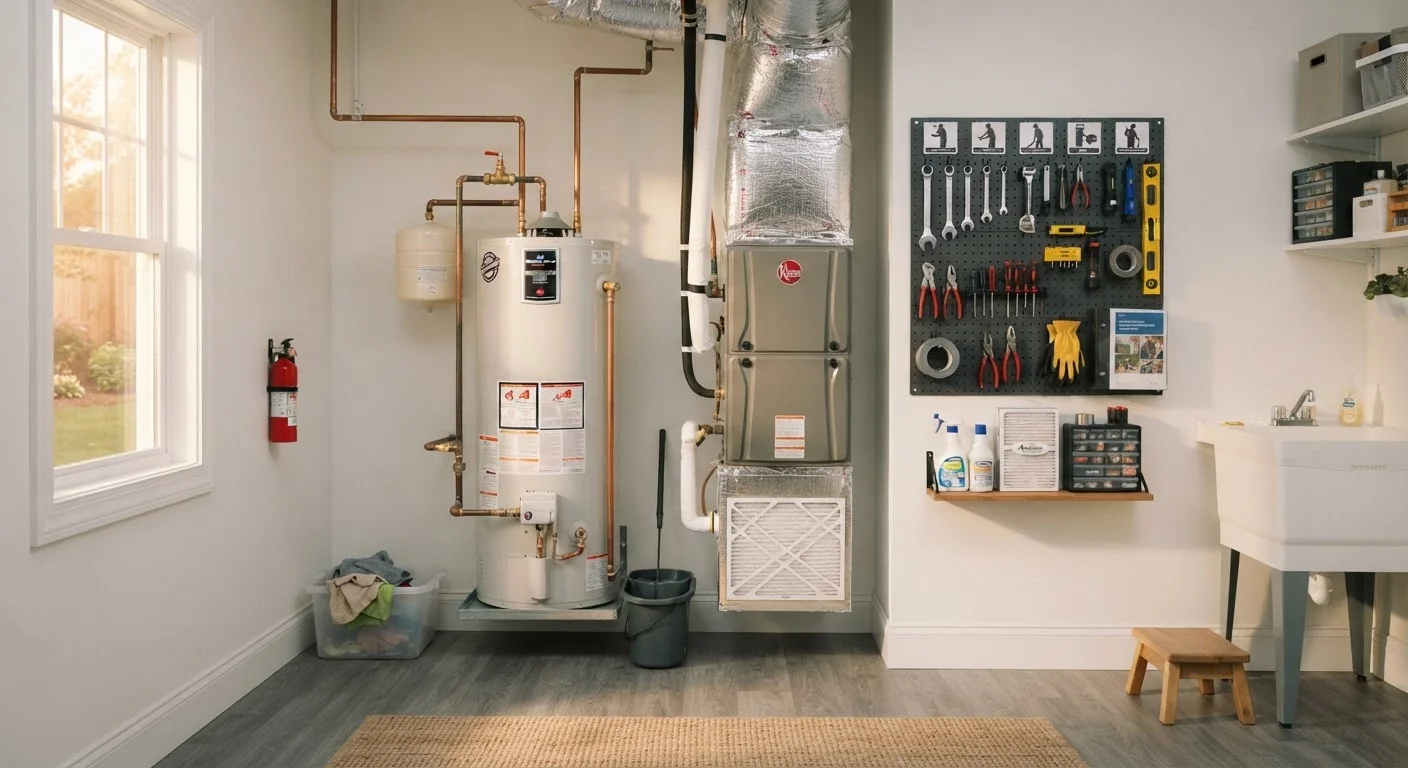
Don't Skip the T&P Valve on Your Water Heater
The temperature and pressure relief valve is a critical safety component on tank water heaters. If it has never been tested or is visibly corroded, do not attempt to test it yourself without reviewing your owner's manual first-a valve that has seized can be difficult to reseat. When in doubt, have a licensed plumber evaluate it as part of a routine service call.
Dryer Vent Blockages Are a Documented Fire Hazard
Lint accumulation in dryer exhaust ducts restricts airflow and creates a fire risk over time. If your dryer takes longer than one cycle to dry a normal load, or if the exterior vent flap doesn't open fully during operation, have the duct professionally cleaned. This task is not simply cosmetic-it directly affects household safety.
Knowing When to Call a Professional
Not every item on this checklist is appropriate for a DIY approach. Tasks involving gas appliances, main electrical panels, structural components, or work inside wall cavities carry genuine safety risks and may require licensed contractors in most jurisdictions.
If you notice signs of duct leakage-uneven room temperatures, dusty supply registers, or rooms that never quite reach the set temperature-those are worth a professional evaluation. Our article on ductwork warning signs walks through what qualified HVAC technicians typically look for.
For a broader look at which home maintenance tasks are genuinely safe for confident homeowners versus which ones warrant professional tools and training, the common home systems assumptions article surfaces several important distinctions that homeowners often overlook. Keeping a simple log of completed seasonal tasks-noting dates, findings, and any professional referrals made-is one of the most practical habits a homeowner can build.