The Two Systems Every Home Has
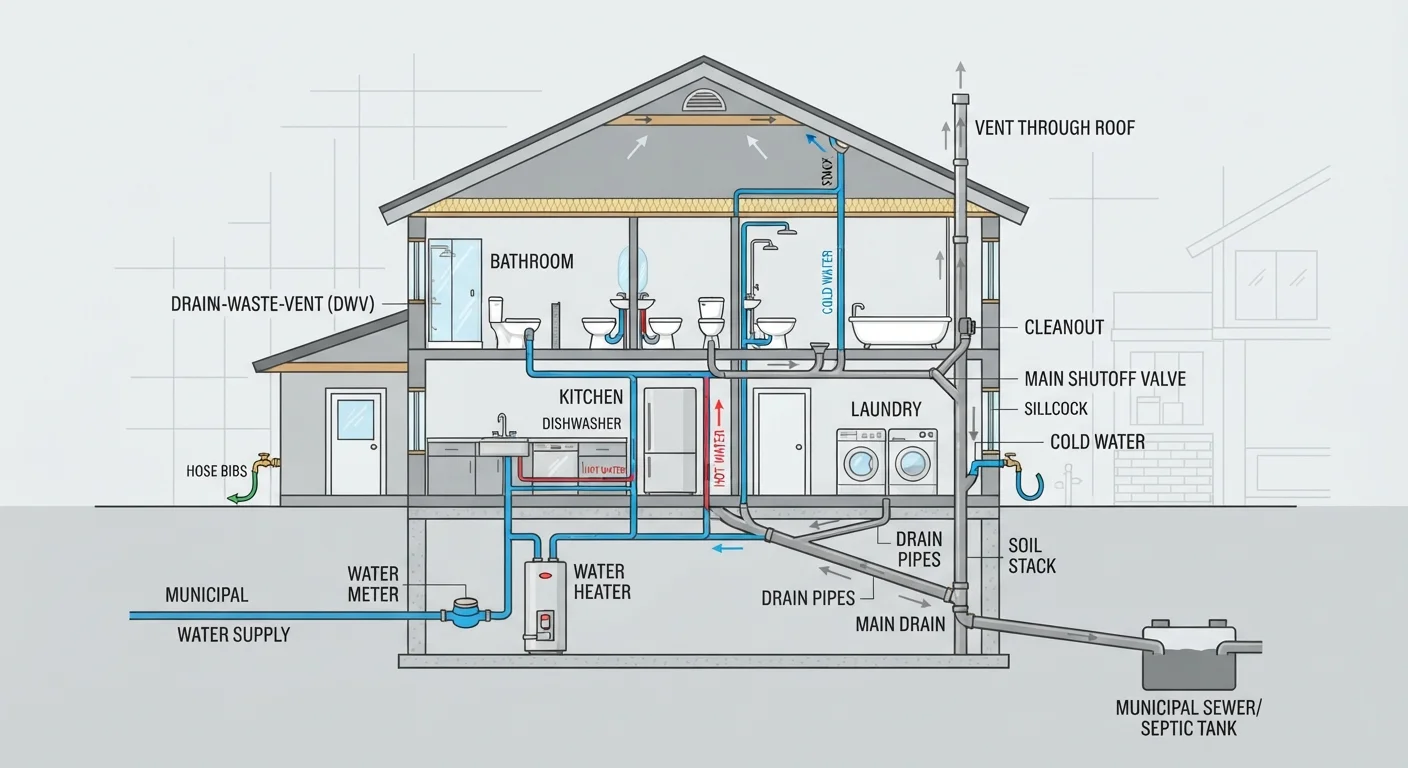
Residential plumbing is built around a straightforward principle: one system brings water in, and a completely separate system takes it away. These two networks - the supply system and the drain-waste-vent (DWV) system - run throughout your home but never share piping. Understanding this distinction is the foundation for making sense of nearly any plumbing issue or maintenance task you'll encounter as a homeowner.
For a broader view of how plumbing fits alongside electrical, HVAC, and structural systems, see A Homeowner's Map of Core House Systems.
40-80 psi
Typical residential water supply pressure
The EPA and plumbing codes generally recommend residential supply pressure stay within this range to protect fixtures and prevent pipe stress.
1/4"
Standard drain pipe slope per foot
Most plumbing codes specify a minimum slope of 1/4 inch of vertical drop per horizontal foot to ensure wastewater flows consistently by gravity.
~14%
Of US home water loss attributed to leaks
The EPA's WaterSense program estimates that the average US household loses roughly 10,000 gallons per year to leaks, with some homes losing significantly more.
How the Supply System Works
Fresh water enters your home under pressure - either from a municipal water main or a private well with a pump. This pressurized supply travels through a main shutoff valve (a critical component every homeowner should locate) and then branches out through a network of pipes to reach every fixture: sinks, toilets, showers, dishwashers, washing machines, and outdoor hose bibs.
Most homes use either copper, CPVC (chlorinated polyvinyl chloride), or PEX (cross-linked polyethylene) tubing for supply lines. PEX has become common in newer construction due to its flexibility and resistance to freeze damage. Hot water lines follow the same distribution path but first loop through a water heater before reaching fixtures.
Know Your Main Shutoff Before You Need It
Walk through your home now and locate the main water shutoff valve - don't wait for an emergency. In most US homes it's near where the supply line enters the house, often in a basement, utility closet, or crawl space. Confirm it turns freely; a valve that hasn't been operated in years can seize. Labeling it clearly helps everyone in the household respond quickly to a sudden leak.
Because supply lines are always pressurized, even a small failure - a pinhole leak, a loose fitting, or a burst pipe - can release significant water quickly. Knowing the location of your main shutoff valve is one of the most practical things a homeowner can do.
How the Drain-Waste-Vent System Works
Where supply lines push water with pressure, drain lines move wastewater passively - using gravity. Pipes are sloped at a consistent angle (typically 1/4 inch of drop per horizontal foot) so waste flows toward a central soil stack, a large vertical pipe that carries everything down to the sewer line or septic system.
Two components make this system work safely:
- P-traps: The curved pipe beneath every sink and fixture holds a small pool of water that seals off sewer gases, preventing them from rising into living areas.
- Vent pipes: These run upward through walls and exit through the roof. They introduce air behind draining water, maintaining neutral pressure so waste flows freely and trap seals aren't siphoned dry.
A blocked vent is a common and often misdiagnosed problem - symptoms include slow drains, gurgling sounds, and unpleasant odors, even when the drains themselves are clear.
Where the Two Systems Intersect - and Why It Matters
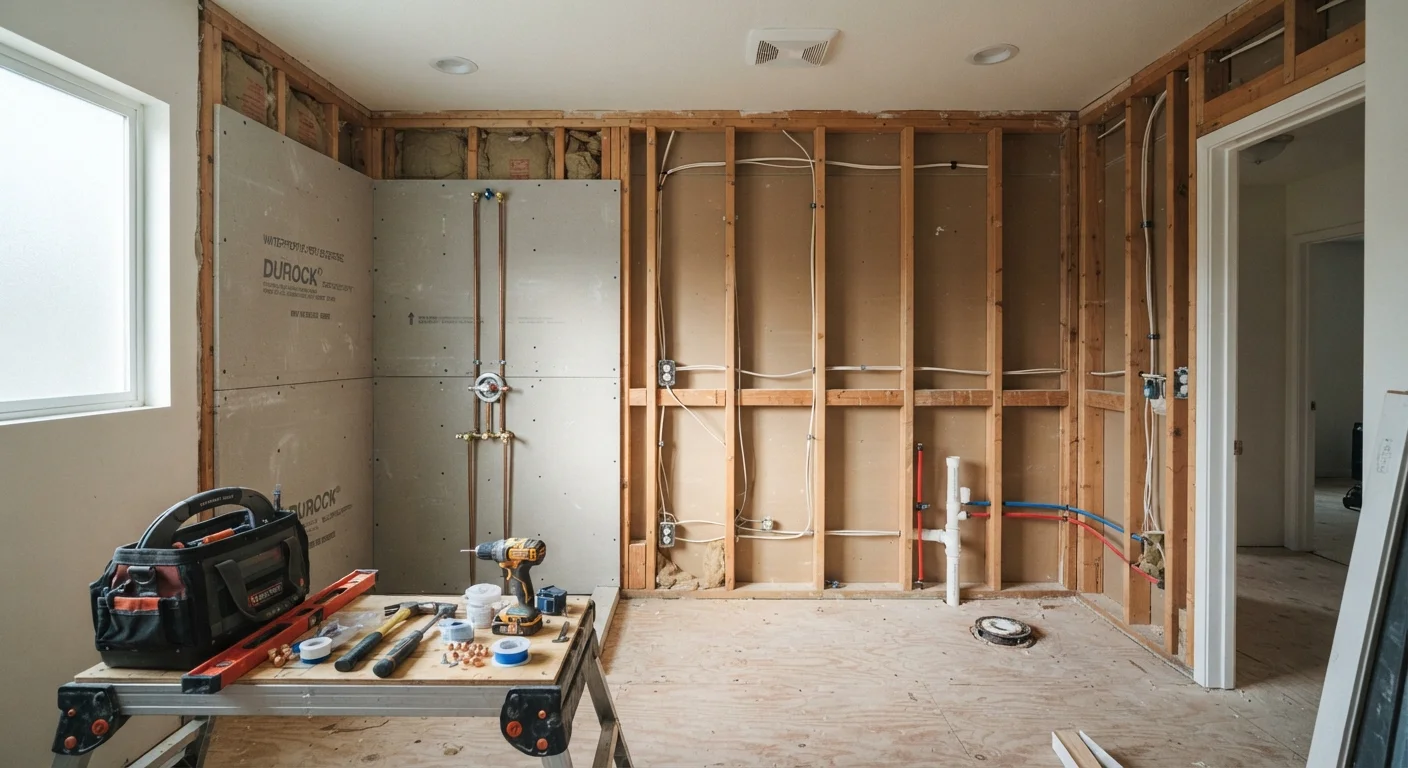
Supply and drain lines converge at every plumbing fixture. A bathroom sink, for instance, has hot and cold supply lines feeding the faucet, and a drain assembly with a P-trap connecting to the DWV network. The systems work independently but must be installed correctly in relation to each other - particularly in renovation projects where moving a fixture means rerouting both types of piping.
This interconnected nature means that a problem in one system can sometimes mask or mimic a problem in another. Slow draining at multiple fixtures often signals a shared drain or vent issue rather than individual clogs. Tracking symptoms across the house - rather than in isolation - helps narrow down the real source.
Routine attention to both systems is part of sound home maintenance. The Seasonal Home Systems Maintenance checklist covers plumbing checks alongside HVAC and other systems so nothing gets overlooked across the year.
Warning Signs and When to Call a Professional
Many plumbing problems announce themselves before they become emergencies. Common early indicators include:
- Discolored or rust-tinged water from taps (may indicate pipe corrosion)
- Low water pressure at multiple fixtures (could point to supply line issues or mineral buildup)
- Slow drains across several fixtures at once (often a shared drain or vent problem)
- Water stains on ceilings or walls below bathrooms
- Persistent sewer odors inside the home
Some tasks - clearing a single slow drain, replacing a faucet cartridge, or installing a new fixture - are within the reach of a confident DIYer. But work involving the main supply line, in-wall or under-slab drain lines, or anything requiring a local permit should be handled by a licensed plumber. Many jurisdictions require permits for significant plumbing alterations, and unpermitted work can create problems when selling a home. Always verify local code requirements before starting any project beyond basic maintenance.
For additional context on how long plumbing components typically last, see The Lifespan of Major Home Systems.