Choosing the right contractor involves more than comparing quotes. These questions help homeowners vet experience, licensing, and project management practices.
Key Takeaways
Verifying a contractor's license and insurance before signing anything is non-negotiable.
A detailed written contract protects both parties and should cover scope, timeline, and payment terms.
Understanding who pulls permits - and why it matters - can prevent costly legal and resale problems.
Asking for references from recent, comparable projects reveals how a contractor actually performs.
Clear communication expectations set at the start reduce conflicts during the project.
Why the Questions You Ask Before Hiring Matter as Much as the Work Itself
Most renovation disputes don't start on the job site - they start in conversations that never happened. A contractor who seems capable and reasonably priced can still create significant problems if you haven't confirmed their credentials, clarified their process, or nailed down the terms of your agreement before work begins.
This checklist is organized by stage: questions to ask when you're vetting candidates, questions for the bidding and contract phase, and questions to settle before the first nail is driven. Whether you're planning a bathroom remodel, a roof replacement, or a structural project like removing a wall (see our guide on understanding load-bearing walls before renovating), the same disciplined approach to hiring applies.
Use this checklist to guide conversations, not to intimidate contractors. Most reputable professionals will welcome a thorough homeowner - it signals you're serious and organized.
Vetting Candidates
Confirm the contractor holds a current, valid license in your state for the specific type of work being done.Must
Ask for proof of general liability insurance and verify that it covers property damage and third-party injury.Must
Request proof of workers' compensation coverage if the contractor employs workers who will be on your property.Must
Ask how long they have been in business under their current company name, and verify the business is registered.Should
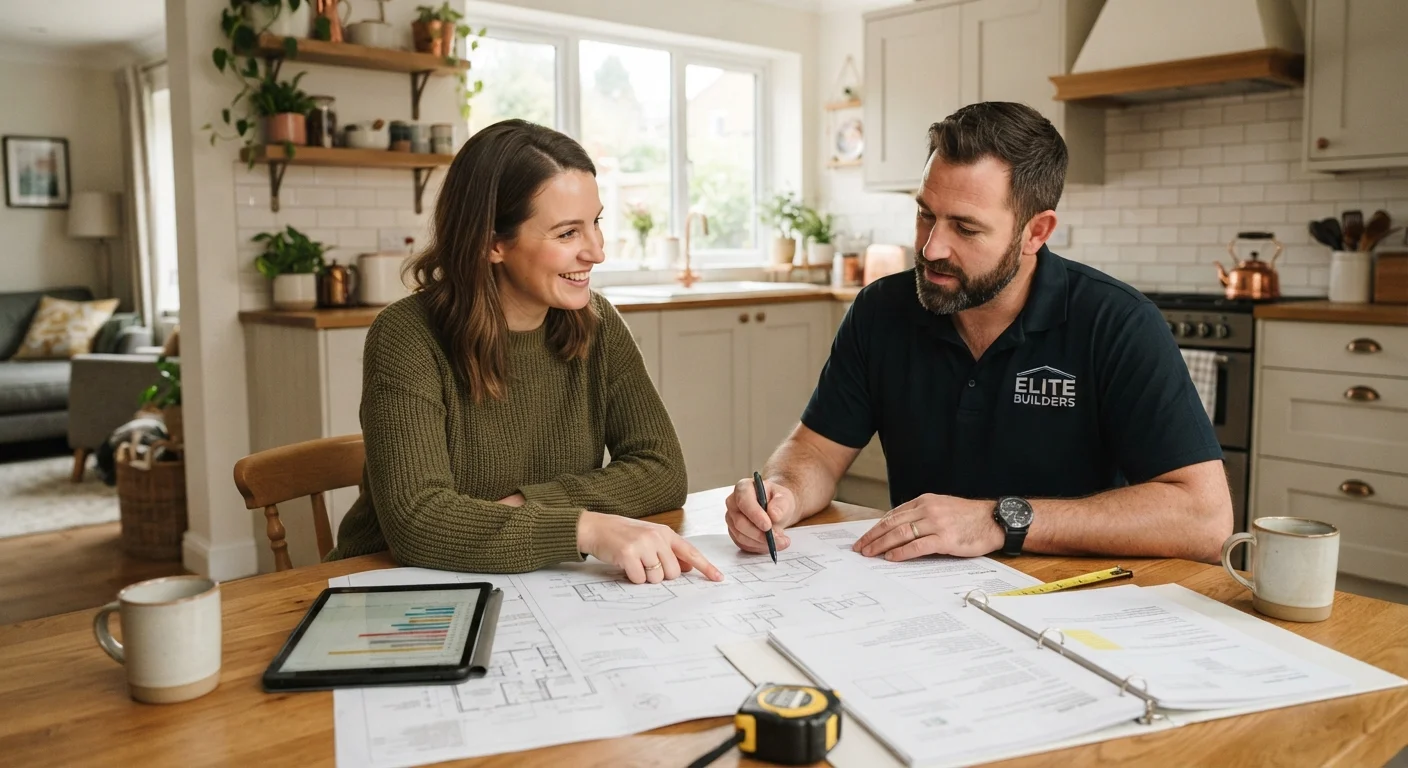
Request references from at least three projects completed in the past 12-18 months that are similar in scope to yours.Must
Contact those references directly and ask about timeline adherence, communication quality, and how problems were handled.Must
Search the contractor's name and company with your state licensing board and the Better Business Bureau for complaints or disciplinary actions.Should
Bids and Contracts
Obtain written bids from at least three contractors to give yourself a meaningful basis for comparison.Should
Ask each contractor to itemize labor and materials separately so you can identify where bids differ.Should
Confirm that the contract specifies the exact scope of work, including materials, brands (where applicable), and finishes.Must
Ensure the contract includes a clear payment schedule tied to project milestones rather than calendar dates alone.Must
Ask how change orders will be handled - any scope changes should require written approval and a revised cost estimate before work proceeds.Must
Confirm the contract specifies who is responsible for cleanup and debris removal at the end of the project.Should
Permits and Compliance
Ask whether your project requires a building permit and confirm who will be responsible for pulling it - it should be the contractor, not you.Must
Verify that all subcontractors used on your project are also licensed and insured for their trade.Must
Ask whether the work will be inspected by a local building official and how inspection scheduling will be handled.Should
Project Management and Communication
Confirm who your primary point of contact will be throughout the project - the contractor themselves or a project manager.Must
Ask how often you should expect progress updates and through what channel (phone, email, or project software).Should
Clarify the expected start date and the estimated completion date, and ask what factors could cause delays.Must
Ask whether the crew will be working on your project exclusively or juggling multiple jobs simultaneously.Nice to have
Confirm what the process is for raising a concern or dispute mid-project before it escalates.Should
Ask what warranty, if any, the contractor offers on their labor separate from any manufacturer warranties on materials.Should
Tools and Resources to Support Your Vetting Process
A few practical resources make the vetting process faster and more reliable. Your state's contractor licensing board website is the most important - it lets you confirm that a contractor's license is active and check for disciplinary history. Most boards allow free public lookups by name or license number.
Required
State Contractor Licensing Board Website
Verify that a contractor's license is active and check for complaints or disciplinary history.
Required
Certificate of Insurance (COI)
A document from the contractor's insurer confirming current liability and workers' compensation coverage.
Required
Written Contract Template
A baseline agreement form covering scope, payment schedule, change orders, and dispute resolution to ensure nothing is left verbal.
Optional
Better Business Bureau (BBB) Lookup
Search for filed complaints or unresolved disputes against a contractor or their company.
Required
Local Building Department Contact
Confirm which permits your project requires and verify that permits have actually been pulled once work begins.
Never Pay the Full Amount Upfront
A request for full payment before work begins is a significant red flag. Standard practice ties payment to project milestones - typically a deposit at signing, installments at defined stages, and a final payment upon satisfactory completion. Retaining a portion until the work passes inspection gives you meaningful leverage if issues arise.
Verbal Agreements Are Not Enough
Any commitment a contractor makes verbally - about timeline, materials, cost, or workmanship - should be captured in the written contract before work starts. If a contractor is reluctant to put agreed terms in writing, treat that reluctance as important information about how disputes will be handled later.
Once you've chosen a contractor and work is underway, understanding the permit and inspection process helps you stay informed. Our article on navigating permits, inspections, and codes covers what to expect after the contract is signed.
Home & Garden Editorial Team is the collective byline for our editorial team and contributor network. Articles published under this byline or an editorial pen name are researched, written, and reviewed according to our editorial standards for clarity, consistency, and independence before publication.
The content provided on our blog site traverses numerous categories, offering readers valuable and practical information. Readers can use the editorial team’s research and data to gain more insights into their topics of interest. However, they are requested not to treat the articles as conclusive. The website team cannot be held responsible for differences in data or inaccuracies found across other platforms. Please also note that the site might also miss out on various schemes and offers available that the readers may find more beneficial than the ones we cover.