Why Home System Assumptions Are So Costly
Most homeowners develop their maintenance habits through informal channels - what a previous owner did, advice from neighbors, or vague recollections from a home inspection walkthrough. That informal knowledge base tends to be inconsistent, and when it's wrong, the costs can be substantial. A skipped maintenance step on an HVAC system or a misunderstood warranty clause on a water heater can translate into repair bills that a correct assumption would have prevented.
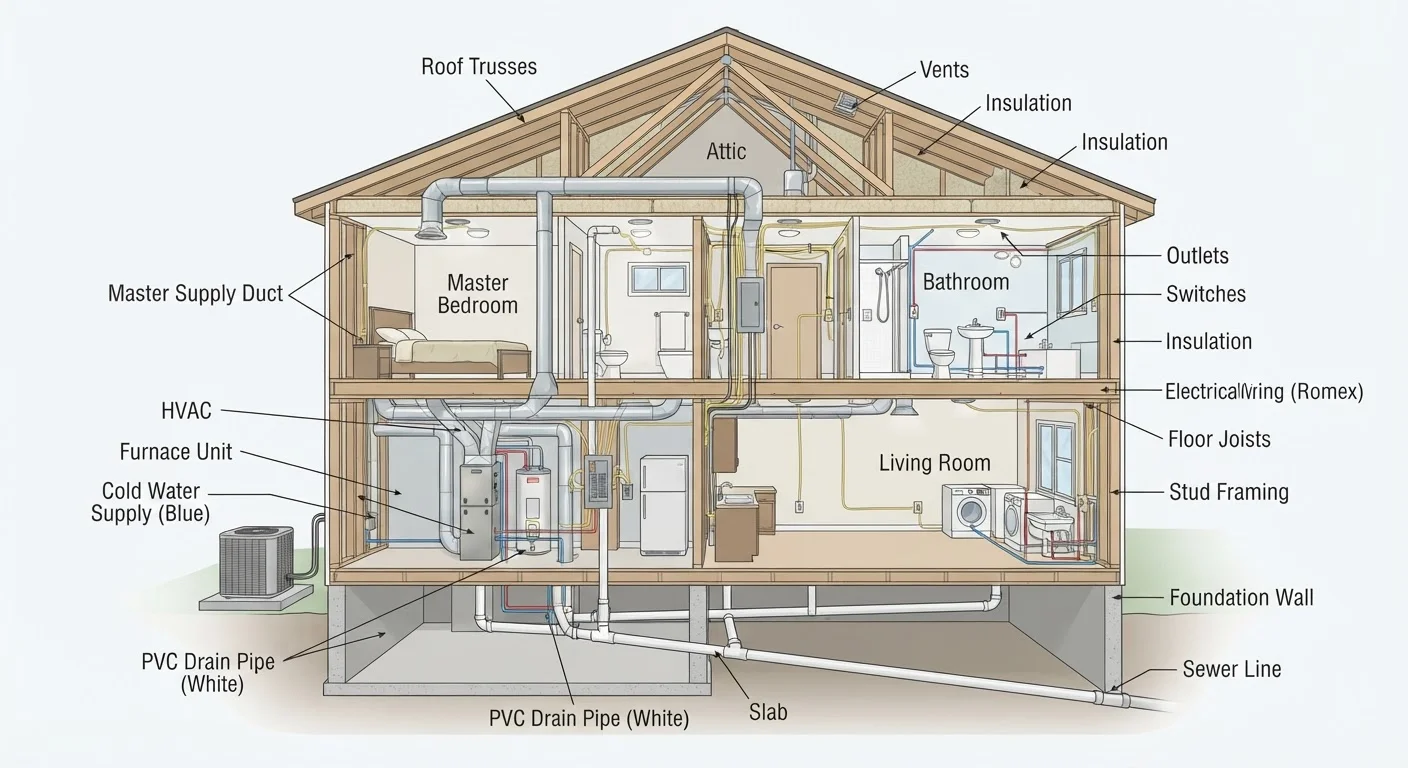
This article works through the most common misconceptions about core home systems - heating, cooling, plumbing, electrical, and appliances - and replaces them with what the evidence actually shows. For a broader look at how these systems interact with one another, see A Homeowner's Map of Core House Systems.
Myth
Changing your HVAC filter once a year is sufficient for most households.
Fact
Most HVAC manufacturers and professional associations recommend filter changes every 1-3 months, depending on filter type, household size, and whether pets are present.
Annual filter changes are better than nothing, but they fall well short of what most systems require to operate efficiently. A clogged filter forces the blower motor to work harder, raises energy consumption, and accelerates wear on components. Homes with pets or residents who have allergies typically need monthly changes. Checking the filter every 30 days and replacing it when it's visibly grey is a more reliable method than calendar-based scheduling.
Myth
A home warranty covers the same things as homeowner's insurance.
Fact
Home warranties and homeowner's insurance cover fundamentally different risks and almost never overlap in meaningful ways.
Homeowner's insurance is designed to protect against sudden, accidental damage - a tree falling on your roof, a burst pipe flooding a room, fire damage. A home warranty is a service contract that covers mechanical breakdown of systems and appliances due to normal wear. Neither covers what the other does. Critically, home warranty contracts frequently include exclusions for pre-existing conditions, improper installation, or lack of maintenance records - conditions many homeowners don't discover until a claim is denied.
Myth
If an appliance is still under manufacturer warranty, any repair issue will be covered at no cost.
Fact
Manufacturer warranties routinely exclude damage caused by improper installation, power surges, hard water, or lack of maintenance - all common real-world scenarios.
Warranty coverage is narrower than most people assume. Most cover defects in materials or workmanship under normal use, but "normal use" is defined by the manufacturer. A water heater that fails because sediment was never flushed may not be covered even if it's two years old. Reading the warranty document at the time of purchase - not after a problem occurs - is the only reliable way to understand what protection you actually have.
Myth
Water heaters only need attention when they start leaking or producing cold water.
Fact
Sediment accumulation, anode rod degradation, and pressure valve function all require periodic attention - years before any visible failure appears.
Most tank water heaters benefit from annual sediment flushing to prevent buildup that reduces efficiency and accelerates corrosion. The sacrificial anode rod - a metal component that protects the tank from internal rust - typically needs inspection every 3-5 years and replacement when depleted. The temperature and pressure relief valve should also be tested periodically. Waiting for a visible symptom means most of these maintenance windows have already passed. For flood-prone homes, sump pump maintenance involves a similar logic: the time to check is before you need it.
Myth
Unpermitted electrical work only becomes a problem if something goes wrong.
Fact
Unpermitted electrical work can void homeowner's insurance coverage, create liability during a home sale, and fail to meet safety codes regardless of whether an incident occurs.
Insurance policies typically require that covered work comply with local codes. If an unpermitted electrical modification is implicated in a fire claim, the insurer may deny or reduce the payout. When selling, disclosure requirements in most states mean unpermitted work must be declared - and buyers or their inspectors frequently find it anyway. The cost of retroactive permitting and inspection is almost always higher than doing it correctly the first time. For a foundational understanding of your electrical system, Home Electrical Panel Basics is a useful starting point.
The DIY Boundary: Where Assumptions Become Hazards
One of the most consequential beliefs homeowners hold is that any repair job they can physically perform is one they should tackle themselves. In reality, the risk threshold varies enormously depending on which system is involved.
Gas and Electrical Work Carry Serious Risks
Work involving gas lines, electrical panels, or structural modifications should always be evaluated by a licensed professional before any DIY attempt. Errors in these areas can cause fires, carbon monoxide exposure, or electrocution. Even a competent DIYer can create dangerous conditions without the diagnostic equipment and code knowledge a licensed tradesperson brings.
Plumbing tasks like replacing a faucet or a toilet flapper carry relatively low risk. Electrical work beyond replacing a light switch or outlet cover, however, frequently requires a permit in most US jurisdictions - and doing it without one can create problems when you sell the property or file an insurance claim. Gas line work is a category where professional involvement isn't optional; it's a safety requirement in virtually every municipality.
Permits aren't bureaucratic friction - they trigger inspections that protect you. For a detailed breakdown of when paperwork is required and what happens when it's skipped, see Permits, Inspections, and Codes. And if your project grows large enough to require a contractor, Before You Hire a Contractor covers the vetting questions most homeowners skip.
Planning Around System Lifespans
Many expensive surprises aren't truly sudden - they're the predictable end of a system that outlived its expected service life. Homeowners who aren't tracking those timelines often treat a failed furnace or water heater as an emergency when it was actually foreseeable. Budget pressure compounds the problem: an unplanned replacement in January is more expensive in every sense than one planned and budgeted for in September.
Age Alone Doesn't Tell the Whole Story
A 15-year-old furnace that has been professionally serviced annually may outperform a 10-year-old unit that has never been maintained. Lifespan estimates are averages - actual longevity depends heavily on installation quality, usage patterns, and maintenance history. Use age as a planning prompt, not a deadline, and have a qualified technician assess condition before making replacement decisions.
The Lifespan of Major Home Systems provides reference ranges for HVAC units, roofing, water heaters, plumbing, and more. Pairing that information with a seasonal maintenance checklist is the most reliable way to stay ahead of failures rather than reacting to them.
Similarly, if your home has ductwork, losses there may be silently undermining the efficiency of a system you're maintaining correctly everywhere else. Signs Your Home's Ductwork Is Undermining Your HVAC Efficiency explains what to look for and when a professional assessment is warranted.