Why Ducts Matter More Than Most Homeowners Realize
Your HVAC system's furnace or air handler is only half the story. The network of ducts that distributes heated or cooled air throughout your home is equally important - and far more prone to silent, gradual problems. According to the U.S. Department of Energy, duct leakage alone can account for 20-30% of conditioned air loss in a typical home, meaning your system may be working considerably harder than necessary to maintain comfortable temperatures.
Unlike a noisy furnace or a clearly broken thermostat, failing ductwork rarely announces itself dramatically. Instead, it chips away at efficiency and comfort over time. Understanding the warning signs - and the mistakes that allow duct problems to persist - puts you in a much stronger position to act before those losses compound. For a broader overview of how air moves through your home's systems, see how your home's HVAC system actually works.
Common Mistakes Homeowners Make With Ductwork
Most duct-related problems are not inevitable - they develop or persist because of predictable, avoidable oversights. The mistakes below represent the patterns HVAC professionals encounter most frequently.
Ignoring warning signs because the system still runs.
Why it happens: If the HVAC unit turns on and air comes out of the vents, many homeowners assume the system is working correctly. Duct inefficiency doesn't stop the system from running - it just makes it work harder.
Using standard duct tape to seal duct leaks.
Why it happens: The name suggests it's the right tool for the job, but standard adhesive duct tape breaks down relatively quickly under the temperature swings and airflow conditions inside duct systems.
Assuming new equipment solves the problem without inspecting the ducts.
Why it happens: When an HVAC system ages, the intuitive response is to replace the unit. But a new, efficient furnace or air conditioner loses much of its advantage if it's distributing air through a leaky or poorly sized duct system.
Closing vents in unused rooms to redirect airflow.
Why it happens: The logic seems straightforward - block off a room you're not using and more air should go where you need it. In practice, most residential duct systems are not designed to accommodate that kind of pressure redistribution.
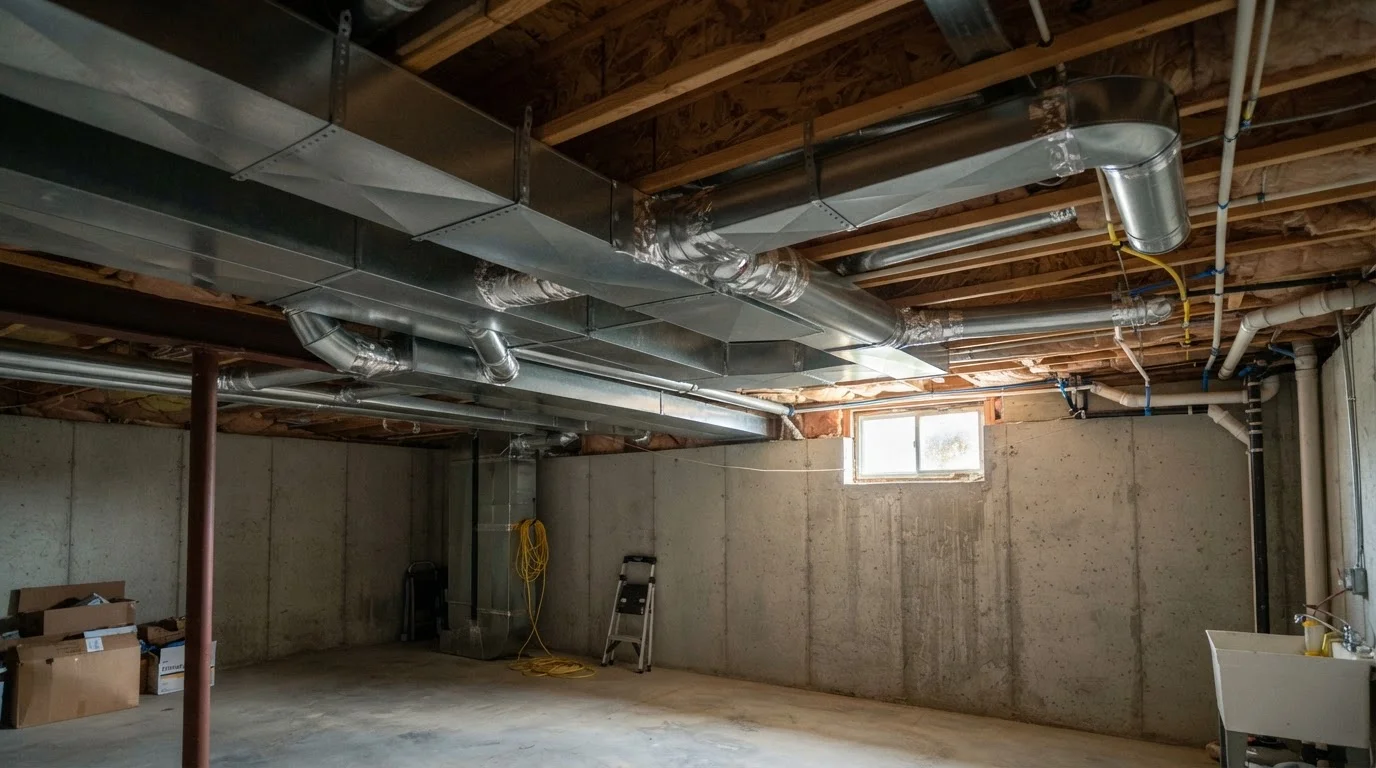
Neglecting ducts in unconditioned spaces like attics and crawl spaces.
Why it happens: Out of sight often means out of mind. Ducts in these areas are rarely inspected during routine maintenance and can develop significant insulation degradation, pest damage, or disconnections over time.
Don't Attempt Duct Work in Attics or Crawl Spaces Alone
Inspecting or repairing ducts in attics, crawl spaces, or wall cavities carries real physical risks - poor footing, insulation exposure, and limited ventilation are common hazards. These areas may also contain older insulation materials that should not be disturbed without professional guidance. Always have a licensed HVAC technician perform any diagnostic or repair work in confined or hard-to-reach duct locations.
Reading the Warning Signs in Your Home
Before any technician runs a formal duct leakage test, your home itself often provides clues worth paying attention to.
20-30%
Conditioned air lost to duct leakage
The U.S. Department of Energy estimates that duct leakage accounts for 20-30% of conditioned air loss in a typical home with forced-air systems.
~75%
U.S. homes with forced-air systems
The U.S. Energy Information Administration's Residential Energy Consumption Survey indicates that the large majority of U.S. homes rely on forced-air distribution, making duct condition relevant to most households.
- Uneven temperatures between rooms: If one bedroom is noticeably warmer or cooler than the rest of the house despite the system running normally, a disconnected or leaking duct branch is a likely culprit.
- Unexplained increases in energy bills: A sudden or gradual rise in heating or cooling costs - without a change in weather patterns or usage habits - can indicate conditioned air is escaping before reaching its destination.
- Excessive dust accumulation near vents: Ducts that run through dusty attics or crawl spaces and have gaps or cracks can pull in debris and distribute it through living areas.
- System short-cycling: When your HVAC unit turns on and off more frequently than normal, it may be struggling to meet demand because air is being lost along the way.
- Stuffy or stale air quality: Poor return airflow - often a sign of undersized or blocked return ducts - can make air feel stagnant and reduce the system's ability to filter contaminants effectively.
If several of these signs appear together, that pattern warrants a call to a licensed HVAC professional rather than a DIY investigation. Duct systems in attics, walls, and crawl spaces involve areas that can present safety risks and typically require specialized diagnostic equipment such as a blower door or duct pressurization test to assess accurately. You can also consult the seasonal home systems maintenance checklist to fold duct monitoring into your regular home upkeep routine.
What Qualified Technicians Typically Do to Address Duct Problems
A licensed HVAC technician approaching duct issues will generally start with diagnostics before recommending any repairs. This typically includes a duct leakage test, a visual inspection of accessible duct runs, and a review of the system's airflow balance across rooms.
Common corrective steps may include:
- Duct sealing: Using mastic sealant or metal-backed tape (not standard duct tape, which degrades quickly) to close gaps at joints and connections. Aerosol-based sealing technologies are also used for interior leaks in hard-to-reach sections.
- Insulation improvements: Ducts running through unconditioned spaces - attics, garages, crawl spaces - lose or gain heat based on surrounding temperatures. Adding or replacing insulation around those runs reduces that thermal exchange.
- Duct redesign or replacement: In homes with undersized, poorly routed, or excessively long duct runs, partial or full duct system redesign may be recommended. This is a more involved project and typically requires permits depending on local building codes - your technician should be able to advise on what applies in your area.
It's worth noting that duct improvements work best as part of a holistic approach to home efficiency. Upgrading ducts while ignoring air sealing in walls or attics, for instance, may deliver less benefit than expected. Similarly, homeowners considering thermostat upgrades may find those improvements more effective once airflow issues are resolved - see what actually changes with smart thermostats for context on how those two systems interact.