Why System Lifespan Awareness Matters
Most homeowners don't think about a water heater until it fails, or about a roof until water appears on the ceiling. That reactive approach is understandable, but it tends to be costly. Major home systems rarely fail without warning signs - and knowing the typical service life of each system helps you recognize those signs before they become emergencies.
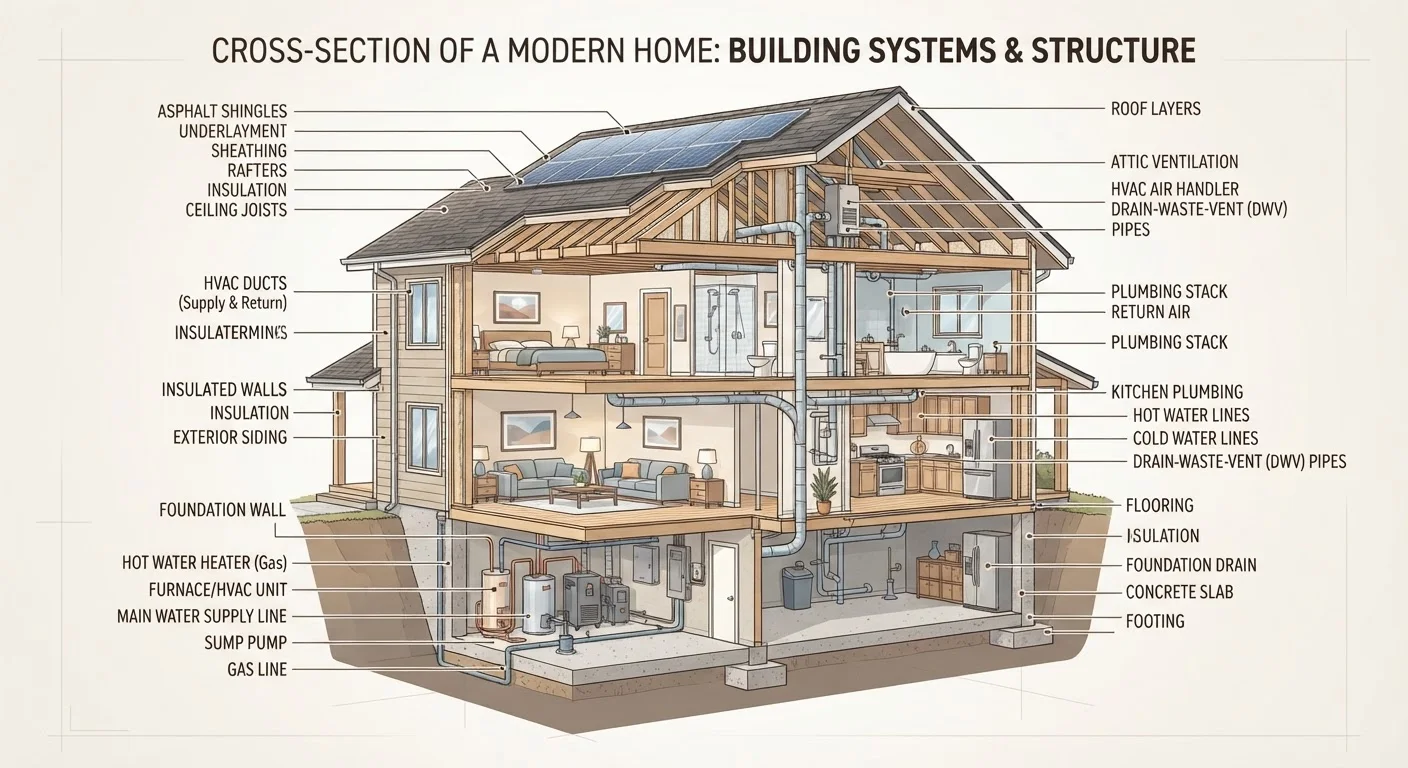
Planning ahead also smooths out the financial impact. Replacing an HVAC unit, re-roofing, or upgrading a plumbing stack are significant expenses. A rough sense of when systems are approaching end-of-life gives you time to set aside funds or phase projects. For a broader look at how these systems interact with each other, see our homeowner's map of core house systems.
Typical Lifespans by System
The ranges below reflect industry-cited estimates under normal operating conditions with reasonable maintenance. Actual service life varies based on climate, installation quality, usage patterns, and upkeep.
HVAC
Central air conditioning systems generally last 15-20 years; furnaces often reach 15-30 years depending on fuel type and brand category. Heat pumps typically fall in the 15-20 year range. Annual professional servicing and regular filter changes are strongly associated with longer service life. For a deeper look at how these systems function, see how your home's HVAC system actually works.
Water Heaters
Traditional tank water heaters average 8-12 years. Tankless (on-demand) units tend to last 20 years or more with periodic maintenance such as descaling. Sediment buildup in tank models is a leading cause of early failure - annual flushing can meaningfully extend service life.
Roofing
Asphalt shingle roofs - the most common type in the US - typically last 20-30 years, though architectural shingles often outperform three-tab shingles. Metal roofing can last 40-70 years. Tile and slate can exceed 50 years under favorable conditions. Climate exposure, attic ventilation, and installation quality all influence actual lifespan.
Plumbing
Pipe longevity depends heavily on material. Copper supply lines often last 50-70 years; PVC drain pipes are similarly durable. Galvanized steel pipes - common in homes built before the 1960s - can corrode after 20-50 years. Cast iron drain lines may last 75-100 years but are prone to rust scaling. If your home is older, it's worth having a plumber assess pipe condition before problems surface.
Electrical Panels
A standard residential electrical panel typically serves 25-40 years. Older panels - particularly certain fuse-box or split-bus designs - may warrant earlier evaluation by a licensed electrician, especially if the home's electrical load has grown substantially since installation.
Appliances
Built-in appliances vary: dishwashers average 9-12 years; refrigerators 10-15 years; washing machines 10-14 years. These figures assume regular cleaning and modest repair when minor issues arise.
Lifespan Estimates Are Ranges, Not Guarantees
The figures cited here are drawn from industry studies and general contractor guidance - they describe typical outcomes, not guaranteed ones. A well-maintained system can outlast its average range; a poorly maintained or incorrectly installed one may fail well short of it. Use these numbers as planning benchmarks, not predictions. When in doubt about a specific system's condition, have it inspected by a licensed professional.
Building a Replacement Timeline
Start by identifying when each major system was installed. Check inspection records, permit history, or labels on equipment - most manufacturers stamp an installation or manufacture date on the unit. Once you have approximate ages, compare them against the typical lifespan ranges above to see which systems are within their final third of expected service.
Prioritize systems that are safety-critical (electrical panels, gas appliances, roofing structure) or whose failure would cause secondary damage (water heater leaks, plumbing failures). A planned replacement nearly always costs less than an emergency one when you factor in after-hours service calls and damage remediation.
Consider pairing this exercise with a seasonal maintenance checklist. Seasonal home systems maintenance can catch early warning signs - unusual noises, higher utility bills, visible corrosion - that indicate a system is nearing the end of its service life sooner than expected.
For homeowners who want to pressure-test their assumptions, common assumptions that lead to expensive surprises is worth reviewing before making any major decisions.
This article provides general educational information about home systems. Costs, lifespans, and conditions vary widely by location, installation, and maintenance history. Consult a licensed contractor or inspector for assessments specific to your home.