Reading Your Lease Before You Commit
The single most important step for any apartment dweller considering a pet isn't choosing a species - it's reading the lease. Pet policies vary enormously: some buildings permit only cats and dogs under a weight limit, others explicitly exclude all animals, and a surprising number have clauses that cover caged birds or aquariums without most tenants realising it.
Look specifically for language around "animals," "pets," and "livestock." Some leases use broad definitions that could technically include a hamster or a parakeet. If the language is ambiguous, request written clarification from your landlord before adopting - a verbal "that's fine" offers no protection if a complaint is later filed.
Get Pet Permissions in Writing
A verbal agreement with a landlord or building manager carries little weight in a formal dispute. Before adopting any animal, obtain written confirmation - ideally a signed pet addendum - that specifies the permitted species and any associated fees. This protects both parties and prevents misunderstandings if building management changes.
Pet deposits and pet fees are also common. These are distinct from standard security deposits in many US states, and regulations around their refundability differ by state. Understand what you're agreeing to financially before signing any addendum.
Which Small Pets Are Best Suited to Apartment Life
Not all small pets place the same demands on a shared living environment. The key variables are noise, odour, space requirement, and activity schedule - and these differ more than most beginners expect.
- Fish and invertebrates (such as shrimp or snails) are among the lowest-impact choices. They produce no noise and minimal odour when tanks are properly maintained.
- Guinea pigs are social and relatively quiet, though they do wheek and purr - sounds unlikely to penetrate walls but audible within a unit.
- Hamsters are nocturnal, which matters in apartments: a wheel spinning at 2 a.m. can disrupt your own sleep even if it doesn't bother neighbours. See how hamsters and gerbils compare for a detailed breakdown of each species' habits.
- Birds require the most careful thought from a noise standpoint. Canaries and finches are melodic but relatively contained; cockatiels can be louder. Comparing canaries, finches, and cockatiels can help you match a species to your specific living situation.
When evaluating a small pet's noise impact, listen to audio recordings of the species at various times of day before committing - individual animals within a species vary considerably in how vocal they are.
Species-level noise guides are averages; the actual animal you adopt may be louder or quieter. Pre-adoption research reduces the chance of a mismatch with your living situation.
Ask your landlord to confirm pet permissions in an email or written addendum, even if they verbally agree - this protects you if management changes or a complaint arises later.
Verbal agreements are difficult to enforce in a dispute. A paper trail is the most practical safeguard for both the tenant and the landlord.
See our honest overview of small pet tradeoffs for a broader look at what ownership actually involves before you decide.
Managing Noise and Neighbour Relations
Even pets considered "quiet" can generate sound that travels through thin walls or ventilation systems in older apartment buildings. Proactive communication with neighbours often prevents complaints more effectively than any physical soundproofing measure.
Practical steps worth considering:
- Position habitats away from shared walls, particularly bedroom walls of adjacent units.
- Use solid-surface wheels (not mesh) and lubricate them regularly if you keep nocturnal rodents.
- For birds, cover the cage in the evening to signal nighttime and reduce early-morning vocalisation.
- If a neighbour raises a concern, address it directly and promptly - most disputes escalate because of silence, not the pet itself.
If you're also considering a dog, the noise and exercise calculations shift significantly. Meeting a dog's physical needs in limited space covers that topic in depth.
Space Planning and Habitat Placement
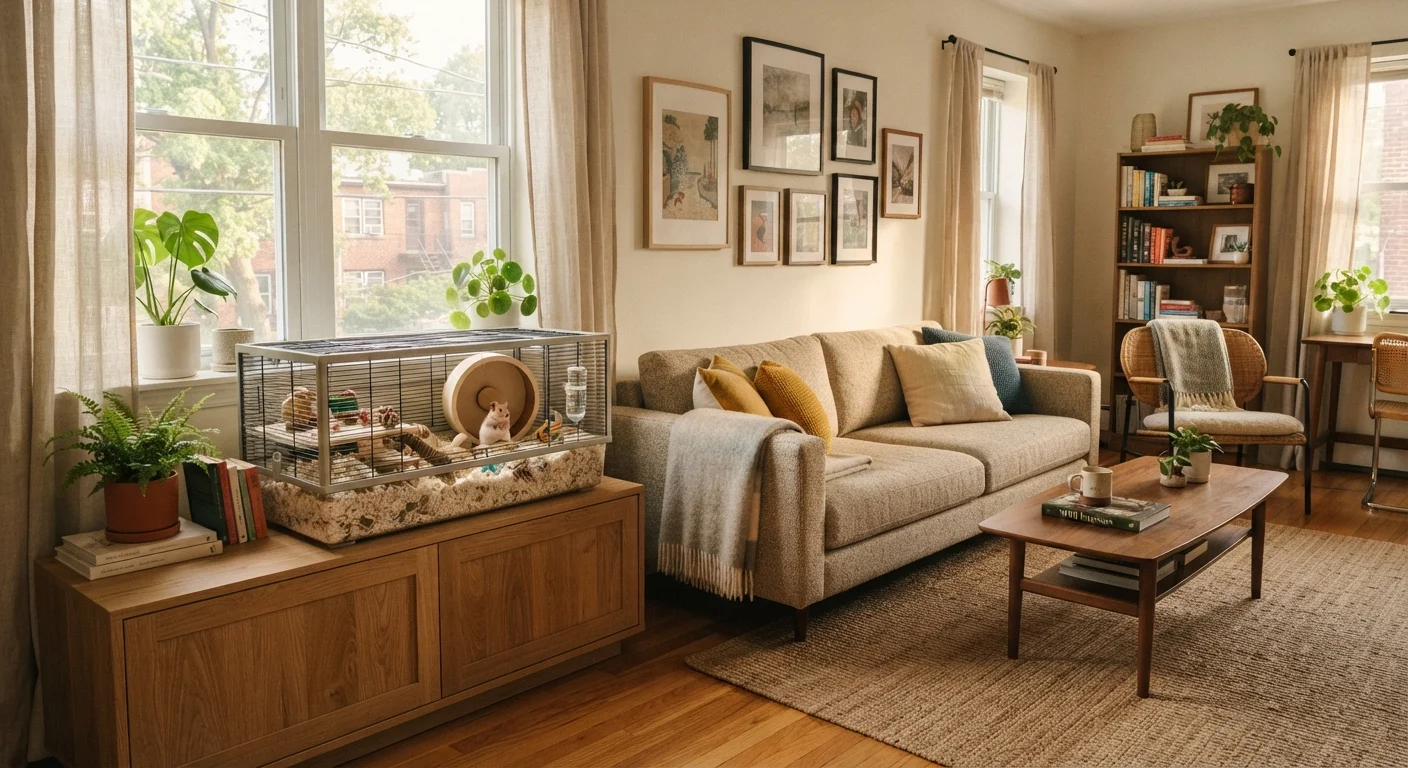
Small doesn't mean the pet requires no space planning - it means the planning looks different. A properly sized guinea pig enclosure, for example, takes up roughly the footprint of a coffee table and needs a stable, flat surface away from drafts, direct sunlight, and loud appliances.
Consider airflow and temperature. Many small animals are sensitive to temperature extremes: hamsters can enter a torpor-like state in cold rooms, and birds are vulnerable to kitchen fumes (particularly from non-stick cookware). Place enclosures in rooms with consistent temperatures and good air circulation, but away from kitchen proximity.
For birds specifically, setting up a parakeet's environment offers detailed guidance on cage sizing and placement that applies broadly to other indoor bird species as well.
Stable Temperature Zones Matter More Than Size
A smaller room can actually be ideal for a small pet's habitat if it maintains a consistent temperature and low humidity. Avoid placing enclosures near exterior walls in winter or against windows that receive intense afternoon sun - temperature swings are more stressful to small animals than the overall room size.
Odour, Allergens, and Building Rules
Odour management in an apartment is partly about the pet and largely about cleaning frequency. Small mammal enclosures should typically be spot-cleaned daily and fully changed weekly - less frequent cleaning is the main driver of noticeable smell, not the animal itself.
Allergens are a related consideration, especially in buildings with shared ventilation or frequent guests. Rodent dander and bird feather dust can trigger reactions in sensitive individuals. If someone in your household or a regular visitor has allergies, research hypoallergenic-adjacent options (fish, reptiles) or consult an allergist before adopting.
Finally, some buildings apply rules beyond the lease - HOA guidelines, local ordinances, or building-specific policies - that may restrict species or numbers of animals. Verify at the building management level, not just the lease level, to avoid surprises.
Final Checklist Before You Adopt
Before bringing a small pet home to an apartment, work through these practical questions:
- Is your lease or building policy explicitly permissive, or have you obtained written confirmation?
- Have you accounted for any pet deposit or ongoing pet fee in your budget?
- Does the species you're considering match your daily schedule - particularly its activity hours?
- Is there a suitable, stable location in your unit for the habitat, away from drafts, direct sun, and kitchen fumes?
- Do you have a plan for odour management and a realistic cleaning schedule?
- Have you thought through what happens during travel or emergencies - who will care for the animal?
Our pre-adoption readiness checklist walks through these questions in greater detail and can help you assess whether the timing is right.
Apartment living and small pet ownership are genuinely compatible - the key is doing the groundwork before adoption rather than after.