Choosing the Right Cage Size and Layout
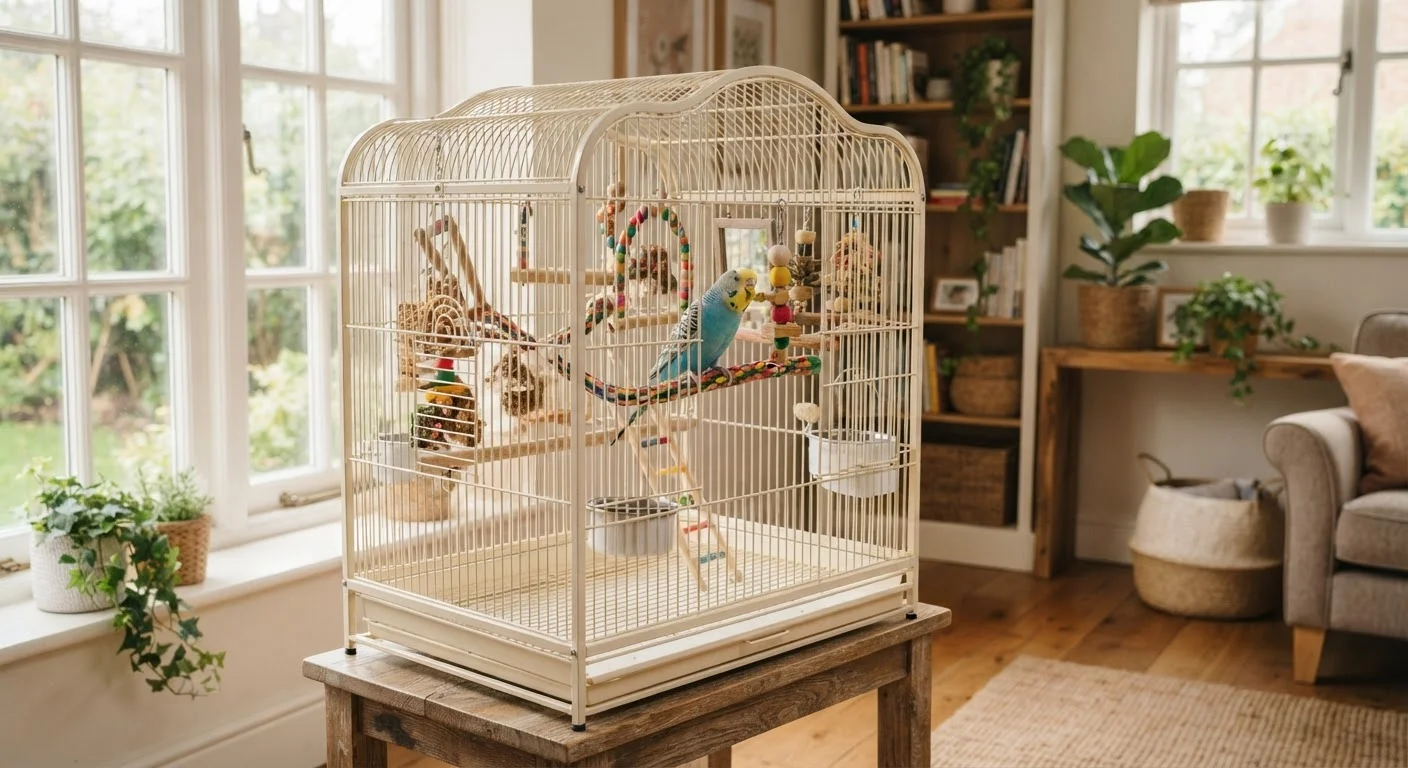
The single most common mistake new parakeet owners make is underestimating how much space these birds actually need. Parakeets - also called budgerigars - are naturally active fliers, and even in captivity they need room to move horizontally. A cage should be at minimum 18 inches wide, 18 inches deep, and 24 inches tall, though wider is always better. Bar spacing should be no more than half an inch to prevent head entrapment.
Horizontal bar orientation matters too. Parakeets climb side-to-side naturally, so cages with horizontal bars on at least two sides give them a surface to grip and traverse. Avoid round cages - they offer no safe corners for the bird to retreat to and can create psychological stress over time.
If you're weighing up your options before committing, this pre-adoption readiness checklist covers housing considerations that apply directly to birds. Those in smaller living spaces can also find practical guidance in our apartment small pet article.
Perch Variety and Foot Health
Perches are not interchangeable. A cage fitted with only the standard dowel rod that often comes with budget cages sets a parakeet up for foot problems, including pressure sores and a condition called bumblefoot (pododermatitis). The solution is variety.
Use at least three different perch types at varying heights in every cage setup.
Uniform perch surfaces cause the same foot pressure points to repeat all day, leading to sores and joint strain. Varied textures and diameters distribute pressure and exercise different muscle groups in the foot.
Rotate toys weekly rather than filling the cage all at once.
Constant access to the same objects leads to habituation - the bird stops engaging with them entirely. Introducing items in rotation keeps the environment feeling novel without overwhelming the bird.
Ensure at least one full side of the cage is positioned against a wall.
Exposure on all sides creates a sense of vulnerability for prey animals like parakeets. A solid backing on one side mimics the security of a natural roosting spot and reduces low-grade chronic stress.
Establish consistent daily sleep and wake times and cover the cage at night.
Parakeets need 10-12 hours of sleep and thrive on routine. Irregular light exposure disrupts circadian rhythms and can suppress immune function over time.
Keep the cage completely out of the kitchen and away from any non-stick cookware fumes.
Polytetrafluoroethylene (PTFE), commonly found in non-stick coatings, releases gases when overheated that are acutely toxic to birds - sometimes fatally so within minutes. This risk is well-documented in avian medicine.
Include at least three different perch types: a natural wood perch with uneven texture (such as manzanita or java wood), a softer rope perch for resting, and a conditioning perch - often made from a slightly abrasive material - that helps maintain nail length naturally. Position them at different heights and orientations so the bird shifts posture throughout the day.
Toys, Foraging, and Mental Stimulation
Parakeets are intelligent, curious birds that can develop behavioral problems - feather plucking, excessive screaming, repetitive movements - when chronically bored. Toys are not optional extras; they're a welfare essential.
Rotate toys on a weekly basis rather than filling the cage all at once. Too many objects at once can overwhelm a small bird, while a completely bare cage offers nothing. Foraging toys - those that require the bird to work for a treat - engage natural problem-solving behaviors. Bells, mirrors, and shredding materials all serve different stimulation needs.
It's worth noting that mirrors can be psychologically complex for parakeets. A bird with no companions may bond to its reflection, which can satisfy social needs temporarily but also cause frustration. If you keep a single bird, human interaction and out-of-cage time become especially critical. Understanding what small pet ownership actually involves can help set realistic expectations before a bird joins your home.
Safe Placement and Environmental Hazards
Where you place the cage matters as much as what goes inside it. Parakeets are highly sensitive to airborne toxins. Kitchens pose real risks: non-stick cookware, when overheated, releases fumes that can be fatal to birds within minutes. Scented candles, aerosol sprays, air fresheners, and cigarette smoke are all harmful. Place the cage in a living area with good ventilation but no direct drafts.
Natural light supports circadian rhythm and mood, but direct sun through a window can overheat a bird rapidly. Position the cage near a window where the bird gets indirect light, and ensure one side of the cage is against a wall - this gives the bird a sense of security rather than exposure on all sides.
Fumes and Airborne Hazards
Birds have highly efficient respiratory systems that make them acutely vulnerable to airborne toxins - a trait historically exploited in coal mines. Beyond non-stick cookware, common household hazards include scented candles, incense, paint fumes, cleaning sprays, and carbon monoxide. If you are redecorating or using strong cleaning products, move your bird to a well-ventilated, unaffected room and allow adequate airing time before returning it. When in doubt, consult an avian veterinarian about specific substances.
Temperature consistency is also important. Parakeets do well in the same range comfortable for most US households - roughly 65-85°F - but sudden drops or fluctuations are stressful. Avoid placing cages near air conditioning vents or exterior doors.
Daily Interaction and Routine
No cage setup, however well-designed, replaces the role of daily interaction. Parakeets are flock animals by nature. A bird left alone with no social contact for most of the day may become withdrawn or develop stress behaviors regardless of how enriched its physical environment is. This doesn't necessarily mean acquiring a second bird - though a bonded pair can thrive together - it means intentional, consistent daily engagement from you.
Aim for at least one period of supervised out-of-cage time daily, in a bird-safe room. Talk to the bird during routine activities nearby. Parakeets pick up on voice patterns and environmental cues, and a predictable daily schedule - similar wake and sleep times, consistent feeding times - reduces anxiety measurably. Cover the cage at night to signal sleep time and protect from drafts.
For comparison, indoor cats face a similar enrichment gap when owners underestimate how much stimulation confined animals need. The principle applies just as strongly to birds. Those curious about how parakeets compare to other small birds in terms of social needs and care demands can explore our comparison of indoor bird species.
This article provides general educational information about parakeet care and is not a substitute for advice from a qualified avian veterinarian. If your bird shows signs of illness or behavioral distress, consult a vet with experience in avian medicine.