Understanding the Core Difference
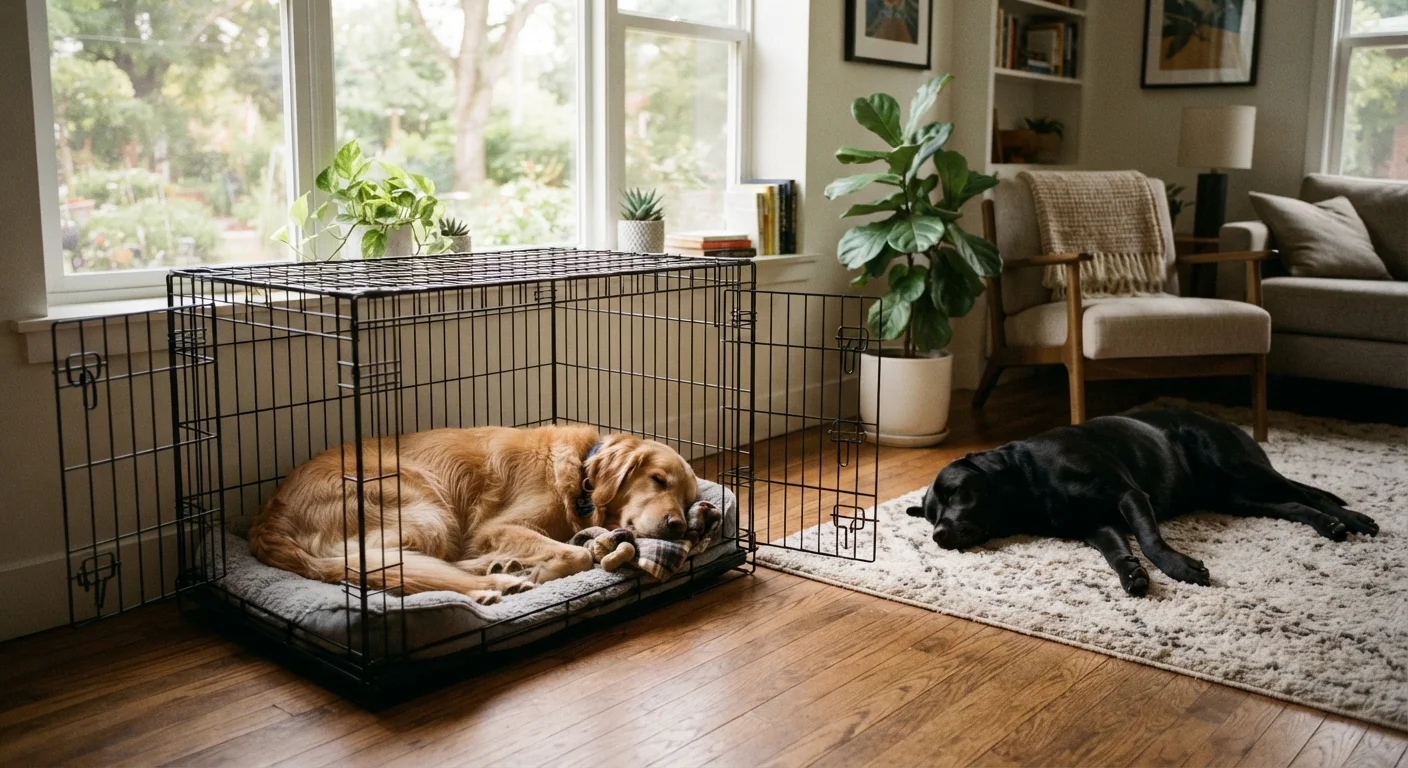
Crate training and free roaming represent two fundamentally different philosophies for managing a dog's unsupervised time at home. Crate training uses a designated enclosure - wire crate, plastic kennel, or soft-sided carrier - to limit the dog's access to the home when no one is available to supervise. Free roaming allows the dog to move through part or all of the home unconfined.
Neither is inherently cruel or inherently ideal. The right approach depends on the intersection of your dog's age, history, temperament, and breed traits. A choice that works perfectly for one dog can create genuine stress or safety risks for another.
One important clarification: a crate used well is not punishment. Dogs are den animals by nature and many will voluntarily seek out enclosed spaces for rest. The goal is to make the crate a calm, positive environment - not a place of isolation or correction.
Time Limits Matter in the Crate
Adult dogs should generally not be crated for more than four to six hours at a stretch during the day. Puppies need bathroom breaks far more frequently - often every one to two hours for very young dogs. Extended crating without adequate breaks, exercise, and social interaction is not appropriate for any dog regardless of temperament. If your schedule requires very long absences, a dog walker, daycare, or pet sitter can bridge the gap.
When Crate Training Makes the Most Sense
Crate training shines in situations where structure and predictability matter most. Puppies are the clearest example - they lack bladder control, have no concept of household rules, and will chew, eliminate, and explore indiscriminately if left unsupervised. A crate limits opportunity for mistakes and reinforces the cycle of positive elimination habits that underpin house-training.
Newly adopted adult dogs present a similar case. Even an otherwise well-mannered dog needs time to learn the rhythms of a new household before being trusted with unsupervised access. Rescue dogs, in particular, may come with unknown behavioral histories.
Breed temperament matters here too. Breed-specific traits like high prey drive, herding instinct, or intense energy can translate into significant destruction when a dog is under-stimulated and unsupervised. Working breeds - Huskies, Border Collies, Jack Russell Terriers - are disproportionately represented in stories of home damage left alone. For these dogs, a crate is as much about safety as management.
Dogs recovering from illness or surgery also benefit from crate rest, where controlled confinement supports healing.
| Criterion | Crate Training | Free Roaming |
|---|---|---|
| Best life stage | Puppies, newly adopted dogs | Mature, trained adult dogs |
| House-training support | Strong - limits accident opportunities | Relies on existing reliability |
| Destructive behavior risk | Minimized by confinement | Higher without solid training |
| Stress for anxious dogs | Can increase if introduced poorly | May reduce confinement-related distress |
| Breed suitability | High-drive, high-energy breeds | Calm, low-energy breeds |
| Setup requirement | Crate purchase, gradual introduction | Dog-proofing designated spaces |
| Owner supervision needed | Less - crate manages risk | More - behavior must be established |
When Free Roaming Is a Reasonable Choice
Free roaming becomes appropriate when a dog has demonstrated, over time, that it can be trusted. The transition is usually earned gradually - shorter absences first, specific rooms opened up, then broader access as confidence builds. It is a privilege extended through evidence, not assumed.
Temperament is the biggest factor. Dogs that are naturally calm, socially secure, and have low destructive tendencies adapt well to unsupervised freedom. Lower-energy breeds - Basset Hounds, Cavalier King Charles Spaniels, senior Greyhounds - often settle without incident when left alone. Their behavioral baseline makes free roaming low-risk once basic training is in place.
It is also worth considering the emotional dimension. Some dogs find prolonged crating stressful, particularly if they were not introduced to it gradually or positively. If a dog consistently shows distress signals - panting, excessive vocalization, attempts to escape - inside a crate, free roaming a safe, dog-proofed room may actually reduce anxiety rather than increase behavioral risk. Understanding whether distress reflects true separation anxiety or simple boredom helps owners choose the right response.
Making the Transition Thoughtfully
Moving from crate training to free roaming should be incremental. Start with a confined area - a single dog-proofed room - rather than whole-home access. Use a camera or pet monitor during initial unsupervised periods to observe behavior honestly. If a dog sleeps, drinks water, and settles calmly, that is strong evidence the transition is working. If chewing, elimination, or anxious pacing appears, pull back and extend the crate phase.
Pairing either approach with adequate exercise is non-negotiable. Meeting your dog's physical needs before a period of alone time - crated or free - significantly reduces restless or destructive behavior. A tired dog is far more likely to settle regardless of confinement status.
For dogs displaying signs of distress in either arrangement, consulting a certified professional dog trainer or a veterinary behaviorist is a sensible step. Behavioral challenges are easier to address early than after patterns become entrenched. Adult dogs can still learn new coping skills - but the approach and timeline differ from puppyhood training, so realistic expectations matter.