Recognizing the Real Signs of Separation Anxiety
Separation anxiety is one of the most commonly misread behavioral conditions in pet dogs - and the misreading often leads to responses that make things worse. Unlike straightforward disobedience, separation anxiety is a genuine fear-based response. The dog isn't misbehaving; it is experiencing distress that overwhelms its ability to cope.
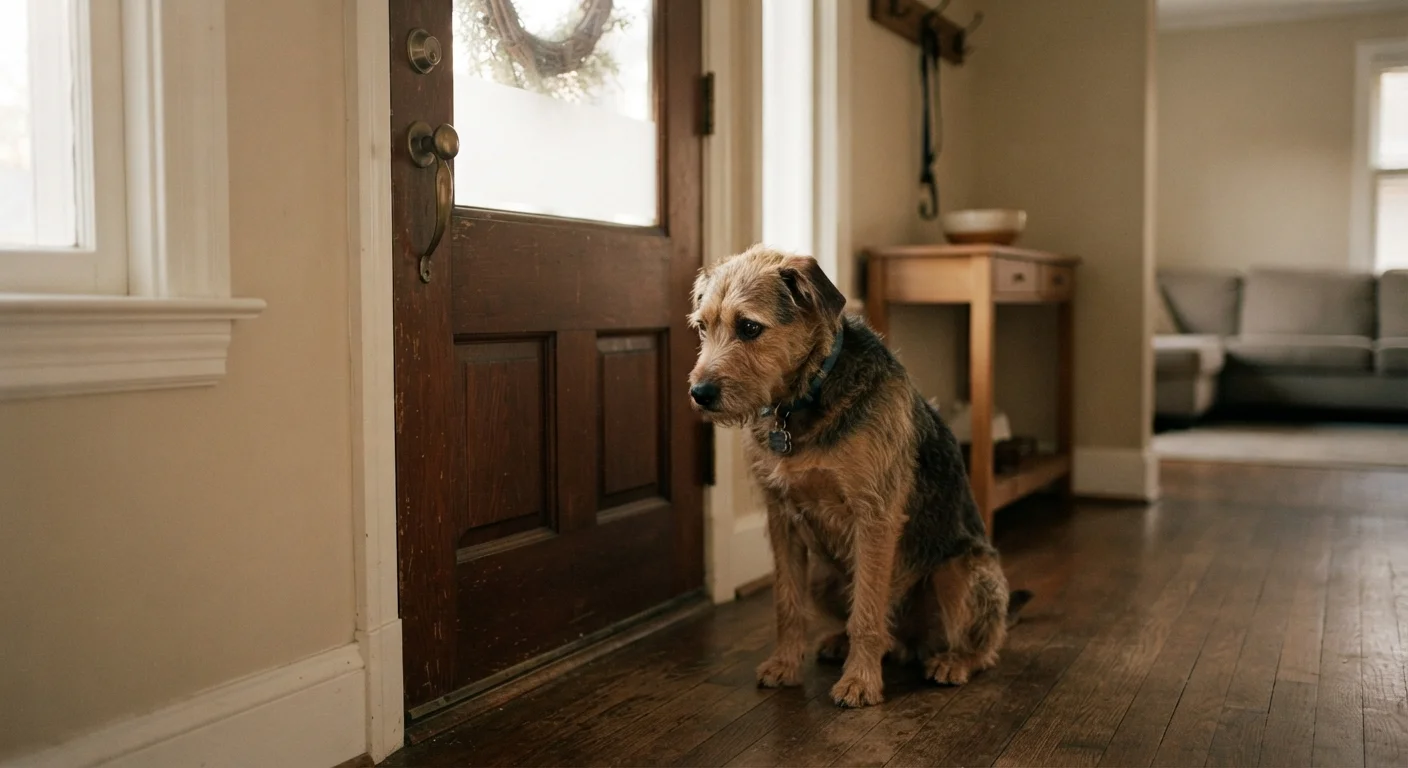
The clearest behavioral markers include: destructive behavior concentrated at entry and exit points (doors, windows), house soiling in a dog that is otherwise reliably trained, excessive salivation or vomiting, and self-injurious behaviors like repetitive licking or paw chewing. Critically, these behaviors are triggered specifically by the owner's departure or absence - not distributed randomly throughout the day as boredom-driven behavior tends to be.
Also notable are pre-departure signals. Dogs with separation anxiety often read subtle cues - picking up keys, putting on shoes, grabbing a bag - and begin displaying distress before the owner has even reached the door. Trembling, shadowing the owner from room to room, whining, and refusing food or treats are all signs that the dog is already in an escalated state. Signs your dog may be in pain share some behavioral overlap with anxiety signs, so ruling out physical discomfort is an important early step.
Myth
My dog chews furniture out of spite when I leave - he knows he's doing something wrong.
Fact
Dogs do not experience spite. Destructive behavior during alone time is driven by panic, not revenge.
The "guilty look" many owners interpret as evidence of wrongdoing is actually a submissive response to the owner's body language upon return - not proof the dog understood its behavior was forbidden. Research in animal cognition, including work published in peer-reviewed behavioral science journals, consistently shows dogs lack the cognitive framework for spite or deliberate revenge. When a dog with separation anxiety chews, scratches doors, or destroys objects, it is attempting to cope with acute distress. Punishing the dog after the fact - sometimes even minutes later - does not connect the correction to the behavior in any meaningful way and can increase overall anxiety.
Myth
If my dog is anxious, I'll know because she'll bark the entire time I'm gone.
Fact
Many dogs with separation anxiety are silent but show other significant distress signs such as pacing, self-injury, or house soiling.
Excessive vocalization is one possible sign, but separation anxiety presents across a wide spectrum. Some dogs pace repetitively along a fixed route. Others salivate heavily, scratch at exit points until their paws bleed, or lose bladder control even though they're fully house-trained. Because owners are absent when these behaviors peak, they often go undetected for weeks or months. Setting up a camera or using a pet monitor during a short, deliberate absence is the most direct way to observe what your dog actually does - and is strongly recommended by veterinary behaviorists before starting any intervention program.
Myth
Separation anxiety and boredom look the same, so the fix is the same too.
Fact
Boredom and anxiety have distinct behavioral signatures and require different management approaches.
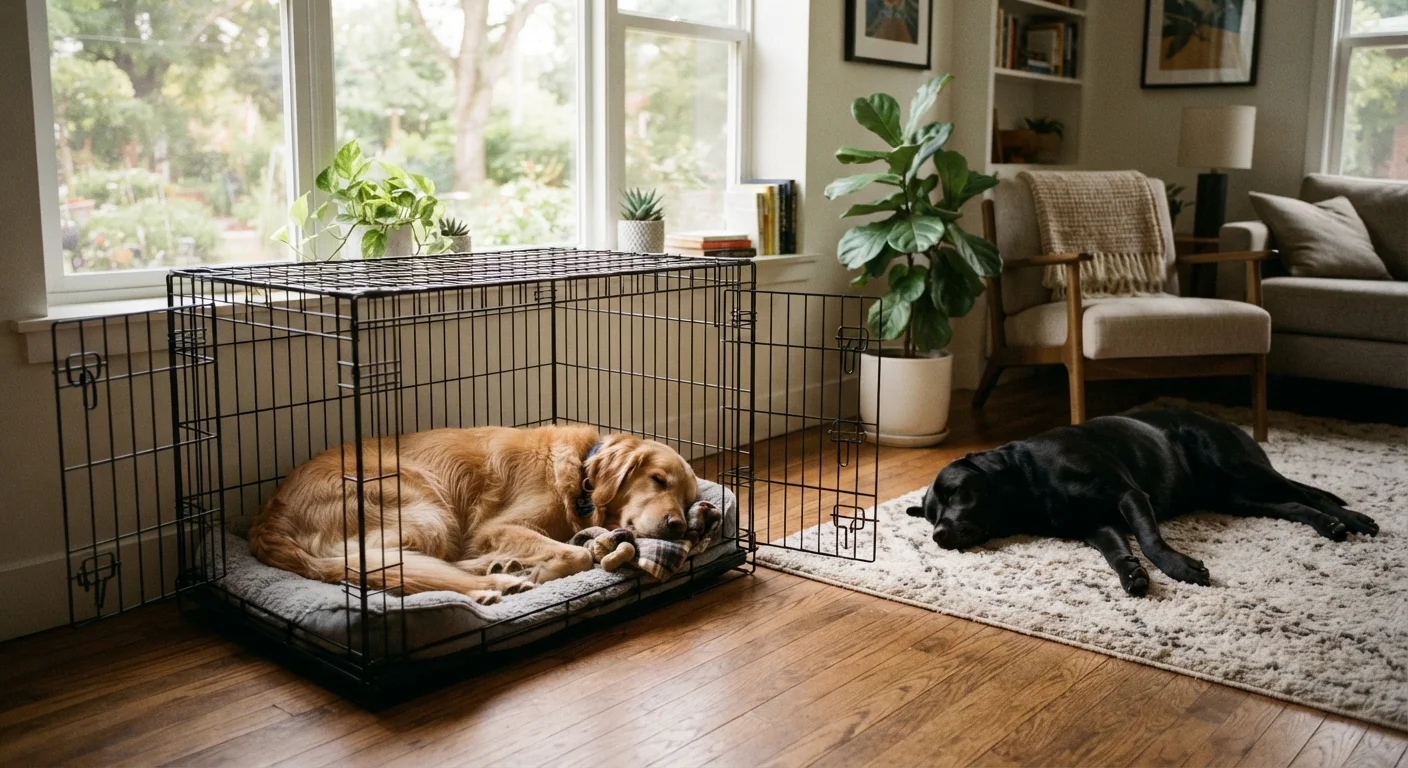
A bored dog tends to engage in destructive or attention-seeking behavior somewhat indiscriminately - chewing items throughout the day, exploring, playing with objects. An anxious dog's distress is tightly clustered around your departure and return. The destruction tends to happen within the first 20-30 minutes after you leave, and your dog may be visibly agitated - trembling, refusing food, following you room to room - even before you've walked out the door. These pre-departure signals are a key diagnostic feature. Crate training versus free roaming can also look very different depending on whether anxiety or boredom is the underlying issue.
Myth
Getting a second dog will cure my dog's separation anxiety.
Fact
A companion animal rarely resolves true separation anxiety because the distress is specifically tied to the primary attachment figure.
Separation anxiety is fundamentally about the bond between dog and owner - not about being alone in a general sense. Dogs with genuine separation anxiety often remain distressed even with another pet present, because the trigger is the absence of their person, not the absence of company. Introducing a second dog without addressing the underlying anxiety can result in two dogs with behavioral challenges instead of one. While some dogs benefit from canine companionship in reducing general stress, this should never be treated as a standalone solution for diagnosed separation anxiety.
Myth
Certain breeds are dramatic - the anxious behavior is just their personality and can't be changed.
Fact
While breed predisposition is real, separation anxiety is treatable with structured behavioral intervention in most dogs.
It's true that some breeds - particularly those developed to work closely alongside humans, such as herding breeds, Vizslas, and many toy breeds - are statistically more prone to separation distress. Breed-specific traits can absolutely shape how a dog relates to human presence. But predisposition is not destiny. Behavioral treatment involving gradual desensitization to departure cues, systematic alone-time training, and in moderate-to-severe cases, veterinary-prescribed medication, has a meaningful evidence base. Dismissing the behavior as an unchangeable personality trait delays care that can substantially improve a dog's quality of life.
What Actually Helps - and What Doesn't
The treatment approach that carries the most evidence involves systematic desensitization: gradually and repeatedly exposing the dog to departures across very short durations, building tolerance incrementally without pushing the dog into a full panic response. This process requires patience and consistency - it typically unfolds over weeks to months, not days.
Common well-intentioned approaches that often backfire include: making prolonged, emotional goodbyes (which elevate the departure's emotional significance), punishing post-departure destruction (which the dog cannot connect to the behavior), or immediately flooding the dog with long alone-time durations before it has the skills to cope. Providing food puzzles or enrichment toys can help reduce boredom and mild stress, but they are rarely sufficient as a standalone treatment for true anxiety.
Don't Skip the Veterinary Check
Before assuming a behavior problem, rule out medical causes. Incontinence, cognitive dysfunction in older dogs, or pain conditions can produce behaviors that mimic anxiety. Dogs often mask pain, so a veterinary exam is a worthwhile first step when new or escalating distress behaviors appear.
For moderate to severe cases - where the dog is injuring itself, the behavior is not responding to behavioral strategies, or the dog's welfare is significantly compromised - veterinary involvement is appropriate. A veterinarian may refer to a board-certified veterinary behaviorist and may discuss whether medication is a suitable component of the management plan. This article provides general educational information and is not a substitute for professional behavioral or veterinary assessment.