
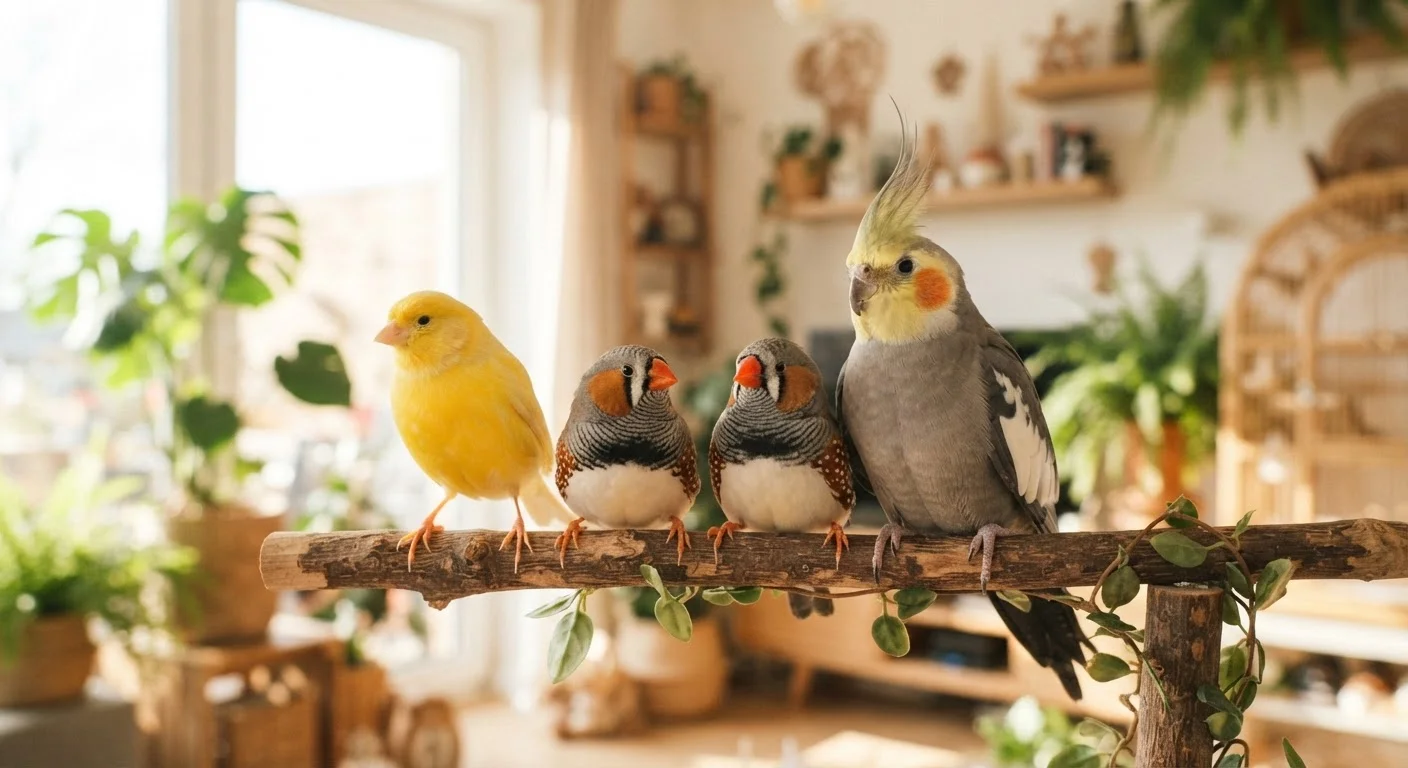
Why These Three Birds Are Worth Comparing
Canaries, finches, and cockatiels consistently rank among the most common pet birds in American households - and it's easy to see why. All three are relatively small, manageable in indoor spaces, and widely available. But their temperaments, care demands, and the kind of relationship they form with owners differ considerably.
Understanding those differences before you bring a bird home can prevent mismatched expectations. As part of an honest look at small pet ownership, birds often surprise new owners with needs that go well beyond food, water, and a cage. This comparison breaks down the key variables so you can make a well-informed choice.
| Canaries | Finches | Cockatiels | |
|---|---|---|---|
| Handling & Interaction | Minimal - prefers distance | Minimal - prefers flock mates | High - seeks daily bonding |
| Noise Level | Melodic song (males) | Quiet chirping and chattering | Loud - whistles and contact calls |
| Best Kept As | Single bird | Pairs or small groups | Single or bonded pair |
| Daily Time Commitment | Low | Low | Moderate to high |
| Typical Lifespan | 10-15 years | 5-7 years | 15-20 years |
| Beginner Suitability | Good | Excellent | Moderate |
| Apartment Friendliness | Moderate | High | Lower - louder |
Canaries: The Independent Songster
Canaries are prized primarily for the male's rich, complex song - a trait selectively developed over centuries of breeding. They are observation birds rather than companion birds: they typically do not seek out or enjoy being handled, and attempting to force interaction can cause stress. For owners who love bird song but have limited time for active engagement, a canary can be a genuinely rewarding pet.
Care requirements are straightforward: a roomy cage (minimum 18 inches wide for a single bird), daily fresh water, a varied diet of quality seed mix supplemented with leafy greens and occasional fruit, and access to natural or full-spectrum lighting to support their natural rhythms. Canaries do not need a companion bird, and housing two males together often triggers territorial conflict.
Lighting Matters for Canary Health
Canaries benefit from exposure to natural daylight cycles or full-spectrum lighting, which supports normal molting, singing behavior, and overall wellbeing. Position the cage near a window where the bird receives indirect natural light, but ensure it can also retreat to a shaded area. Avoid placing cages in direct drafts or in rooms with strong temperature fluctuations.
One important consideration: only male canaries produce the elaborate song most buyers expect. Females vocalize, but far more quietly and simply. If song is your primary reason for choosing a canary, confirm the bird's sex with the seller or a veterinarian before purchase.
Finches: Low-Maintenance, Social Birds
Zebra finches, society finches, and Gouldian finches are among the most popular species kept as pets. Unlike canaries, finches are highly social with each other and generally do poorly when kept alone - a same-species pair is the standard recommendation for most finch keepers. They are active, quick-moving birds that entertain themselves readily through foraging, preening, and interacting with cage mates.
Finches are not cuddly birds. They rarely become hand-tame, and most prefer to be observed rather than handled. This makes them a particularly suitable choice for owners who appreciate lively, visually interesting birds without the commitment of daily hands-on interaction. Their small size and relatively quiet vocalizations - a soft chattering and chirping - also make them among the more apartment-friendly bird options. For more on navigating bird ownership in smaller living spaces, see what apartment dwellers should consider before getting a small pet.
Cage size matters more than many beginners expect: finches need horizontal flying room rather than just height. A cage at least 30 inches wide for a pair allows for adequate movement and exercise.
Cockatiels: The Interactive Choice
Cockatiels are the most socially complex of the three species covered here. Native to Australia, they are flock animals by nature and form strong bonds with human caretakers when raised with regular, gentle interaction. A well-socialized cockatiel can learn to whistle tunes, step onto a hand on cue, and signal its emotional state clearly through crest position and body language.
That social depth comes with a real commitment. Cockatiels kept without enough daily interaction can develop behavioral problems including feather destructive behavior or persistent loud calling. At minimum, plan for an hour of out-of-cage time and active engagement each day. Their vocalizations are also notably louder than finches or canaries - male cockatiels in particular can produce piercing contact calls that carry through walls.
Diet for cockatiels should go well beyond seed mixes: pellets, fresh vegetables, and limited fruit are important for long-term health. Avocado, onion, and certain other foods are toxic to cockatiels and all pet birds - consult a veterinarian familiar with avian species before introducing new foods. Cockatiels can live 15-20 years with good care, making the commitment substantial. Their environmental needs share some parallels with other small companion birds - setting up a parakeet's environment offers useful reference points for cage design and enrichment principles.
Health, Veterinary Care, and Lifespan
All three species benefit from at least an annual wellness exam with an avian veterinarian. Birds are prey animals and instinctively mask signs of illness, meaning visible symptoms often indicate an advanced problem. Finding an avian-experienced vet before you need one is strongly recommended.
Lifespan varies considerably: canaries typically live 10-15 years, zebra finches average 5-7 years, and cockatiels commonly reach 15-20 years in good health. This range matters when evaluating the long-term commitment involved. The lifespan differences seen in small mammals echo a similar dynamic - species that seem similar on the surface can carry very different ownership timelines.
15-20 years
Cockatiel average lifespan with good care
Cockatiels are among the longest-lived small companion birds, representing a significant multi-decade commitment for owners.
5-7 years
Typical zebra finch lifespan
Finch lifespans are considerably shorter than cockatiels, a practical factor when comparing long-term ownership responsibilities.
This article is for general informational purposes only and is not a substitute for professional veterinary advice. Always consult a qualified avian veterinarian for guidance specific to your bird's health and care needs.