Social Needs: Alone vs. Together
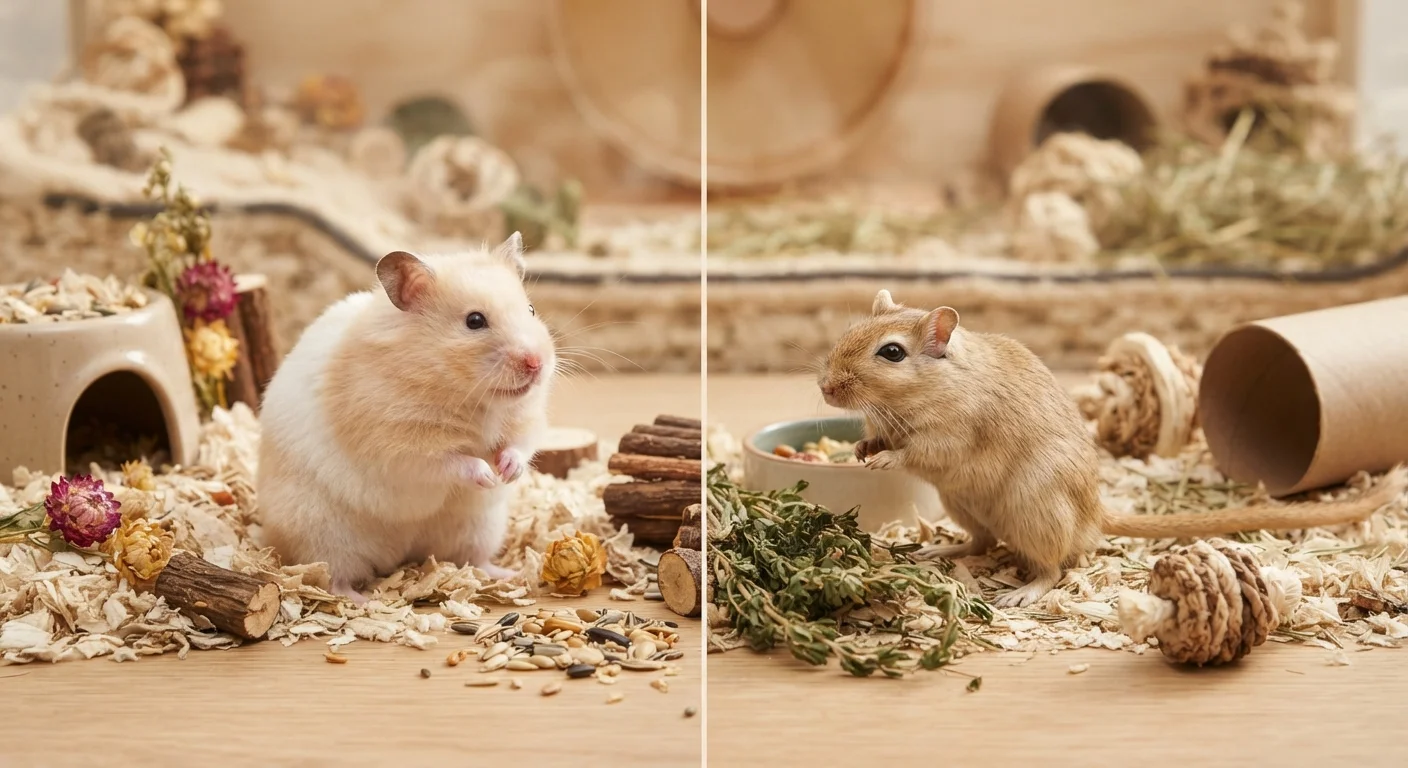
One of the most consequential differences between hamsters and gerbils is how they relate to their own species. Hamsters - particularly the Syrian hamster, the most commonly kept variety - are territorial and solitary in the wild. In captivity, housing two Syrian hamsters together almost always results in fighting that can cause serious injury or death. Even the smaller dwarf hamster species, such as Roborovski or Campbell's, require careful monitoring if housed in pairs and are best introduced as juveniles from the same litter.
Gerbils, by contrast, are highly social animals that live in family groups in the wild. A lone gerbil is a stressed gerbil. Most animal welfare guidance recommends keeping gerbils in same-sex pairs or small groups to support their psychological wellbeing. Introducing adult gerbils who are strangers is notoriously difficult and requires a slow, structured process - so it is generally far easier to adopt bonded pairs from the start.
This single distinction shapes the entire ownership experience. A hamster owner manages one animal's territory; a gerbil owner manages a social dynamic. Neither approach is inherently harder, but they call for different mindsets. For more on how small pet social needs vary across species, see what new guinea pig owners often discover about the consequences of underestimating companionship requirements.
| Criterion | Hamsters | Gerbils |
|---|---|---|
| Social structure | Solitary (especially Syrians) | Social; need companions |
| Activity pattern | Nocturnal / crepuscular | Polyphasic (day and night) |
| Typical lifespan | 2-3 years | 3-5 years |
| Minimum enclosure size | 450+ sq in floor space | 450+ sq in floor space |
| Burrowing depth needed | 6+ inches of substrate | 4-6 inches of substrate |
| Handling tolerance | Moderate; daytime disturbance stressful | Moderate; more flexible schedule |
| Noise at night | Higher (wheel running, digging) | Lower; activity is distributed |
| Ease of introduction to new animals | Not recommended for same-species pairs | Easier when adopted as bonded pairs |
Activity Patterns and Handling
Hamsters are crepuscular to nocturnal - most active at dusk, through the night, and into early morning. Waking a hamster during the day to handle it causes genuine stress and can trigger defensive biting. This makes hamsters less compatible with households that want daytime interaction, and it is a common source of frustration for families who expected a more responsive pet.
Gerbils operate on a polyphasic schedule: short bursts of activity followed by rest, repeated throughout the day and night. While this does not mean they are always available for handling, their activity is far more distributed, making brief daytime interactions more realistic without disrupting their natural rhythm.
Both species can become comfortable with gentle, consistent handling over time, but neither should be treated as a cuddly lap animal. They move quickly, startle easily, and can be dropped if not handled with care - a fall from even moderate height can cause injury. This is why most small animal veterinarians caution against unsupervised handling by young children.
2-3 years
Typical hamster lifespan in captivity
Syrian hamsters generally live 2-3 years, a shorter window than many first-time owners anticipate when making the commitment.
3-5 years
Typical gerbil lifespan in captivity
Gerbils tend to live slightly longer than hamsters on average, meaning the care commitment extends over a longer period.
450 sq in
Recommended minimum enclosure floor space
Many exotic animal welfare organizations recommend at least 450 square inches of unbroken floor space for both hamsters and gerbils - far more than most starter cages provide.
If you are weighing the realities of small pet ownership more broadly, a balanced look at small pet tradeoffs is worth reading before committing to either species.
Housing, Enrichment, and Health Considerations
Both hamsters and gerbils need significantly more space than the small wire cages traditionally sold in pet stores. Current animal welfare recommendations - informed by European guidelines and increasingly adopted by US exotic animal veterinarians - suggest a minimum of 450 square inches of unbroken floor space, with deep substrate for burrowing. Hamsters, particularly Syrians, are especially vigorous burrowers and benefit from 6 or more inches of bedding depth.
Gerbils also burrow but tend to be more active above ground, making vertical space and multilevel setups appealing enrichment. A glass tank-style enclosure, often called a gerbilarium, with deep bedding on the bottom and ventilated lid, is a widely used approach for gerbil housing.
Wheels are essential for hamsters and should have a solid running surface (not wire rungs) with a diameter of at least 10 inches for Syrians to prevent spinal curvature. Gerbils also use wheels but may be less reliant on them if they have ample tunnelling and social stimulation.
Health monitoring is equally important for both species. Rodents are prey animals and instinctively conceal signs of illness, which means subtle behavioural changes - reduced activity, changes in eating, unusual posture - can signal serious problems. Learning to read these cues matters. Our guide on signs of illness in small pets that are easy to miss outlines what to watch for across rodent species. Any health concern should prompt a visit to a veterinarian experienced with small exotic mammals rather than a wait-and-see approach.
For those living in apartments, noise and space considerations also factor into the choice. Keeping a small pet in an apartment explores practical logistics worth thinking through before setting up an enclosure in a smaller living space.
A Note on Veterinary Care for Small Rodents
Hamsters and gerbils are classified as exotic animals in most US veterinary practices, meaning not all general veterinarians are equipped to treat them. Before adopting either species, identify a local vet with small mammal or exotic animal experience. Routine wellness checks - even when your pet appears healthy - can help catch common issues like dental problems, respiratory infections, or tumors early. This is general informational guidance and not a substitute for professional veterinary advice.