The Social Reality: Guinea Pigs Need Companions
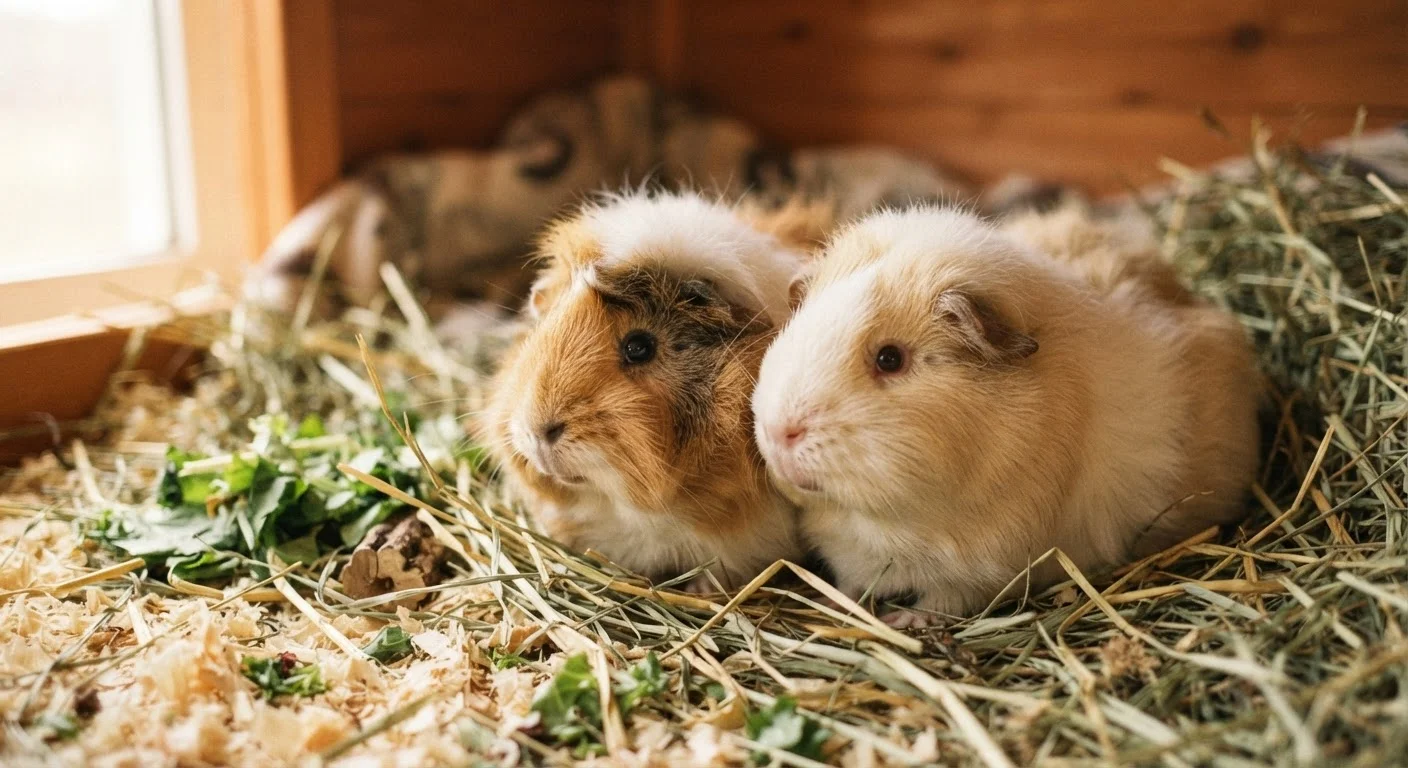
One of the most common surprises for new owners is discovering just how deeply social guinea pigs are. In their natural environment, these animals live in groups, and most animal welfare organizations recommend keeping them in same-sex pairs or small groups rather than alone. A single guinea pig without companionship can develop signs of stress and loneliness even when its human caregivers interact with it regularly - humans simply cannot replicate the near-constant social contact that another guinea pig provides.
Before bringing one home, it's worth reading through the pre-adoption readiness checklist to make sure your household, budget, and time can realistically support two animals from the start. Adopting a bonded pair from a shelter is often the most straightforward approach.
Housing a guinea pig alone, assuming it will bond primarily with its human owner.
Why it happens: Guinea pigs are often marketed as simple starter pets, and their social requirements aren't prominently communicated at point of sale.
Providing a cage that's too small, based on packaging claims rather than welfare guidelines.
Why it happens: Retail cages are often labeled as appropriate for guinea pigs when they fall well short of recommended minimums.
Treating hay as optional bedding rather than the dietary foundation it needs to be.
Why it happens: Packaging and care guides frequently describe hay as a supplement or comfort material rather than emphasizing it as a primary food source.
Overlooking daily vitamin C requirements and relying on pellets alone.
Why it happens: Pellets are often fortified with vitamin C at manufacture, but the nutrient degrades significantly over time during storage.
Waiting too long to seek veterinary care because signs of illness seem minor.
Why it happens: Because guinea pigs instinctively mask discomfort, owners may assume everything is fine until the animal is seriously unwell.
Cage Size, Diet, and the Vitamin C Gap
Pet-store starter cages are almost universally undersized for guinea pigs. Most small-animal welfare guidelines suggest a minimum of around 7-8 square feet of unobstructed floor space for two guinea pigs, and more is always better. The multi-level cages marketed for small pets add vertical space but don't meaningfully increase the usable floor area guinea pigs need for movement and foraging.
7-8 sq ft
Minimum recommended floor space for two guinea pigs
Most small-animal welfare organizations suggest this as a baseline, with larger being strongly preferred for active exploration.
70-80%
Portion of daily diet that should be fresh hay
Veterinary and small-animal nutrition guidance consistently places unlimited grass hay as the dietary cornerstone for guinea pig health.
Diet is the other area where new owners frequently stumble. Fresh grass hay - timothy or orchard grass being common choices - should form the bulk of every meal, not just a bedding supplement. Pellets are a useful addition in limited quantities, but hay provides the long-strand fiber essential for healthy gut motility. Fresh leafy greens round out the diet, but not all vegetables are safe; onion family plants and some cruciferous vegetables in large amounts can cause digestive upset.
Critically, guinea pigs are one of the few mammals - alongside humans and some primates - that cannot synthesize vitamin C internally. A diet lacking a reliable daily source can lead to scurvy relatively quickly. Bell peppers, leafy greens such as romaine lettuce, and small amounts of parsley are practical sources. Vitamin C degrades rapidly in water, making supplements added to drinking water an unreliable delivery method.
If you're weighing guinea pigs against other small pets, the comparison of hamster and gerbil needs illustrates how differently small rodents can be - guinea pigs sit in their own category when it comes to dietary complexity and space.
Recognizing Illness Early and Finding the Right Vet
Guinea pigs are prey animals and instinctively conceal signs of weakness, which means illness can progress significantly before it becomes obvious. Reduced appetite, changes in droppings, unusual stillness, labored breathing, or discharge around the eyes and nose all warrant prompt attention. Weight loss is one of the most reliable early indicators - many experienced owners weigh their guinea pigs weekly to catch downward trends before other symptoms appear.
Don't Wait on Vet Care for Small Pets
Because guinea pigs conceal illness so effectively, what looks like a minor dip in energy can signal a serious condition. A guinea pig that stops eating - even for a day - can develop gastrointestinal stasis, which is a medical emergency. Identify an exotic-animal or small-pet veterinarian in your area before you bring your guinea pig home, not after a problem arises.
Not every veterinarian has hands-on experience with guinea pigs. Before an emergency arises, identify an exotic or small-animal veterinarian in your area who sees pocket pets regularly. For a deeper look at the subtle health signals that are easy to overlook in small animals, this guide to illness signs in small pets is worth bookmarking. And for a candid look at the full picture of small pet ownership - ongoing costs, time commitments, and realistic expectations - the honest tradeoffs of small pet ownership offers useful grounding.
This article is for general informational purposes only and does not constitute veterinary advice. Always consult a qualified veterinarian for guidance specific to your pet's health and care needs.