Why Indoor Life Creates an Enrichment Gap
Keeping cats indoors protects them from traffic, predators, infectious disease, and harsh weather. The tradeoff, however, is that a controlled environment strips away the behavioral complexity cats are wired to navigate. A cat allowed outdoors might stalk insects, scale fences, patrol territory, and investigate dozens of novel scents in a single afternoon. An indoor cat with only a food bowl and a couch has none of that stimulation - and the deficit accumulates.
Behavioral veterinarians describe this as an enrichment gap: the difference between the complexity a cat's brain expects and what the environment actually provides. When the gap is large, cats often develop recognizable stress outlets - excessive vocalization, compulsive grooming, inter-cat conflict, or destructive scratching. Many owners interpret these as personality quirks rather than environmental signals. Understanding the distinction matters, because the fix is usually practical, not medical.
It's worth dispelling one persistent assumption: that cats are solitary, self-sufficient animals who simply don't need much. As feline science has repeatedly shown, cats are not emotionally indifferent - they form social bonds, experience boredom, and respond measurably to environmental quality.
Core Practices for Closing the Gap
Enrichment doesn't require expensive gear or constant attention. It requires understanding what cats are biologically motivated to do - and setting up conditions where they can do it.
Structure play sessions around the predatory sequence
Cats are hardwired to hunt, catch, eat, groom, and sleep in sequence. Interactive play that mimics prey movement - erratic, low-to-the-ground, pausing and darting - engages this cycle fully. Without it, cats can become persistently restless or redirect predatory energy toward people or furniture.
Add vertical space and distinct territorial zones
Cats are vertical animals. Height provides safety, vantage points, and territorial control - resources that matter deeply to feline psychology. A flat, single-level environment reduces a cat's perceived territory size and increases vulnerability stress.
Rotate and vary toys rather than leaving them permanently available
Novelty drives feline engagement. A toy left out continuously loses interest within a day or two; the same toy reintroduced after a week feels new again. Rotation extends the useful life of enrichment items and keeps curiosity active.
Use puzzle feeders and food-dispensing enrichment
Cats in the wild spend a significant portion of active time foraging. When food arrives instantly in a bowl twice a day, that drive has nowhere to go. Food puzzles - ranging from simple treat balls to tiered trays - redirect foraging instinct productively and slow intake, which can also help manage weight.
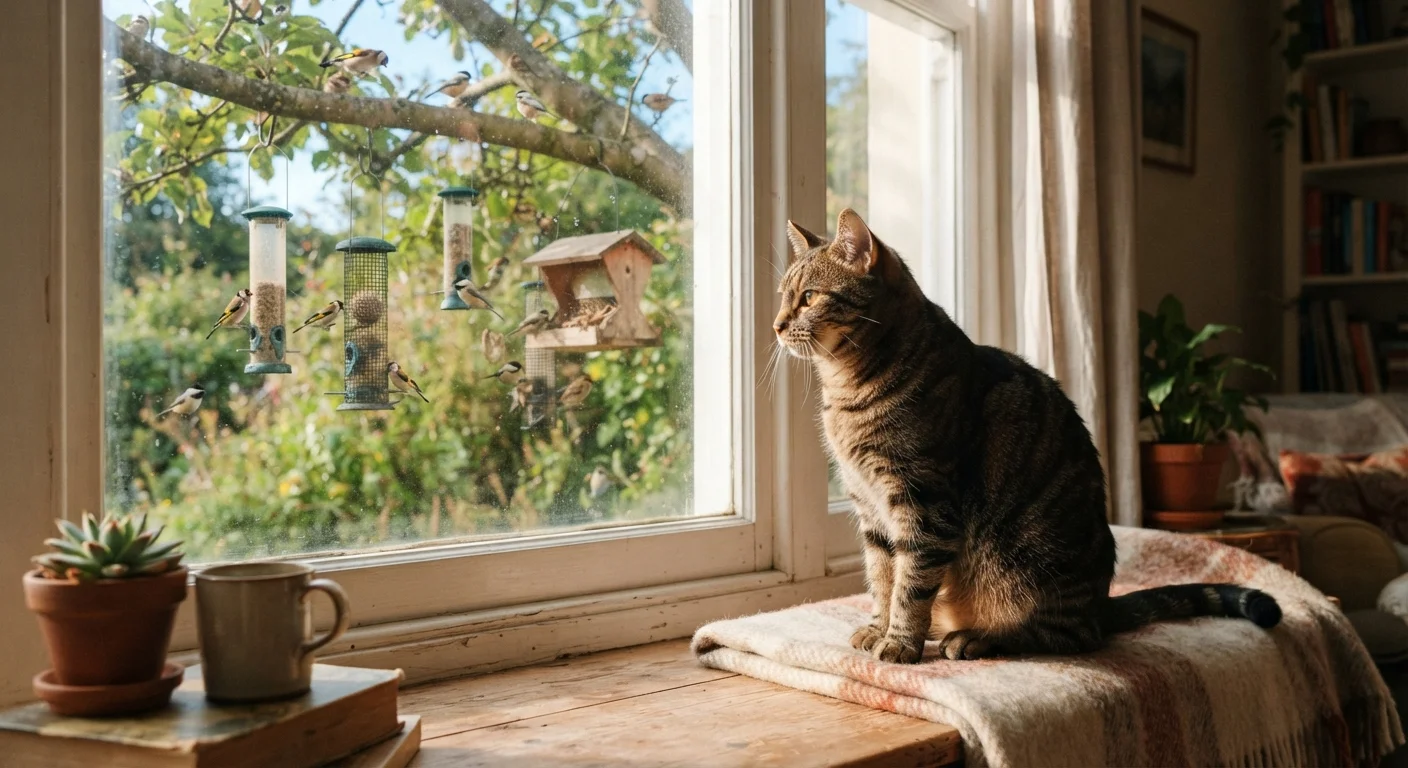
Provide consistent access to window views and outdoor sensory input
Visual and olfactory stimulation from the outdoors - birds, insects, wind movement - engages cats' senses without physical access risk. Research on cat welfare consistently identifies window access as a meaningful quality-of-life factor for indoor cats.
Incorporate unpredictability and novelty into the environment regularly
A static, predictable environment dulls curiosity over time. Small, safe changes - a new paper bag to investigate, a cardboard box left on the floor, a different texture on a scratching surface - keep exploratory behavior engaged without requiring major effort.
Putting It Into Practice: Where to Start
Owners often feel overwhelmed trying to implement enrichment all at once. In reality, starting with one or two changes and observing how your cat responds is far more effective than a whole-room overhaul. Pay attention to which enrichment opportunities your cat actually uses - not all cats want the same things, and individual preference varies by age, breed background, and personality.
If you share your home with more than one cat, enrichment planning becomes more layered. Resource distribution, vertical territory, and separate feeding stations all play a role in keeping stress low - something explored in more depth in our guide to managing multi-cat households. For senior cats, enrichment may need to be scaled for reduced mobility while still providing cognitive engagement - see care shifts after age ten for tailored guidance.
This article provides general information about feline behavioral needs and is not a substitute for professional veterinary advice. If your cat shows sudden behavioral changes, consult a licensed veterinarian or veterinary behaviorist.