
What a Scheduled Maintenance Plan Actually Is
A scheduled maintenance plan is a sequence of inspections and service tasks recommended by the vehicle's manufacturer, timed to keep critical systems operating as designed. It is not a upsell invented by dealerships - it is an engineering document developed through testing of each specific powertrain, transmission, and fluid system.
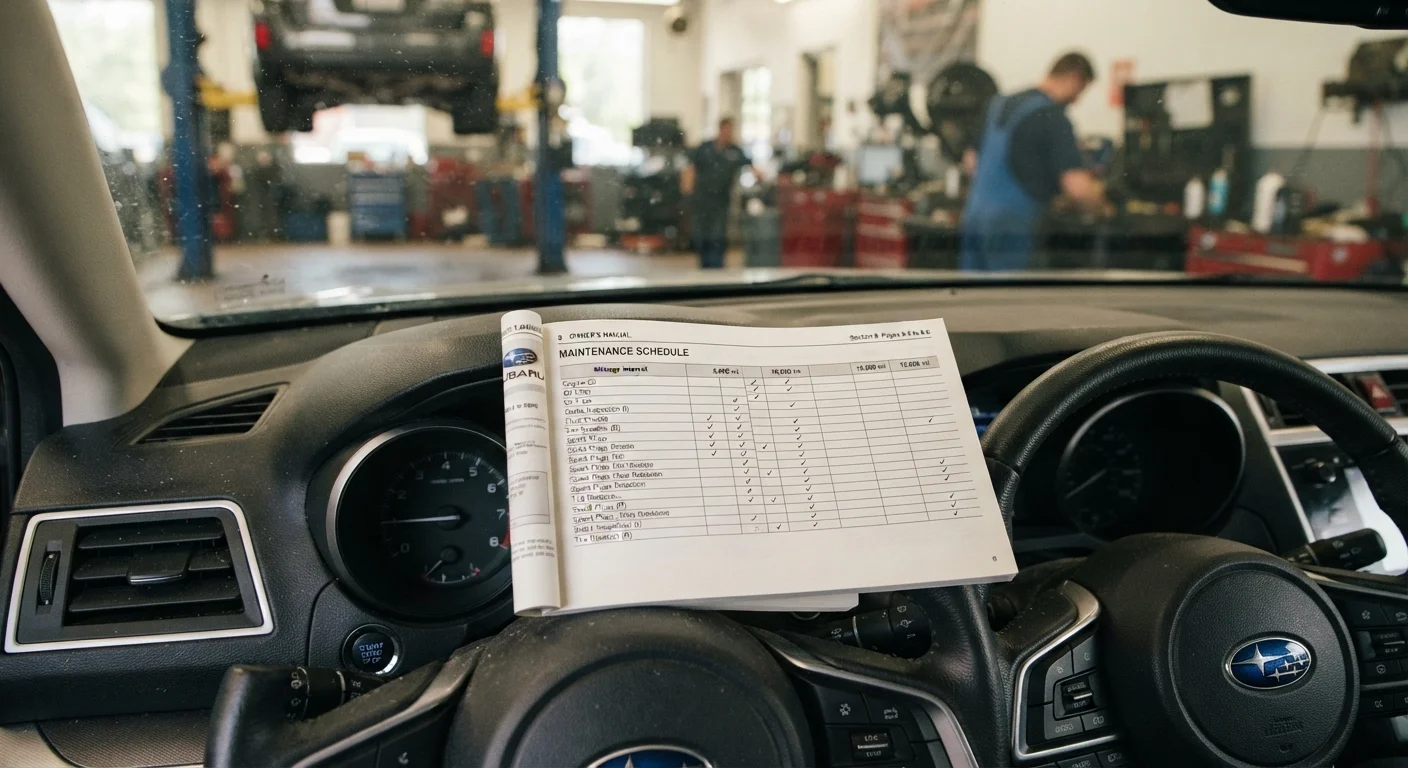
The schedule lives in your owner's manual. Every model year and engine variant can have slightly different intervals, which is why generic advice about mileage milestones isn't always reliable. Your manual is the primary reference. It covers everything from oil changes and filter replacements to spark plugs, drive belts, and coolant flushes - organized by mileage, time, or both.
Think of it the same way you might approach any long-term system with predictable wear patterns. Just as home systems have documented service lives, your vehicle's components have predictable replacement windows. Following the schedule keeps small tasks from compounding into large ones. For a broader view of vehicle care across a car's full lifespan, see Car Maintenance From First Oil Change to High Mileage.
Service interval
The mileage or time threshold at which a specific maintenance task is due, as specified by the vehicle manufacturer.
Owner's manual
The official document provided with every new vehicle that contains manufacturer-specified maintenance schedules, fluid specifications, and operating guidance.
Oil life monitor
An onboard system that estimates remaining engine oil quality based on driving patterns and conditions, alerting the driver when a change is recommended.
Severe-duty schedule
An alternative maintenance schedule with shorter intervals, designed for vehicles operated under demanding conditions such as frequent short trips, towing, or extreme climates.
Coolant flush
A service that drains the old engine coolant (antifreeze), cleans the cooling system, and refills it with fresh fluid to prevent corrosion and maintain proper engine temperature.
Deferred maintenance
Routine service tasks that have been postponed beyond their recommended intervals, often leading to accelerated wear or more expensive repairs later.
Mileage vs. Time: Why Both Clocks Are Running
Most maintenance schedules use two triggers: mileage and elapsed time. A common example is an oil change recommended at 5,000 miles or six months, whichever comes first. The logic is straightforward - fluids and materials degrade through use and through age, independently of each other.
Drivers who cover fewer miles often assume they can extend service intervals safely. In practice, motor oil breaks down chemically over time even when the vehicle sits in a garage. Coolant, brake fluid, and transmission fluid do the same. Rubber components - belts, hoses, seals - harden and crack with age regardless of mileage. The time-based trigger exists precisely for lower-mileage situations.
Conversely, high-mileage drivers in stop-and-go traffic may hit mileage thresholds well before the time interval, requiring more frequent attention. The rule is simple: whichever threshold arrives first is the one that counts.
Set a Calendar Reminder for Both Triggers
After each service visit, note the date and odometer reading and set two reminders: one for the mileage threshold and one for the time threshold. Whichever arrives first is your next service due date. This simple habit prevents both under-servicing and unnecessary early appointments.
What Standard Service Intervals Typically Cover
While specifics vary by vehicle, most maintenance schedules cluster around a few common checkpoints:
- Every service visit: Engine oil and filter, tire pressure check, visual inspection of lights and fluid levels.
- Mid-range intervals (roughly 15,000-30,000 miles): Cabin air filter, engine air filter, tire rotation, brake inspection, battery condition check.
- Longer intervals (roughly 30,000-60,000 miles): Spark plugs, coolant flush, transmission fluid, drive belts and hoses, fuel system components.
Some modern vehicles equipped with oil life monitoring systems adjust oil change recommendations dynamically based on driving data - a useful feature, but one that doesn't eliminate all other time-based services. Understanding what each service actually addresses helps you make informed decisions rather than simply reacting to a dashboard light. Our guide on decoding dashboard warning lights explains what those alerts mean and when they demand immediate action.
For a deeper look at oil specifically, understanding oil change intervals breaks down viscosity ratings and how to judge degradation.
How Driving Conditions Change the Equation
Most owner's manuals include two schedules: a standard one and a severe-duty one. Severe conditions are more common than drivers expect. Automakers generally classify the following as severe use:
- Frequent short trips under five miles - engine never fully warms up, moisture accumulates in oil
- Extended idling or heavy stop-and-go traffic
- Towing, hauling, or carrying heavy loads regularly
- Driving in extreme heat or cold climates
- Unpaved, dusty, or gravel roads
If your daily commute involves frequent short hops or urban crawling, the severe schedule likely applies - meaning shorter intervals between services. This isn't a sales tactic; it reflects the additional stress those patterns place on fluids and components.
It's also worth understanding what maintenance advice to question. Some widely repeated rules - about warm-up times, certain fluid changes, and fuel grades - are outdated or oversimplified. Common car maintenance myths explores several beliefs that may be costing drivers unnecessarily.
The Real Cost of Skipping Services
Deferred maintenance rarely produces a one-time cost equivalent to what was skipped. More often, neglecting a routine service creates a cascade. An overdue transmission fluid change, for example, can accelerate wear on internal components that a fluid exchange would have protected. Engine oil that's past its service life can form sludge, restricting lubrication to components that are costly to repair or replace.
There are also indirect costs. Incomplete service records can reduce resale value and complicate private-sale negotiations. If a vehicle is still under a manufacturer's warranty, failing to follow the prescribed schedule can complicate or void coverage for related failures - always check your specific warranty terms for the details that apply to your situation.
Deciding which services to handle yourself and which to leave to a professional is a separate but related question. Knowing where to draw the DIY line offers practical guidance on that decision. The core principle, however, is consistent: staying current on your manufacturer's schedule is the most reliable way to protect both the vehicle and your budget over time.
Skipping Services Can Affect Warranty Coverage
Manufacturer warranties generally require maintenance to be performed according to the owner's manual schedule. If a related component fails and service records don't demonstrate compliance, a warranty claim may be denied. Keep dated receipts for every service - dealer or independent shop - as documentation. Review your specific warranty terms to understand what's required.