
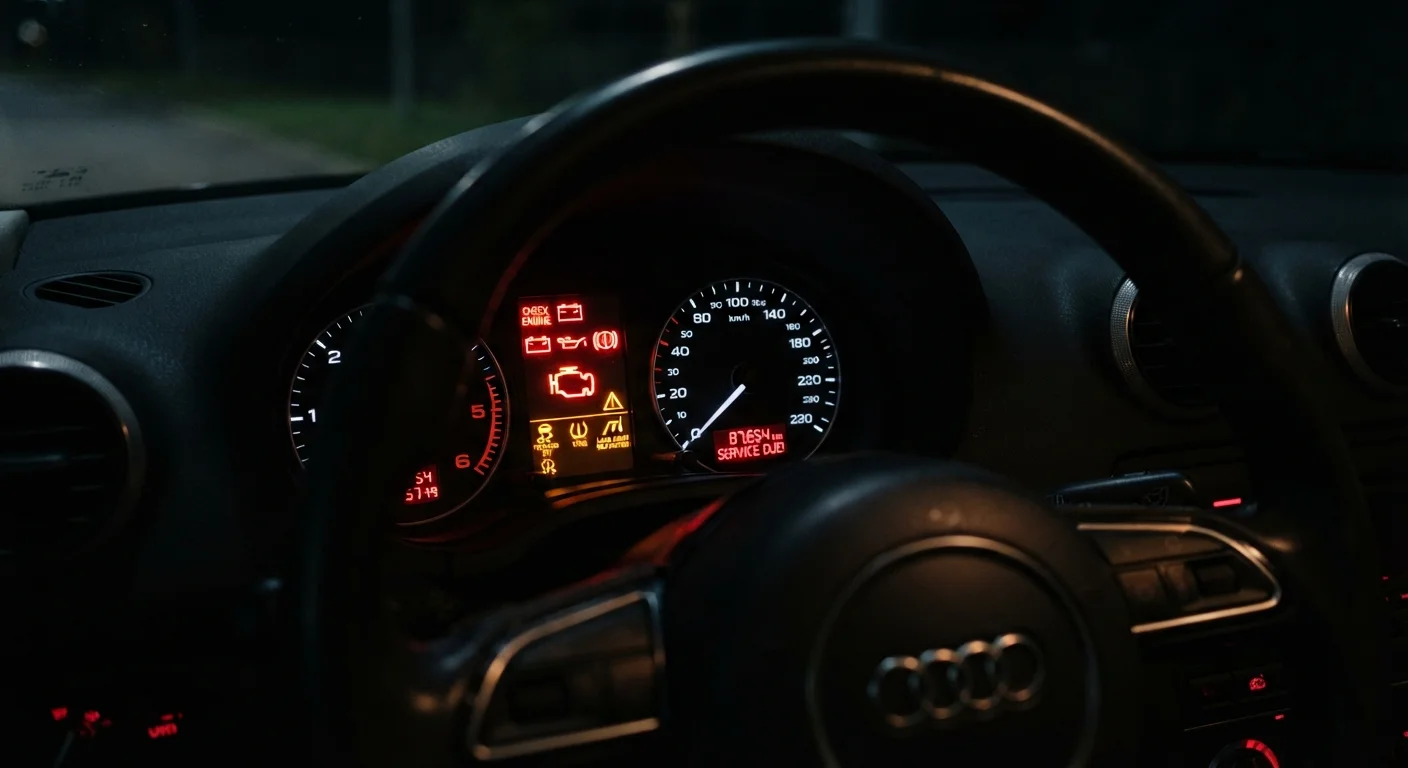
What Dashboard Warning Lights Are Telling You
Your dashboard is a communication system. When a light flickers on, it's your vehicle's onboard diagnostic system flagging a condition that needs attention - ranging from routine reminders to urgent safety alerts. The challenge is knowing which is which.
Warning lights generally fall into three categories based on color: red signals require immediate attention and often mean stop driving as soon as it's safe; amber or yellow lights indicate a condition that should be addressed soon but isn't always an emergency; and green or blue lights are informational - confirming that a system like your headlights or cruise control is active.
| Warning light colors | Red = urgent, Amber/Yellow = address soon, Green/Blue = informational |
| Flashing check engine light | Indicates active misfiring - reduce speed and seek prompt inspection |
| TPMS requirement (US) | Mandatory on all new passenger vehicles sold in the US since 2008 (NHTSA) |
| OBD-II standard applies to | All US passenger vehicles manufactured from 1996 onward (EPA/CARB) |
| Owner's manual | The definitive reference for warning light meanings specific to your vehicle |
Most modern vehicles use standardized icons defined by the Society of Automotive Engineers, but exact meanings and thresholds can vary by manufacturer. Your owner's manual is the authoritative source for your specific vehicle.
The Most Common Warning Lights Explained
Understanding the lights you're most likely to see is the practical starting point for every driver.
Check Engine (Malfunction Indicator Lamp)
This amber engine-shaped icon is one of the most misunderstood lights on any dashboard. It can signal anything from a loose gas cap to a misfiring cylinder or a failing catalytic converter. If it's solid, the issue is typically non-emergency but warrants a diagnostic scan soon. If it's flashing, reduce speed and have the vehicle inspected promptly - a flashing light often indicates active engine misfiring that can cause further damage. See our scheduled maintenance guide to understand how routine service intervals help prevent these faults.
Tire Pressure Monitoring System (TPMS)
This horseshoe-shaped icon with an exclamation point lights up when one or more tires fall below the manufacturer's recommended pressure. It can also trigger temporarily on cold mornings as air contracts in lower temperatures - a phenomenon explained in detail in our article on tire pressure and seasonal changes. Check your tire pressures manually before concluding the light is a false alarm.
Battery Warning
A red battery icon signals that the electrical charging system isn't operating correctly. This is often the alternator rather than the battery itself. Don't ignore it - electrical failure can leave you stranded quickly. Limit non-essential electrical loads and have it inspected the same day.
Oil Pressure Warning
A red oil can symbol is among the most serious warnings your vehicle can display. Low oil pressure can cause rapid, severe engine damage. Pull over safely as soon as possible, turn off the engine, and check the oil level. Do not continue driving until the cause is identified by a qualified mechanic.
Brake System Warning
A red circle with an exclamation point (or the letter "P" inside) can indicate the parking brake is engaged - or that there's a problem with the brake hydraulic system. If the parking brake is released and the light remains on, treat it as urgent. Our brake health guide covers what mechanics look for when diagnosing brake system concerns.
OBD-II
On-Board Diagnostics II - a standardized system used in vehicles sold in the US since 1996 that monitors engine and emissions performance and stores fault codes when a problem is detected.
Malfunction Indicator Lamp (MIL)
The technical name for the check engine light. It illuminates when the vehicle's computer detects a fault in the engine, transmission, or emissions control systems.
TPMS
Tire Pressure Monitoring System - a sensor-based system that alerts the driver when tire pressure drops significantly below the recommended level. Required on all new US passenger vehicles since 2008.
Alternator
A generator driven by the engine that recharges the battery and powers the vehicle's electrical systems while the engine is running. A failing alternator can trigger the battery warning light even if the battery itself is healthy.
Fault Code
A numeric or alphanumeric code stored in the vehicle's computer when a sensor or system falls outside normal parameters. Mechanics use a diagnostic scanner to retrieve and interpret these codes.
Engine Temperature Warning
A thermometer submerged in wavy lines signals engine overheating. Pull over safely, turn off the engine, and do not open the radiator cap while the engine is hot. Overheating can warp cylinder heads or cause serious internal damage in minutes.
What to Do When a Light Comes On
Context matters when a warning light appears. A single question guides your first decision: is this light red or flashing? If yes, treat it seriously. If it's amber and steady, you have more time - but not unlimited time.
A few practical steps apply in most situations:
- Check your owner's manual. Even experienced drivers benefit from the exact definition for their vehicle's make and model.
- Note any accompanying symptoms. Strange sounds, smells, vibrations, or changes in driving feel help a mechanic diagnose the problem faster.
- Get a diagnostic scan. Many auto parts retailers offer free OBD-II code reads, which identify the fault code the vehicle's computer has logged. This doesn't replace a mechanic's assessment but gives useful context.
- Don't ignore it. A warning light that disappears on its own doesn't necessarily mean the problem is resolved - it may mean the condition is intermittent.
If you're preparing for a road trip, our pre-trip vehicle readiness walkthrough can help you address potential issues before you're far from home.
This article is for general informational purposes only. Always consult a qualified mechanic for diagnosis and repair decisions specific to your vehicle.