Why Brake Health Deserves Your Attention
Brakes are among the most safety-critical systems on any vehicle, yet many drivers only think about them when something goes wrong. Unlike engine oil or tire pressure, brake wear isn't visible during a routine walk around your car - it happens gradually, beneath wheel covers, out of sight.
Understanding the basics of how brakes work and what deterioration looks and sounds like puts you in a far stronger position to protect both your safety and your wallet. Catching brake wear early typically means a straightforward pad replacement; ignoring it can mean damaged rotors, compromised calipers, and a significantly higher repair bill.
If you want a broader view of how brakes fit into overall vehicle upkeep, the complete car maintenance overview covers every major category from routine checks to long-term component care.
How Brakes Actually Wear Out
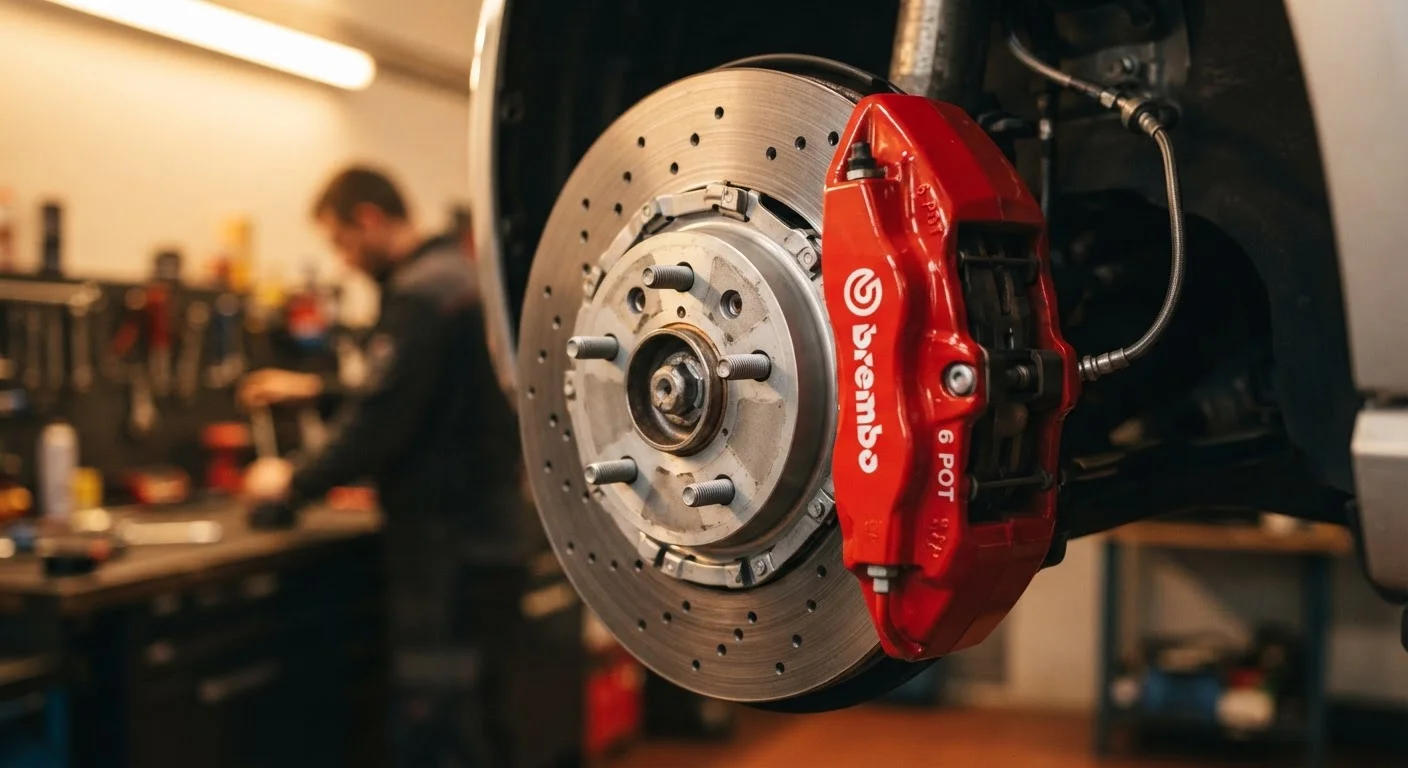
Most passenger vehicles use disc brakes on at least the front axle. When you press the pedal, hydraulic pressure forces a caliper to squeeze brake pads against a spinning metal rotor. That friction slows the wheel. The pads - made of composite friction material - are the sacrificial element designed to wear down over time so the rotor is protected.
Pad lifespan varies considerably. Aggressive city driving with frequent stops, heavily loaded vehicles, and mountainous terrain all accelerate wear. A driver commuting stop-and-go in an urban area may find their pads wear at twice the rate of someone doing mostly highway miles.
25,000-65,000 mi
Typical brake pad lifespan range
Industry estimates vary widely because driving style, vehicle weight, and terrain all influence how quickly friction material wears down.
~70%
Braking force handled by front brakes
Weight shifts forward under deceleration, so front brakes typically do the majority of the work and wear faster than rear brakes on most passenger vehicles.
Rotors don't last forever either. They develop small grooves and uneven surfaces over time. If pads are allowed to wear completely through, metal-on-metal contact can score a rotor deeply - sometimes beyond the point of resurfacing. Brake fluid, often overlooked, absorbs moisture over time and should be inspected periodically according to your manufacturer's schedule. See what manufacturer service intervals actually cover for guidance on timing.
Sounds and Sensations That Signal a Problem
Your brakes will often communicate distress before any visible sign appears. Learning to interpret these signals can help you act before a minor issue becomes a costly repair.
- High-pitched squealing: Most brake pads include a small metal indicator called a wear tab. When the pad wears thin, this tab contacts the rotor and produces a consistent squeal - a deliberate early warning.
- Grinding or growling: A harsh metallic grinding sound typically indicates the pad material is fully worn and metal is contacting the rotor. This warrants prompt attention.
- Vibration through the pedal: Pulsating or shuddering when braking often points to warped or unevenly worn rotors.
- Soft or spongy pedal: If the brake pedal sinks more than usual before engaging, air in the brake lines or low fluid could be the cause - both require immediate professional evaluation.
- Pulling to one side: Uneven braking force, sometimes caused by a sticking caliper or uneven pad wear, can cause the vehicle to drift during braking.
When to Stop Driving Immediately
A grinding noise that persists through every stop, a brake pedal that sinks to the floor, or a sudden loss of braking response are situations where continuing to drive is unsafe. Pull over when it is safe to do so and arrange for the vehicle to be inspected before driving it again. These symptoms can indicate imminent brake failure.
None of these symptoms should be ignored or monitored indefinitely. When in doubt, have a qualified mechanic inspect the system.
What a Professional Brake Inspection Covers
A thorough brake inspection from a qualified mechanic goes well beyond a visual glance at the wheels. Here's what a proper assessment typically includes:
Measure pad thickness with a dedicated gauge or visual inspection against the minimum specification
Manufacturers specify a minimum pad thickness - typically around 2-3 mm - below which stopping performance degrades and rotor damage becomes likely. Knowing the exact measurement lets you plan a replacement before it becomes urgent.
Check rotor thickness and surface condition against the manufacturer's discard specification
Rotors have a minimum thickness stamped on the rotor itself or listed in the service manual. A rotor that has worn or been machined past this limit cannot safely absorb braking heat and must be replaced rather than resurfaced.
Inspect brake fluid condition and test for moisture contamination
Brake fluid is hygroscopic - it absorbs water from the atmosphere over time. Excess moisture lowers the fluid's boiling point, increasing the risk of brake fade under heavy use. Contaminated fluid also promotes internal corrosion.
Evaluate caliper operation and slide pin condition
Calipers must move freely to apply and release evenly. Seized slide pins or sticking calipers cause uneven pad wear, pulling during braking, and premature component failure on one side of the axle.
Inspect brake lines and hoses for cracks, corrosion, or leaks
Rubber brake hoses degrade with age and can develop internal restrictions or external cracking that compromises hydraulic pressure. Metal lines on older vehicles are susceptible to corrosion, particularly in regions where road salt is used.
Before any long trip, it's worth verifying your brakes as part of a broader check. The vehicle readiness walkthrough outlines what to review before hitting the highway.
Habits That Help Your Brakes Last Longer
While wear is inevitable, certain driving habits significantly extend brake life. Anticipating traffic flow and coasting to a natural slowdown rather than braking hard at the last moment reduces the heat and friction your brakes must manage. Maintaining a safe following distance gives you more time and space to decelerate gradually.
Avoid "riding" the brakes - keeping light but continuous pressure on the pedal during descents, for example, generates sustained heat that degrades pads and rotors faster than short, firm stops. On steep grades, downshifting (in manual or certain automatic vehicles) can reduce the burden on the brakes.
Drivers who rarely use their vehicles face a different challenge: corrosion. Rotors can develop surface rust when a car sits unused, and brake fluid absorbs moisture over time regardless of mileage. The guide to maintaining low-mileage vehicles covers how idle time affects key systems.
This article is for general informational purposes only. Brake work involves safety-critical systems - always consult a qualified mechanic for inspection, diagnosis, and repair decisions specific to your vehicle.