What Each Filter Actually Does
Your vehicle contains two separate air filtration systems, and they have nothing to do with each other beyond the word "air." Understanding their distinct roles is the fastest way to stop confusing them.
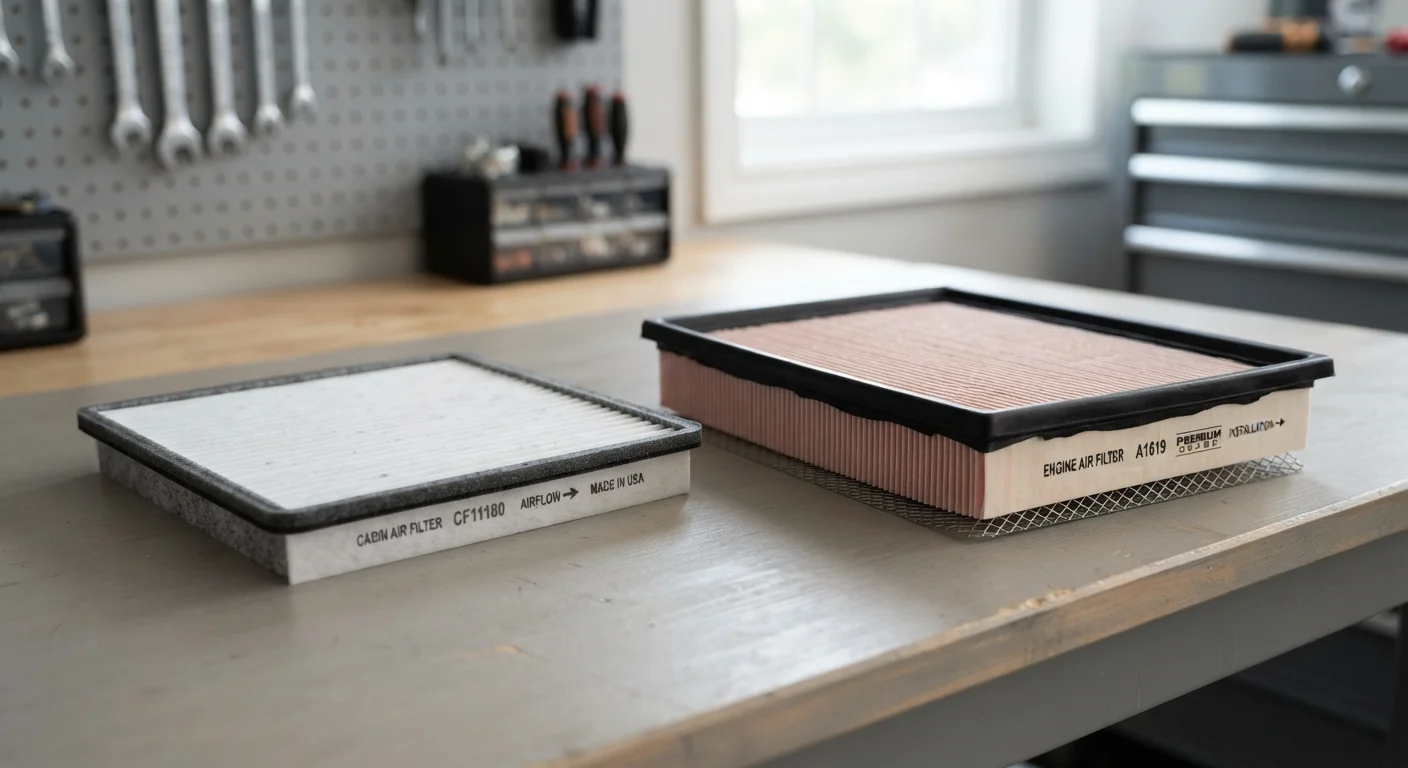
The cabin air filter sits inside the HVAC (heating, ventilation, and air conditioning) system of your car - most commonly behind the glove box or under the dashboard. Its sole job is to clean the air that flows through your vents and into the passenger space where you and your passengers breathe. It traps dust, pollen, mold spores, exhaust particles, and other airborne contaminants before they reach the interior. If you're curious how similar filtration logic applies at home, see our breakdown of how HVAC systems manage airflow.
The engine air filter, by contrast, is located in the engine bay - typically inside a plastic housing connected to the intake duct. It filters the air that the engine pulls in to mix with fuel for combustion. Engines need a precise, clean supply of air to run efficiently; a dirty filter restricts that flow and forces the engine to work harder.
| Criterion | Cabin Air Filter | Engine Air Filter |
|---|---|---|
| Location | Behind glove box or under dash | Engine bay intake housing |
| What it filters | Air entering the passenger cabin | Air entering the engine for combustion |
| Failure symptoms | Weak airflow, musty odors, more dust | Poor fuel economy, sluggish acceleration |
| Typical replacement interval | 15,000-25,000 miles | 15,000-30,000 miles |
| DIY difficulty | Generally straightforward | Generally straightforward |
| Primary beneficiary | Passenger health and comfort | Engine performance and longevity |
Signs Each Filter Needs Replacing
The symptoms of a failing cabin filter and a failing engine air filter are noticeably different, which makes diagnosis straightforward once you know what to look for.
Cabin Air Filter Warning Signs
- Reduced or weak airflow from dashboard vents even at high fan settings
- Musty, stale, or unpleasant odors when the heater or AC is running
- Increased dust accumulation on interior surfaces
- Allergy symptoms worsening during drives
Engine Air Filter Warning Signs
- Noticeable drop in fuel economy over time
- Sluggish throttle response or reduced acceleration
- Engine running rough at idle in severe cases
- Check engine light illuminating (though this has many possible causes)
15,000-25,000 mi
Typical cabin filter replacement interval
General industry guidance; always verify with your vehicle's owner's manual for model-specific recommendations.
Up to 30,000 mi
Typical engine filter service interval
Vehicles driven in dusty or rural conditions may require more frequent inspection and replacement than this general benchmark suggests.
Neither filter gives dramatic, sudden warning signs in most cases - gradual degradation is the norm. Visual inspection is the most reliable method: a filter that started white or light gray and is now dark gray or black with visible debris is overdue for replacement.
Replacement Intervals and Practical Guidance
Replacement intervals vary by vehicle, driving conditions, and filter type, so your owner's manual is always the authoritative reference. That said, general industry guidance provides a useful starting point.
Cabin air filters are commonly replaced every 15,000 to 25,000 miles, or roughly once a year for average drivers. Drivers in high-pollen regions or urban environments with heavy exhaust exposure may find they need replacement more frequently. Engine air filters are typically serviced every 15,000 to 30,000 miles, though vehicles driven on unpaved or dusty roads may require more frequent checks.
Check Your Owner's Manual First
Manufacturer recommendations for both filters are listed in your vehicle's owner's manual under the maintenance schedule section. These specifications account for your engine type, climate control design, and anticipated operating conditions. General mileage guidelines are a useful reference, but your manual takes priority. If you no longer have the physical manual, most manufacturers provide digital versions through their official websites.
Both filters are among the more accessible DIY maintenance tasks for many vehicles - the cabin filter often requires only removing the glove box panel, and the engine filter typically involves unclipping a housing. However, difficulty varies significantly by vehicle model, and if you're uncertain, a qualified mechanic can inspect and replace either filter quickly during a routine service visit.
This article is for general informational purposes only and is not a substitute for advice from a qualified automotive professional familiar with your specific vehicle.