The Science Behind the Pressure Drop
Air behaves predictably under temperature change: it contracts when cold and expands when warm. Inside a sealed tire, this means the PSI reading rises and falls with the thermometer - regardless of whether any air has actually escaped. This is basic gas behavior, not a malfunction.
The practical effect is measurable. A tire properly inflated at 35 PSI on a 70°F afternoon may read closer to 32 PSI on a 40°F morning. That's not a slow leak - it's physics. Repeat temperature drops compound the effect, and a tire that starts the season slightly low can fall well below safe operating range by midwinter.
1 PSI
Pressure lost per 10°F temperature drop
This widely cited rule of thumb reflects the behavior of air inside sealed tires as ambient temperature decreases.
~25%
US vehicles estimated to have at least one under-inflated tire
NHTSA data has consistently shown a significant portion of passenger vehicles on US roads operate with low tire pressure.
2008
Year TPMS became federally required in US vehicles
Federal regulations mandated Tire Pressure Monitoring Systems on all new passenger cars and light trucks sold in the US from model year 2008 onward.
What Happens When Tires Run Low
Driving on under-inflated tires is more consequential than many drivers realize. When a tire lacks sufficient pressure, more of its sidewall flexes with each rotation. That flexing generates heat, accelerates wear along the outer tread edges, and reduces the tire's ability to respond to steering inputs quickly.
Fuel efficiency also takes a hit. Under-inflated tires create more rolling resistance, meaning your engine has to work harder to maintain speed. The U.S. Department of Energy has noted that properly inflated tires can improve gas mileage, though actual savings vary by vehicle and driving conditions.
Tire wear patterns and rotation schedules interact closely with inflation - uneven pressure across your four tires can undermine even a well-maintained alignment.
Check Pressure Before You Drive
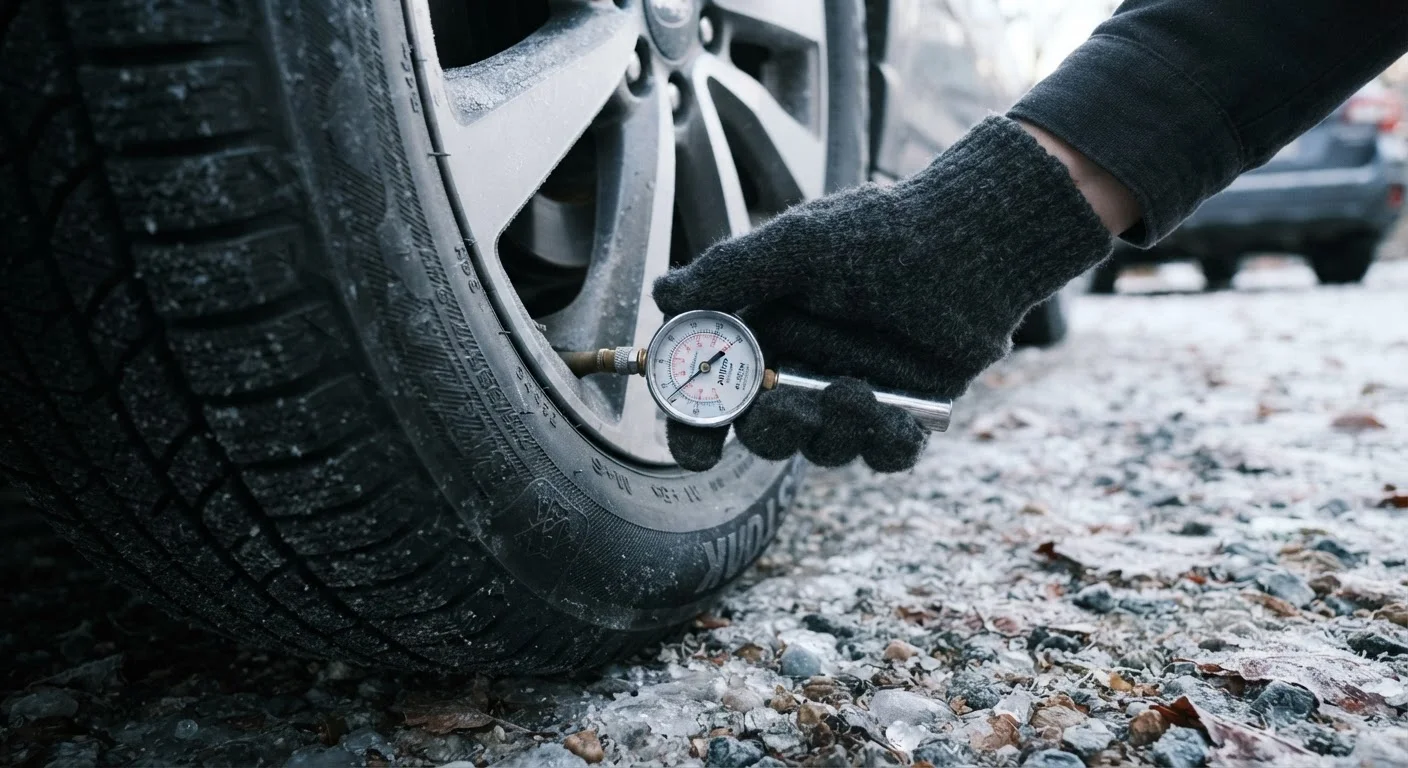
Always measure tire pressure when tires are cold - before the car has been driven or after it has been parked for at least one hour. Driving even a short distance raises internal tire temperature and pressure, which will give you a falsely high reading and cause you to under-inflate if you then add air to reach your target PSI.
How to Check and Adjust Pressure Correctly
Accurate readings require a cold tire - one that hasn't been driven for at least an hour, or has traveled less than a mile at low speed. Driving heats the air inside, temporarily inflating PSI and giving you a falsely high reading.
To check pressure, remove the valve cap, press a pressure gauge firmly onto the valve stem, and read the result. Compare that number to the PSI listed on the sticker inside your driver's door jamb. Do not use the number on the tire sidewall - that figure is a maximum rating, not the recommended operating pressure.
If pressure is low, add air in short bursts and recheck after each. If it's too high, release air using the small pin inside the valve stem. Many gas stations and auto parts stores have air pumps available, and a quality handheld gauge is an inexpensive, worthwhile tool to keep in your vehicle.
For broader context on vehicle upkeep, your vehicle's scheduled maintenance plan typically includes tire pressure inspection at service intervals.
Understanding Your TPMS Warning Light
Most vehicles sold in the US since 2008 are equipped with a Tire Pressure Monitoring System (TPMS), which alerts you when one or more tires drop significantly below the recommended PSI. The warning light - usually a cross-section of a tire with an exclamation mark - is a helpful prompt, but it only triggers once pressure is already notably low.
A cold-weather TPMS alert that clears after you drive a few miles (once the tires warm up) is a sign your pressure is borderline. This pattern warrants a proper pressure check and top-up rather than ignoring it. Understanding what dashboard warning lights actually mean can help you respond appropriately rather than guessing.
Note that TPMS does not replace manual checks. The system may not detect gradual, slow leaks until pressure is well below optimal, so a monthly visual and gauge check remains the most reliable habit.