Why the DIY vs. Shop Decision Matters
Every driver eventually faces the question: tackle this yourself, or hand it over to a professional? The answer shapes both your wallet and your safety. Routine maintenance costs add up over a vehicle's life, and there's genuine value in handling straightforward tasks at home. But the automotive landscape has changed significantly - modern vehicles are increasingly software-driven, with tightly integrated systems that don't always respond well to driveway guesswork.
The goal isn't to discourage home mechanics. It's to help you make an honest assessment before you start. As the common myths around car maintenance show, confident assumptions about what's easy or unnecessary can quietly lead to costly outcomes. A clear-eyed framework is worth more than a rule of thumb.
Tasks Most Confident Home Mechanics Can Handle
A meaningful category of maintenance jobs requires only basic tools, patience, and a reliable how-to resource. These include:
- Engine air filter replacement: Typically a matter of unclipping a housing, swapping the filter, and re-securing it. No special tools required.
- Windshield wiper blades: Straightforward on most vehicles, with instructions often printed on the packaging.
- Cabin air filter: Usually accessible behind the glove box or under the dashboard. Consult your owner's manual for the exact location.
- Battery terminal cleaning: A wire brush and appropriate cleaning solution handle corrosion buildup. Disconnecting the battery requires care and awareness that it can reset certain electronics.
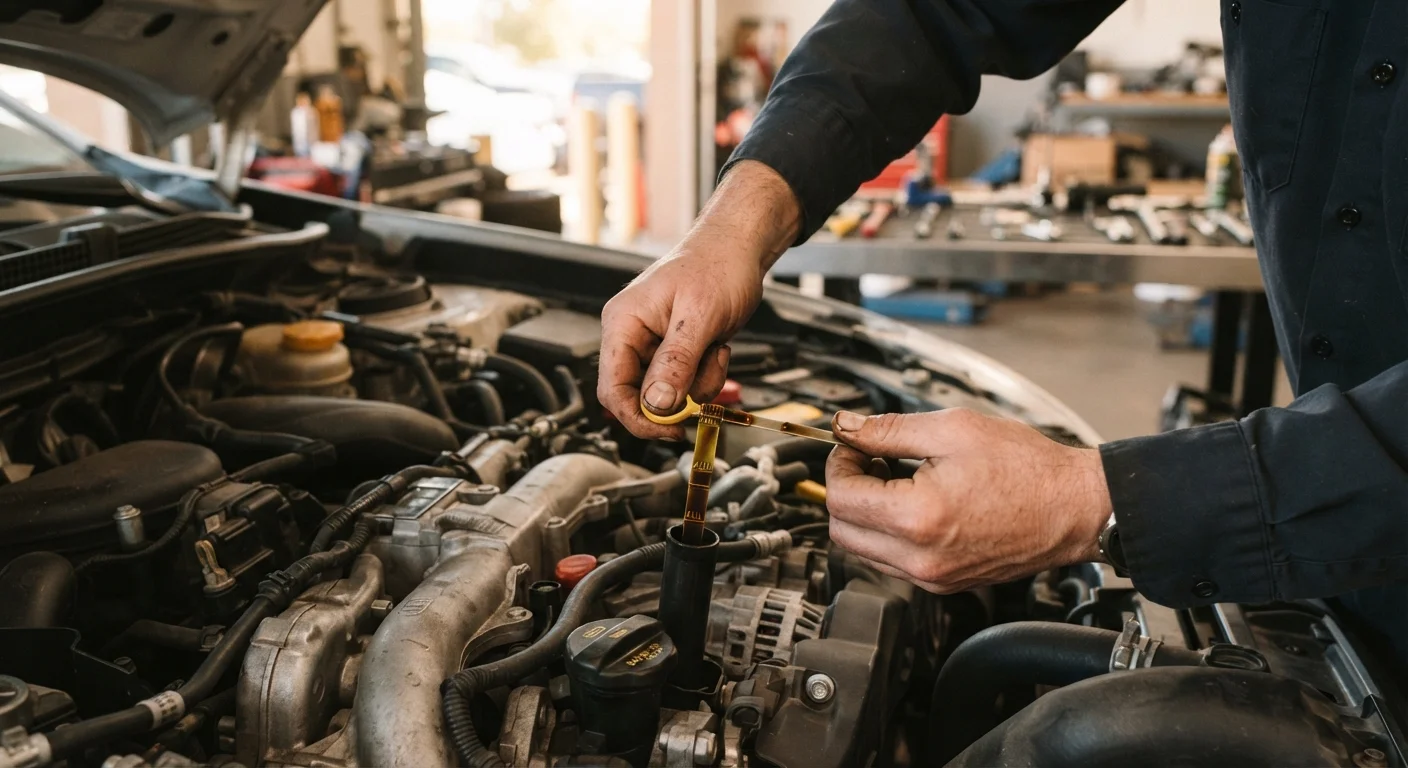
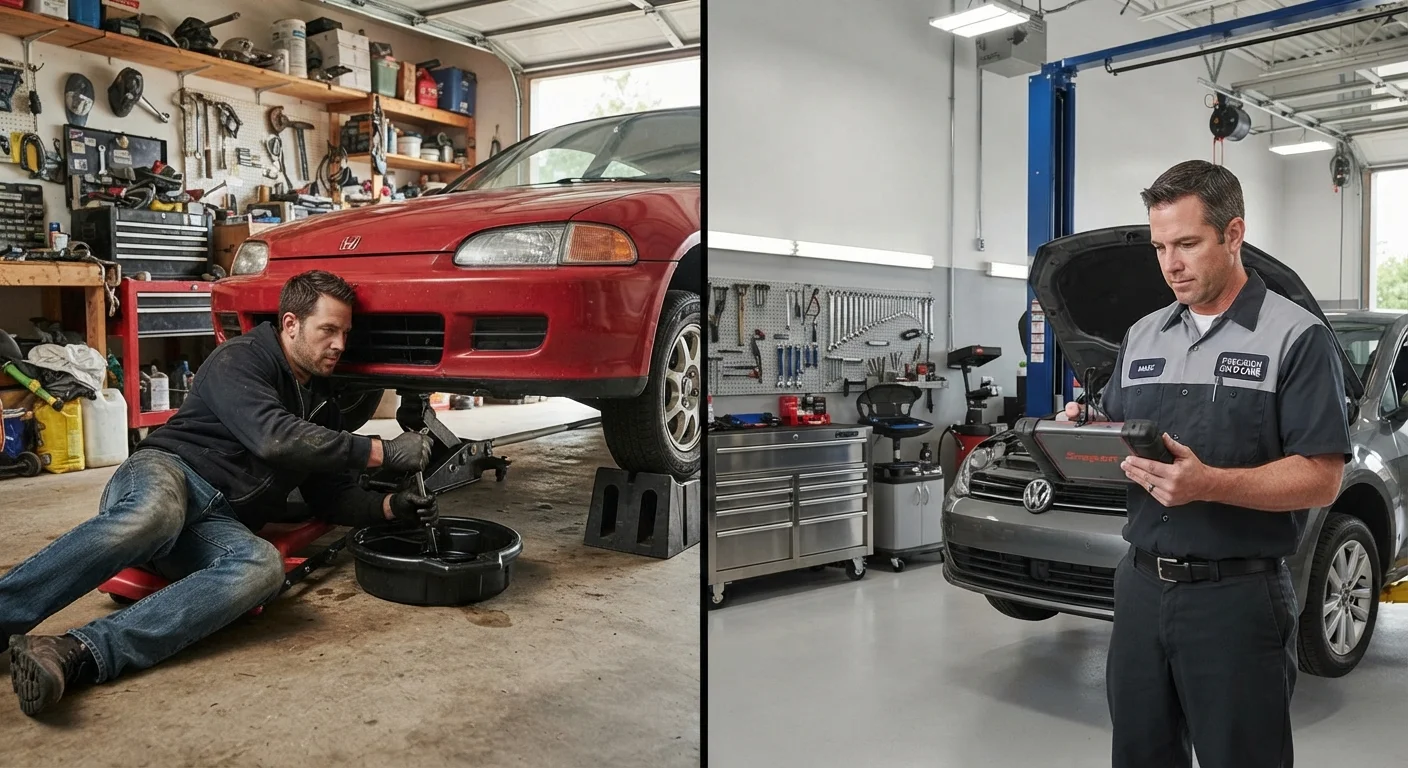
- Oil and filter changes: Manageable for those with the right tools (drain pan, filter wrench, jack stands) and who dispose of used oil properly at a recycling center.
- Tire pressure checks and rotation: Pressure is simple with an inexpensive gauge. Rotation requires a floor jack and jack stands used correctly - never rely on a scissor jack for under-vehicle work.
These tasks align well with your vehicle's scheduled maintenance intervals, and completing them at home can reduce routine costs without compromising safety when done carefully.
Start with Your Owner's Manual
Before attempting any maintenance task, check your vehicle's owner's manual for the manufacturer's specifications, torque values, and recommended service intervals. The manual also identifies tasks that may void your warranty if performed by non-certified technicians - worth knowing before you start.
Where DIY Becomes Genuinely Risky
Other jobs look approachable in tutorial videos but carry real consequences if something goes wrong. The following categories consistently belong in a shop for most drivers:
- Brake system work: Pad replacement may seem simple, but brake caliper, rotor, and line repairs involve safety-critical tolerances. An error here directly affects your ability to stop.
- Suspension and steering components: Worn ball joints, tie rods, and control arms affect vehicle stability. Improper installation can cause loss of control at speed.
- Timing belt or chain service: Requires precise alignment and often specialized tools. Errors can cause catastrophic engine damage.
- Airbag and SRS (Supplemental Restraint System) components: These systems can deploy accidentally during repairs, causing serious injury. This work requires professional handling, always.
- Advanced diagnostics: A check engine light can reflect dozens of possible causes. A scan tool that reads generic codes is not the same as the factory-level diagnostic equipment shops use to accurately pinpoint the source.
Never Work Under a Vehicle on a Floor Jack Alone
A hydraulic floor jack is for lifting - not for supporting a vehicle while you work beneath it. Always use rated jack stands placed at manufacturer-specified lift points before getting under any vehicle. This is a non-negotiable safety step, regardless of how quick the job seems.
Vehicles driven in irregular patterns - parked for weeks at a time, for instance - can develop issues that are easy to misread. The guide on maintaining low-mileage vehicles covers some of those nuances.
How to Make the Call on Any Given Job
A practical framework for deciding where to draw the line:
- What happens if it goes wrong? If a mistake primarily means inconvenience or a re-do, the risk profile is lower. If it could affect braking, steering, or structural integrity, the margin for error disappears.
- Do you have the actual tools required? Not approximations - the specific tools. A torque wrench isn't optional when specifications exist for a reason.
- Can you accurately diagnose the problem first? Replacing parts without a confirmed diagnosis is expensive guesswork. If you're uncertain what's actually wrong, a diagnostic visit often pays for itself.
- Does your vehicle have systems that complicate this? ADAS (Advanced Driver Assistance Systems), electronic parking brakes, and continuously variable transmissions all add complexity that affects how standard repairs are performed.
Being honest about these questions is more valuable than confidence alone. The myths surrounding routine car care often persist precisely because the consequences of being wrong aren't immediate.
Getting the Most from a Shop Visit
When you do take the vehicle to a professional, a little preparation goes a long way. Note when symptoms occur - at what speed, under what conditions, whether they're consistent or intermittent. Write it down. Mechanics diagnose more accurately with detailed context than with a vague description.
Ask for a written estimate before work begins, and request that any removed parts be returned to you if you'd like to inspect them. Understand what the shop's warranty on labor and parts looks like. These aren't adversarial questions - they're standard practice at reputable shops.
If you're weighing a significant repair on an older vehicle, the calculus sometimes shifts toward replacement rather than repair. Understanding your vehicle's full maintenance history, as outlined in our guide to scheduled maintenance plans, helps you make that judgment with real information rather than estimates.
This article provides general educational information about vehicle maintenance practices. Always consult a qualified mechanic for repairs involving safety-critical systems. Proper tool use and safety precautions are essential for any DIY automotive work.