
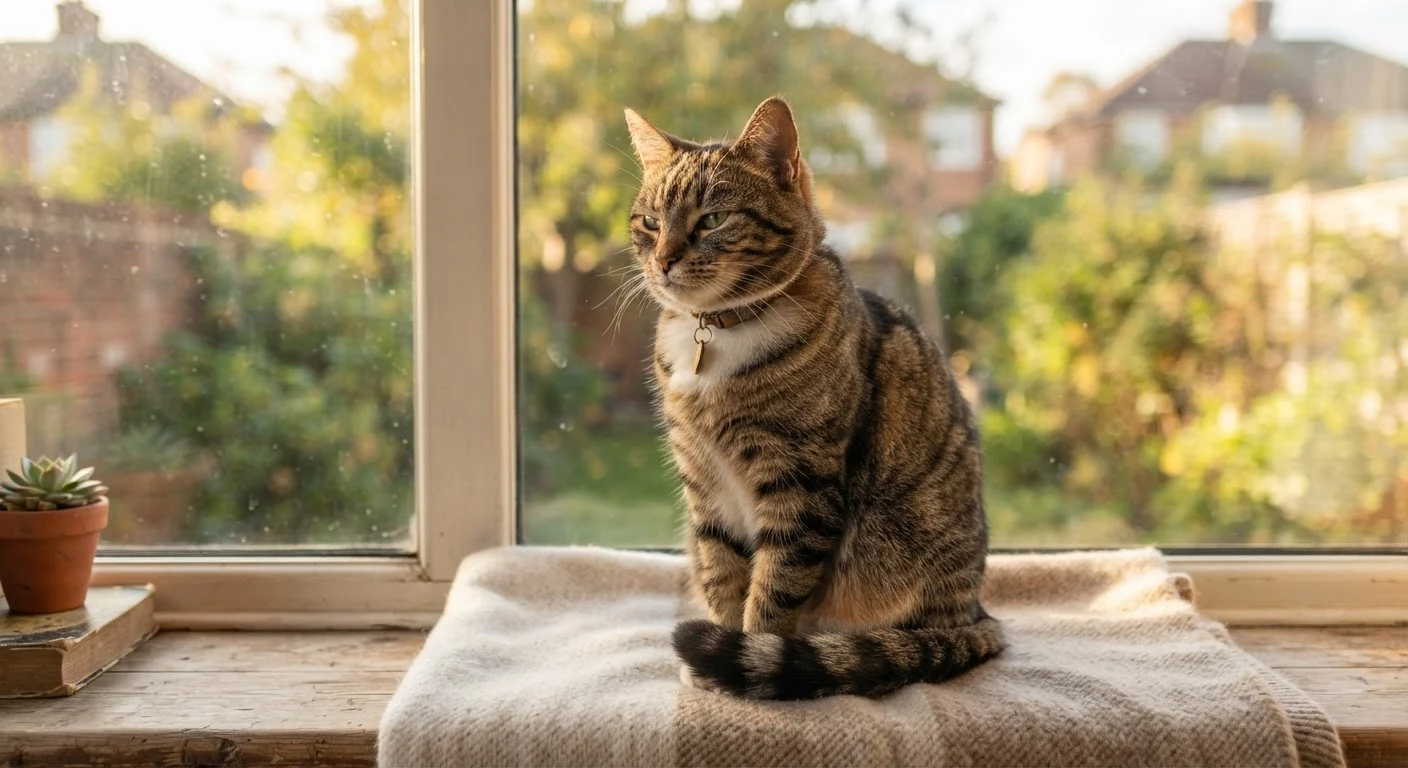
Why Cats Rely on Body Language
Cats are not naturally vocal communicators with each other - most of their meowing is actually directed at humans, developed over millennia of domestication. Between cats, and often with us, the real conversation happens through posture, tail position, ear angle, eye contact, and whisker placement. Learning to read these signals helps you respond to your cat's actual emotional state rather than guessing.
It's worth noting that individual cats vary. A signal that means mild curiosity in one cat may indicate mild anxiety in another, especially depending on breed, history, and personality. Use this guide as a foundation, then layer in what you know about your specific animal. For a look at how feline signals differ from what many people assume, see common cat myths debunked.
| Primary communication mode (cat-to-cat) | Body language and scent marking |
| Slow blink meaning | Affiliative trust signal - not sleepiness (Journal of Scientific Reports, 2020) |
| Tail-up greeting | Confidence and friendly intent |
| Belly exposure | Deep comfort, not necessarily a touch invitation |
| Whiskers pulled back | Fear or aggression - not curiosity |
| Hissing function | Last-resort warning before escalation |
Decoding the Core Signals: Tail, Ears, Eyes, and Posture
Tail Positions
- Tail raised high: Confidence and friendliness. A cat approaching with a fully upright tail is signaling openness to interaction.
- Tail curved at the tip: A relaxed, sociable greeting - often seen when cats approach familiar humans.
- Tail puffed (piloerection): Fear or extreme agitation. The cat is trying to appear larger in response to a perceived threat.
- Tail tucked low or beneath body: Submission, anxiety, or discomfort.
- Tail lashing side to side: Irritation or overstimulation - not playfulness. Back off when you see this.
Ear Positions
- Ears forward and upright: Engaged, alert, and curious.
- Ears slightly rotated outward: Mild uncertainty or mild anxiety.
- Ears flattened sideways ("airplane ears"): Fear or defensiveness.
- Ears pinned flat back: Aggression or intense fear - avoid direct engagement.
Eyes and Slow Blinking
Dilated pupils in a calm environment can indicate excitement or anxiety - context matters. Constricted pupils in a tense cat often signal agitation. The slow blink - where a cat half-closes its eyes and blinks slowly - is a well-documented affiliative signal. Returning a slow blink to your cat is a recognized way to signal mutual trust.
Body Posture
A cat exposing its belly is not always an invitation to touch - it's typically a sign of deep comfort and trust, but many cats will swat if you take the bait. Crouching low with a tucked head signals fear or pain. An arched back paired with piloerection is a classic defensive display.
Piloerection
The involuntary raising of fur along the back and tail, making the cat appear larger. It occurs in response to fear or intense agitation and is controlled by the autonomic nervous system.
Affiliative behavior
Friendly, bonding-oriented actions between individuals - such as slow blinking, head bunting, or allogrooming. These signals indicate social comfort and trust.
Vibrissae
The technical term for whiskers - long, thick sensory hairs embedded in the cat's muzzle, cheeks, and above the eyes that help detect nearby objects and reflect emotional state.
Displacement behavior
An out-of-context action - such as grooming mid-conflict - that indicates internal conflict or stress. It can be easy to misread as relaxation when it is actually a stress signal.
Overstimulation
A state in which a cat has received more tactile or social input than it can comfortably process, often leading to sudden biting or swatting during what seemed like a positive interaction.
Whiskers, Vocalizations, and Combined Signals
Whiskers (vibrissae) extend the body-language picture. Whiskers fanned forward indicate interest or mild excitement. Whiskers pulled tightly back against the face signal fear or aggression. Because whiskers are sensitive proprioceptive organs, their position tracks closely with the cat's emotional state.
Vocalizations layer onto body language rather than replacing it. A chirping trill paired with a raised tail is pure friendliness. A low growl with flattened ears and a puffed tail is unambiguous: give this cat space. Hissing is a last-resort warning before escalation - it should prompt you to remove the stressor, not the cat.
Reading clusters of signals together is far more reliable than fixating on a single cue. A cat with slightly narrowed eyes, loose posture, and a gently curled tail is almost certainly relaxed. The same narrowed eyes paired with a rigid body and twitching tail tell a different story entirely. If you notice persistent stress signals that don't resolve, signs of stress in cats covers the household factors that commonly trigger chronic anxiety. In multi-cat homes, body-language literacy is especially important - see managing multi-cat households for guidance on territory and conflict dynamics.
Body language also shows up in unexpected behaviors. A cat knocking objects off a surface may be signaling boredom or attention-seeking - what it actually means when cats knock things over explains the behavioral context. Similarly, avoidance behaviors around the litter box carry their own distinct signals - litter box problems and their behavioral signals can help you interpret what your cat may be communicating.