Why Feline Stress Is Easy to Miss
Cats are instinctively wired to mask vulnerability. In the wild, displaying weakness invites predation, so domestic cats often suppress outward signs of distress until stress has become significant. This makes recognizing the early signals an essential skill for any cat owner.
Unlike dogs, who tend to externalize anxiety in obvious ways, cats internalize. A stressed cat may simply withdraw, eat less, or groom compulsively - behaviors that are easy to attribute to personality quirks rather than a welfare concern. Understanding what to look for, and which household conditions most commonly drive it, puts owners in a much stronger position to respond.
Stress vs. Chronic Stress in Cats
A single stressful event - a vet visit, a thunderstorm, a new guest - typically resolves within hours to a day as the cat recalibrates. Chronic stress is different: it persists or recurs frequently without resolution, and its effects accumulate over time. The distinction matters because the intervention required is fundamentally different. Situational stress often needs only patience; chronic stress typically requires an environmental audit and, in many cases, veterinary input.
Common Signs of Stress in Cats
Changes in litter box behavior
One of the earliest and most reliable stress indicators is a shift in elimination habits. A cat that begins urinating outside the litter box, straining, or visiting the box more frequently than usual may be responding to psychological stress as much as a physical issue. Stress-related cystitis - inflammation of the bladder without an infectious cause - is well-documented in cats and is directly linked to environmental pressures. Any sudden change in litter box use warrants a vet visit to rule out medical causes first.
Stress-related bladder inflammation in cats has no infectious cause - environment is the driver.
Over-grooming or neglecting grooming entirely
Grooming sits at both extremes of the stress spectrum. Some cats groom compulsively when anxious, creating bald patches or skin irritation - particularly along the belly, inner thighs, or forelegs. Others become so withdrawn that they stop grooming altogether, leading to a dull, matted coat. Both patterns represent a departure from baseline and are worth noting. Compulsive grooming, sometimes called psychogenic alopecia, is typically a displacement behavior triggered by chronic stress.
Compulsive grooming is a displacement behavior - the cat is redirecting anxiety into a controllable action.
Hiding more than usual
Retreating to enclosed, elevated, or dark spaces is a natural feline coping mechanism. Occasional hiding is normal, especially after a disruption like a visitor or a loud noise. However, a cat that begins spending the majority of its waking hours hidden, rarely emerging for food or interaction, is signaling sustained distress. The trigger is often persistent rather than acute - a new pet, ongoing construction noise, or a household dynamic the cat cannot escape.
A cat that hides persistently is signaling sustained distress, not simply preferring solitude.
Appetite shifts - eating more or less
Stress disrupts appetite regulation in cats just as it does in many mammals. Some cats stop eating or eat noticeably less, while others overeat as a coping response. Reduced appetite is the more common pattern and can escalate to a dangerous condition called hepatic lipidosis (fatty liver disease) if a cat stops eating entirely for more than a day or two. Any significant change in eating behavior that lasts longer than 24 hours should be evaluated by a veterinarian.
A cat refusing food for more than a day needs veterinary attention - the health risks escalate quickly.
Increased vocalization or unusual silence
Some stressed cats become uncharacteristically vocal - yowling, crying, or vocalizing at unusual times, particularly at night. Others go in the opposite direction, becoming quiet and unresponsive in a way that reads as depression. Both can indicate that the cat's emotional baseline has shifted. Context matters here: a cat that begins vocalizing after a household change (a new baby, a moved piece of furniture, a relocated litter box) is likely communicating distress tied to that specific disruption.
Sudden changes in how much or how little a cat vocalizes are worth tracking alongside other stress signs.
Aggression toward people or other pets
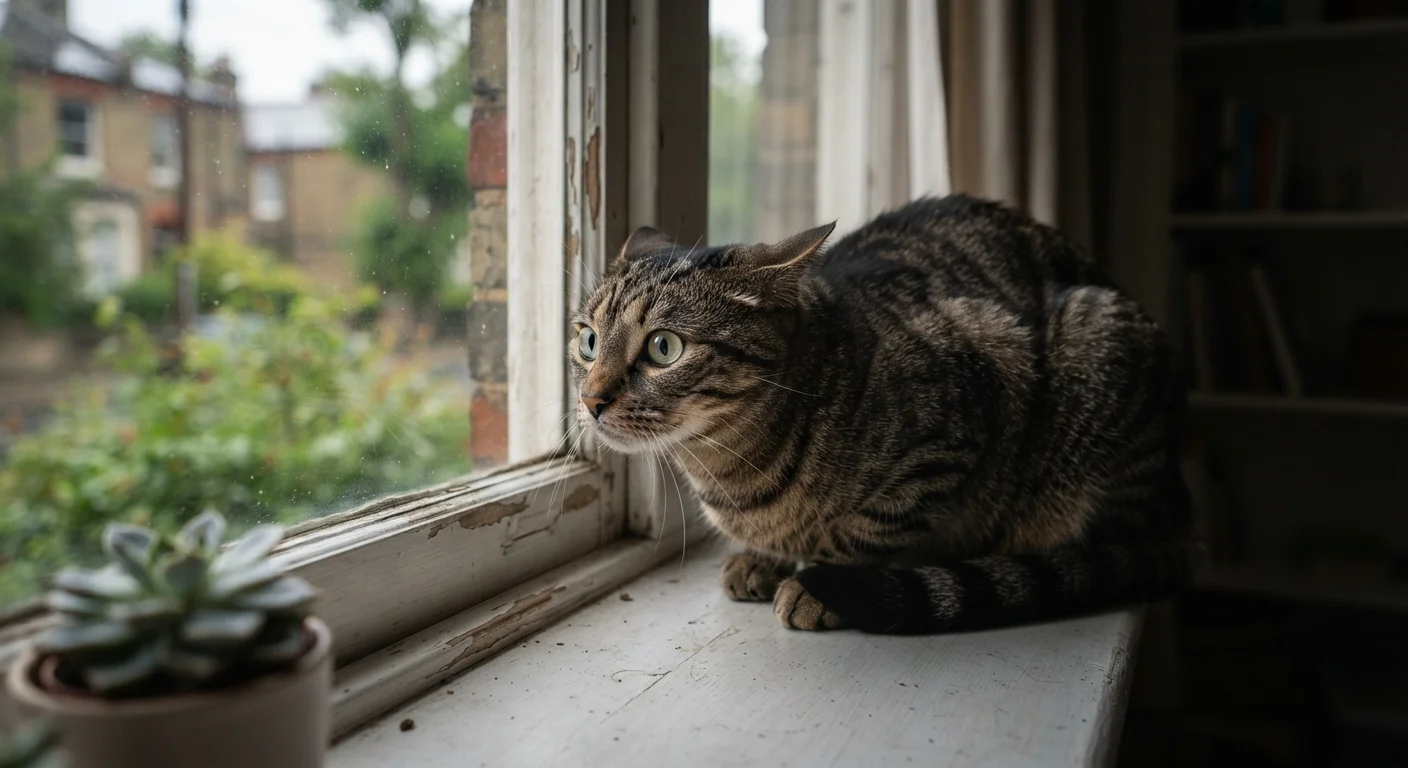
A cat that redirects stress into aggression - hissing, swatting, biting without clear provocation - is often operating from a state of chronic arousal. This is particularly common in multi-cat households where resources like food stations, litter boxes, or resting areas are shared in ways that create competition. Redirected aggression (where a cat attacks a person or companion pet after being startled by something it cannot access, like an outdoor cat through a window) is another common and often misunderstood stress response.
Redirected aggression is a well-recognized feline stress response - not a personality flaw.
If you notice several of these signs appearing together or persisting over days, it warrants closer attention. The litter box problems guide covers how elimination changes in particular can signal both behavioral stress and underlying medical issues.
Track Patterns Before Your Vet Visit
Keep a simple log of when stress behaviors appear - time of day, who was home, any household changes in the preceding days. Even a week of notes gives a veterinarian or behaviorist significantly more to work with than a general description. Patterns often point directly to the trigger.
Putting It Into Practice
Addressing feline stress typically starts with auditing the home environment before reaching for any other solution. Many cats respond well to small, targeted changes: adding a covered hiding spot, creating vertical space, or anchoring feeding times to a reliable schedule. For households with multiple cats, identifying tension points - shared litter boxes, bottlenecked doorways, competition at food stations - is often the first productive step.
Indoor cats face particular challenges because they cannot self-regulate by leaving the space. The enrichment gap many indoor cat owners miss explores how boredom and under-stimulation compound stress over time, even in cats that appear outwardly calm.
When stress appears chronic rather than situational, a veterinary consultation is the appropriate next step. A vet can rule out underlying medical causes, assess whether behavioral intervention or pheromone support may help, and refer to a veterinary behaviorist if needed. This article is for general informational purposes only and is not a substitute for professional veterinary advice.
This article provides general educational information about feline behavior and is not veterinary advice. If your cat is showing persistent signs of stress or physical symptoms, consult a licensed veterinarian.