
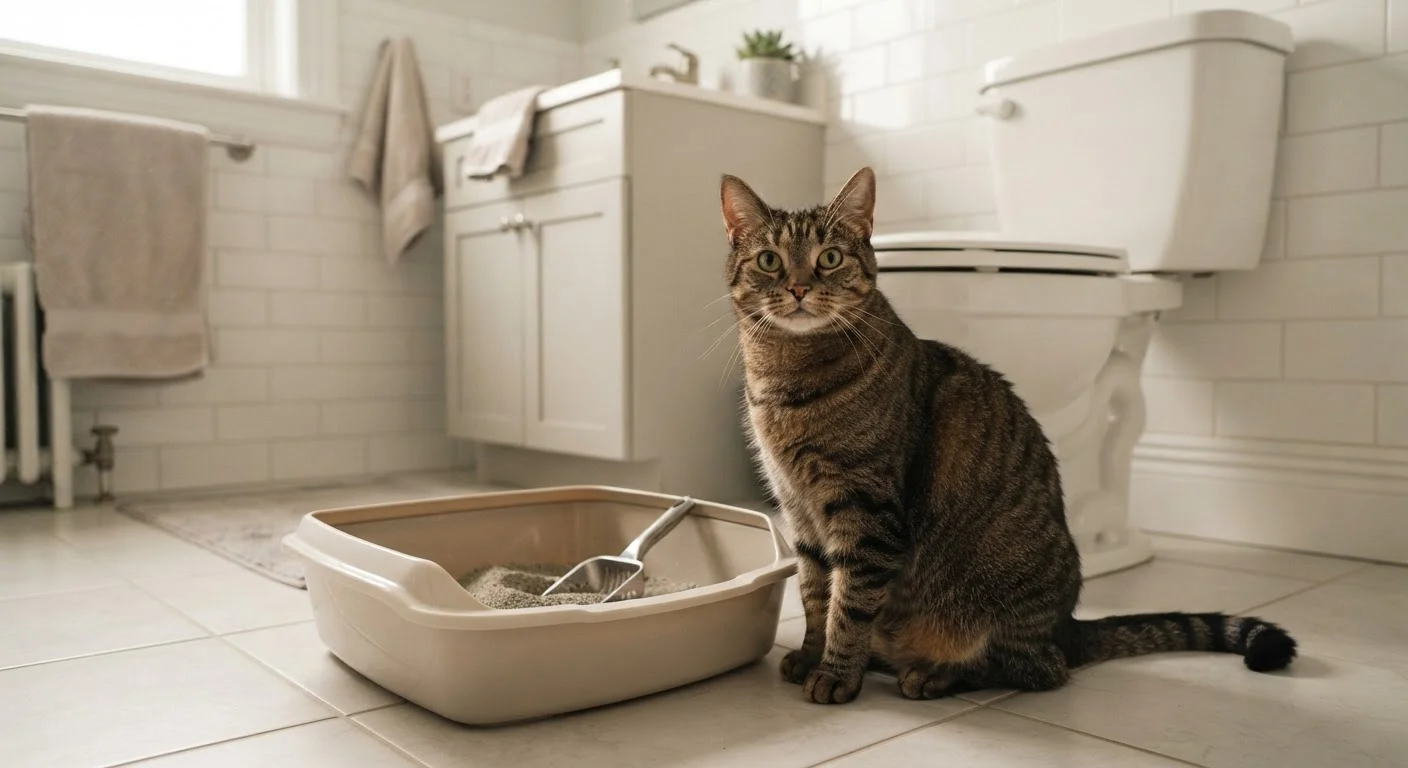
Why Litter Box Problems Are Signals, Not Defiance
When a cat starts eliminating outside the litter box, the instinct for many owners is frustration. But cats are not motivated by revenge or stubbornness - those are human frameworks that don't apply to feline cognition. What looks like misbehavior is almost always communication.
Litter box problems fall broadly into two categories: behavioral (stress, preference, social conflict) and medical (urinary tract infections, kidney disease, diabetes, arthritis, and more). Distinguishing between the two is critical, and in many cases only a veterinarian can do that reliably. Understanding the most common mistakes cat owners make when responding to these problems can help you address the real issue faster - and avoid making things worse.
For a broader foundation on reading what your cat is communicating through body language and behavior, see this field guide to feline signals.
Assuming the cat is being spiteful or acting out of revenge.
Why it happens: Human projection is natural, but cats lack the cognitive architecture for premeditated revenge. Owners who believe the cat is 'punishing' them delay finding the real cause.
Punishing the cat for eliminating outside the box.
Why it happens: Punishment seems logical when the unwanted behavior is obvious, but cats do not connect after-the-fact correction with earlier actions.
Not scooping frequently enough and letting the box become aversive.
Why it happens: Owners often underestimate how sensitive cats are to odor. A box that smells tolerable to a human can be deeply unpleasant to a cat with a far more acute sense of smell.
Ignoring the possibility of a medical cause when the problem starts suddenly.
Why it happens: Owners often attribute sudden changes to stress or behavioral issues without ruling out physical illness, particularly if the cat otherwise appears normal.
Placing all litter boxes in a single area or inaccessible location.
Why it happens: Owners often cluster boxes for convenience, not realizing cats treat all boxes in one zone as a single resource - particularly problematic in multi-cat households.
Switching litter types abruptly without a transition period.
Why it happens: Owners change litters for cost or convenience reasons without realizing the texture, scent, or composition shift can make the box unfamiliar or unpleasant to the cat.
When to Treat It as a Medical Emergency
Not all litter box problems can wait for a scheduled appointment. A cat - especially a male cat - straining to urinate with little or no output is a potential urinary blockage, which is a life-threatening emergency. Do not attempt home remedies or wait it out.
Urinary Blockage Is a Veterinary Emergency
A male cat straining repeatedly at the litter box with little or no urine output may have a urinary blockage - a condition that can become fatal within 24 to 48 hours without treatment. Do not wait to see if it resolves on its own. Take the cat to a veterinarian or emergency animal clinic immediately.
Sudden changes in litter box behavior that are accompanied by changes in water intake, weight loss, vocalizing during elimination, blood in urine or stool, or visible straining all warrant prompt veterinary attention. These signs can indicate conditions including feline idiopathic cystitis (FIC), bladder stones, hyperthyroidism, or gastrointestinal disease.
~10%
Cats affected by feline idiopathic cystitis
Feline idiopathic cystitis (FIC) is estimated to affect roughly 1 in 10 cats presenting with lower urinary tract signs, according to veterinary internal medicine references.
#1
Top reason cats are surrendered to shelters
Inappropriate elimination is consistently cited in animal welfare research as the leading behavioral reason cats are relinquished to shelters in the United States.
Even when the cause turns out to be behavioral, a vet visit first rules out physical pain - because a cat avoiding the box due to pain will continue avoiding it even after you fix the setup, if the pain isn't treated. If you're new to recognizing when something seems off with your cat's health, this overview of subtle illness signs in pets offers useful context on how animals mask discomfort.
Getting the Setup Right - and Keeping It That Way
Many litter box problems are entirely preventable with the right setup from the start. The general guidance from feline veterinary behaviorists is one box per cat, plus one extra - so two cats need at least three boxes. Placing all boxes in one location effectively makes them a single resource in a cat's mind, which creates competition in multi-cat homes.
Box size is frequently underestimated. A box should be at least 1.5 times the length of your cat. Many standard commercial boxes are too small for adult cats, particularly large breeds, which can make entry and posture uncomfortable. Covered boxes may appeal to owners for odor control, but many cats find them claustrophobic or poorly ventilated - especially if the litter isn't scooped frequently.
Litter type matters more than most owners realize. Cats have strong texture preferences, and abrupt changes to a different litter can trigger avoidance. Unscented, clumping litter is generally tolerated well, but individual cats vary. If you're setting up for a new cat, this guide for first-time cat owners covers litter box basics alongside other setup essentials.
Covered Boxes Are Not Always Cat-Friendly
While covered litter boxes contain odor for owners, they can trap ammonia fumes at levels that deter cats from using them. Cats may also feel trapped inside, particularly in homes with other cats who guard resources. If your cat is avoiding a covered box, try removing the lid and observe whether usage improves within a few days.
Location is also key: boxes placed near loud appliances, in high-traffic areas, or in spots where a cat can be cornered or startled will be avoided regardless of how clean they are. Quiet, low-traffic locations with more than one exit point are strongly preferred.