
The Predatory Brain Behind the Paw
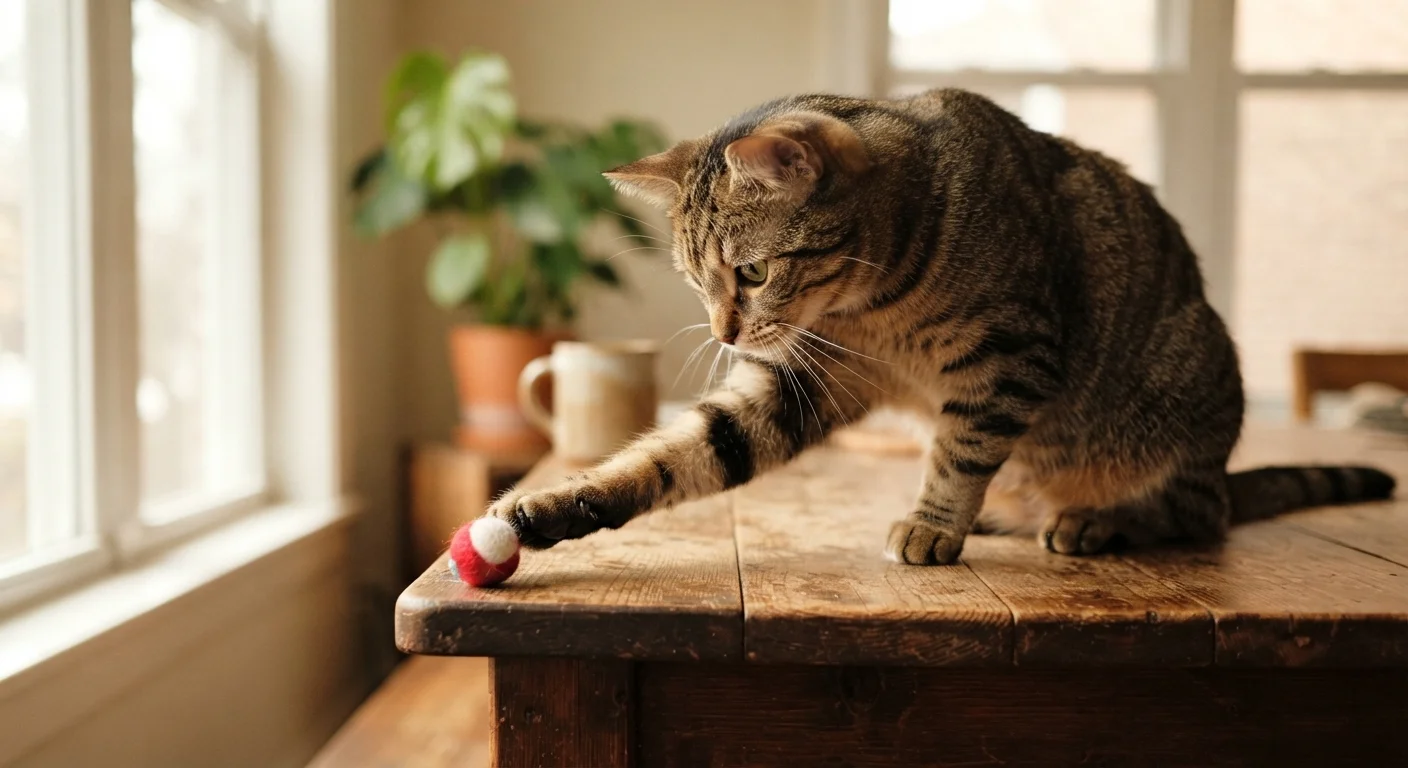
Domestic cats retain the cognitive wiring of hunters. Their paws are not just for balance - they are precision instruments used to test, probe, and manipulate potential prey. When a cat swipes at a pen or nudges a phone toward a table's edge, it is activating the same investigative behavior it would use to determine whether a small creature is alive and worth chasing.
An object that wobbles, rolls, or falls provides exactly the kind of unpredictable movement that engages a cat's prey-detection system. The behavior is self-reinforcing: the motion is intrinsically rewarding, regardless of whether the cat actually intends to follow through with a pounce. Understanding this instinct is central to understanding the behavior - and to reading what your cat is actually communicating. Body language cues often accompany these sessions and can tell you a lot about your cat's arousal level in the moment.
~50%
Indoor cats showing regular object-batting behavior
Behavioral surveys of indoor cat owners consistently report that object manipulation and batting are among the most frequently observed behaviors in domestic cats.
2x daily
Recommended structured play sessions per cat
Feline behavior specialists commonly recommend at least two dedicated interactive play sessions per day to meet a cat's predatory and cognitive stimulation needs.
10-15 min
Effective session length for predatory play
Research on feline play behavior suggests sessions that mimic a hunt-and-catch arc - active pursuit followed by a 'catch' - are most satisfying for cats and reduce redirected behaviors.
Cause and Effect: What Cats Figure Out Quickly
Cats are capable learners who map cause and effect faster than many owners expect. If a cat pushes a glass off a shelf and you immediately appear - startled, loud, or reactive - your cat has logged a highly effective behavior. Over time, knocking things over can evolve from pure instinct into a deliberate strategy for generating a response, particularly in cats who are under-stimulated or feel their social needs are unmet.
This is not manipulation in any malicious sense - it is adaptive behavior. Cats are hardwired to seek interaction and engagement, and they use whatever works. Common cat myths often obscure this reality, leading owners to label the behavior as spite or mischief when it is simply learned cause-and-effect logic at work.
Redirect Before the Object Hits the Floor
If you notice your cat approaching a surface with that classic slow-paw extension, engage them with a toy or call them toward you before anything falls. Redirecting the energy in the moment - rather than reacting after - is far more effective at interrupting the pattern. Over time, this approach can shift the habit toward interaction with appropriate objects.
Boredom, Enrichment, and the Under-Stimulated Cat
A cat that consistently knocks things over is often a cat with excess cognitive and physical energy and nowhere appropriate to direct it. Indoor cats, in particular, can go long stretches without meaningful stimulation. Batting objects provides novelty, movement, and sensory feedback - three things cats actively need.
Enrichment does not have to be elaborate. Structured play sessions using wand toys, rotating the objects available for exploration, and providing puzzle feeders can meaningfully reduce the frequency of surface-clearing episodes. When stress is a factor - perhaps due to a new pet, a schedule change, or household tension - the behavior can intensify. Signs of feline stress are worth knowing, because environmental causes are often addressable once identified.
What You Can Do Without Making It Worse
The most counterproductive response is a dramatic one. Rushing over, raising your voice, or even laughing and engaging playfully can all function as rewards, reinforcing the behavior you're trying to reduce. The most effective general approach is to minimize the payoff: stay calm, remove fragile objects from accessible edges, and give your cat structured outlets for its energy.
Interactive play twice daily - even for ten to fifteen minutes per session - addresses the underlying drive more effectively than any reactive correction. If the behavior is accompanied by other changes, such as changes in litter box habits or social withdrawal, it may be worth a conversation with your veterinarian. Litter box changes and surface-batting, when they occur together, can sometimes reflect the same unmet need or underlying stressor.