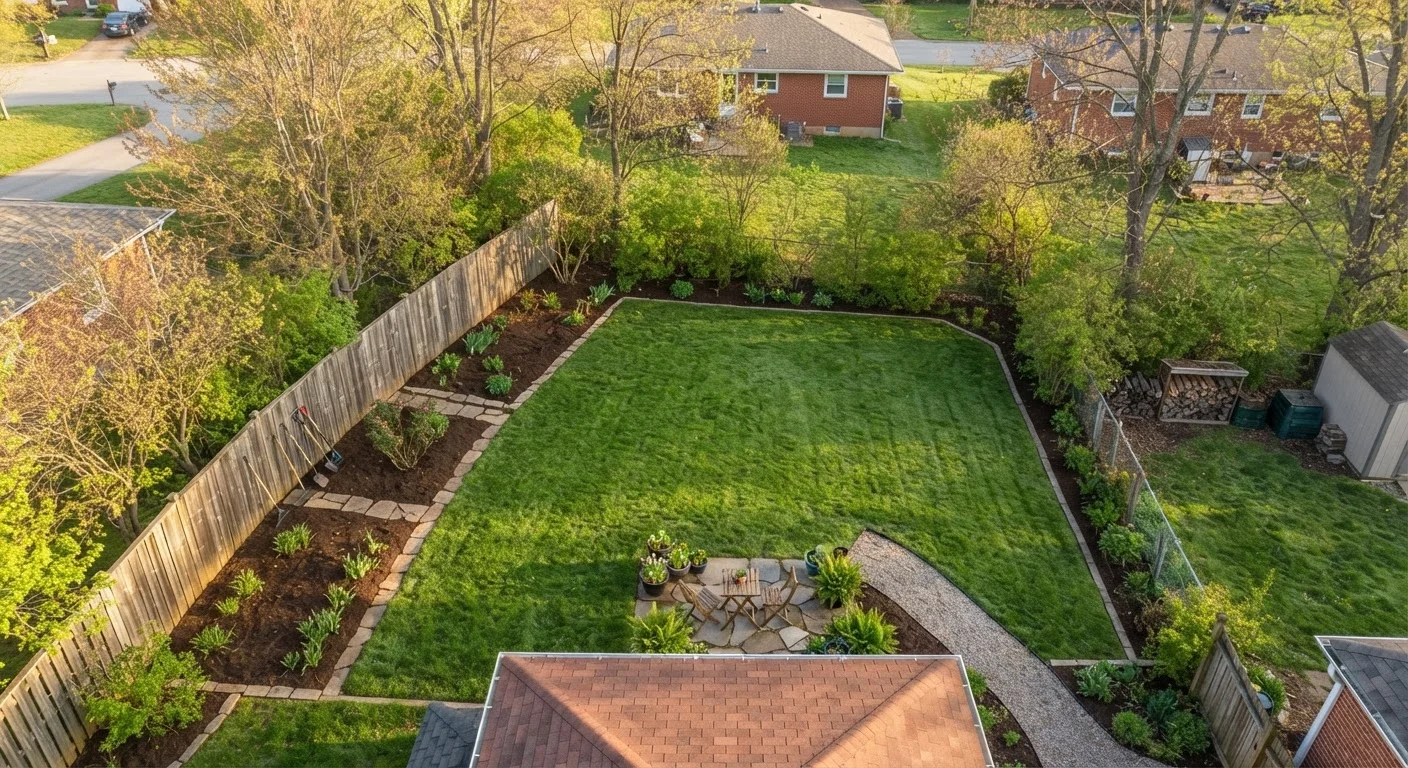
A structured spring checklist helps you tackle the yard systematically—covering lawn, beds, trees, irrigation, and tools before the growing season.
Key Takeaways
Tackling cleanup zone by zone prevents missed tasks and reduces overwhelm.
Early spring is the right time to assess winter damage before active growth begins.
Soil prep, tool maintenance, and irrigation checks are as important as visible cleanup.
Compost and mulch applied in spring can meaningfully improve plant health through summer.
Some tasks-like heavy pruning or irrigation repairs-may require a licensed professional.
Why a Structured Spring Checklist Works
Most homeowners approach spring cleanup reactively-grabbing a rake when they spot dead leaves or pulling weeds whenever they have a free hour. That scattered approach tends to leave gaps: the irrigation system goes untested until the first hot week, or the lawn gets fertilized before the soil is ready to absorb nutrients. A structured, zone-by-zone checklist changes that dynamic by giving you a clear sequence to follow, so high-priority tasks get done before the growing season accelerates.
Think of your outdoor space the way you would indoor rooms. The lawn, garden beds, trees and shrubs, hardscaping, and tool storage each have distinct spring needs. Working through them in order-rather than wherever your eye lands-keeps you from doubling back or skipping steps. This checklist is organized accordingly, with priority levels to help you focus your time if you're working in stages.
For tasks that touch electrical lines, gas-powered irrigation, structural fencing, or other regulated systems, always verify local permit requirements and consult a licensed professional rather than attempting the work yourself.
Required
Garden rake
Removes dead thatch, leaves, and debris from lawn and beds without disturbing soil.
Required
Soil test kit
Measures pH and nutrient levels so you apply only the amendments your soil actually needs.
Required
Bypass hand pruners
Makes clean cuts on shrub stems and small branches to promote healthy regrowth.
Required
Garden fork or cultivator
Loosens compacted bed soil before planting or amending with compost.
Optional
Pressure washer or garden hose with spray nozzle
Cleans hardscape surfaces, tools, and outdoor furniture after winter.
Optional
Lawn spreader
Distributes fertilizer or grass seed evenly across the lawn surface.
The Spring Yard Checklist by Zone
Work through each zone below in sequence. Complete the must items first; add should and nice-to-have tasks as time and budget allow. Estimated time assumes an average suburban lot of roughly 5,000-8,000 square feet.
Lawn
Rake away dead grass, matted leaves, and winter debris to reduce thatch buildup and allow air to reach the soil surface.Must
Walk the lawn to identify bare or thin patches, noting their size and location before deciding on overseeding.Must
Test soil pH and nutrient levels with an inexpensive kit or county extension service test before applying any fertilizer.Should
Overseed bare spots once nighttime temperatures are consistently above 50°F for cool-season grasses, or soil temps reach 65°F for warm-season varieties.Should
Apply a slow-release fertilizer matched to your soil test results rather than a generic all-purpose blend.Nice to have
Garden Beds & Soil
Clear all plant debris, dead annuals, and fallen branches from beds to eliminate overwintering pest and disease habitat.Must
Turn or loosen the top 2-3 inches of bed soil with a fork or cultivator to break up compaction before planting.Must
Incorporate 1-2 inches of compost into beds to replenish organic matter depleted over winter.Should
Apply 2-3 inches of mulch around perennials and shrubs after soil warms, keeping mulch a few inches away from plant stems.Should
Edge bed borders cleanly to create a visible boundary that reduces grass encroachment throughout the season.Nice to have
Trees & Shrubs
Inspect all trees and large shrubs for broken, dead, or crossing branches and remove them before new growth begins.Must
For any branch larger than two inches in diameter or work above head height, hire a certified arborist rather than attempting removal yourself.Must
Prune spring-blooming shrubs (like forsythia and lilac) immediately after they flower, not before, to preserve this season's blooms.Should
Check tree root zones for heaving soil or signs of frost damage to major surface roots.Nice to have
Irrigation & Drainage
Turn on the irrigation system gradually and walk every zone to check for broken heads, leaks, or misaligned spray patterns.Must
Clear gutters, downspouts, and any French drain inlets of winter debris to ensure proper drainage before spring rains.Must
Update irrigation controller schedules and sensor settings to match spring watering needs rather than carrying over summer settings.Should
Inspect hose connections and soaker hoses for cracks or splits caused by winter freezing.Should
Hardscaping & Structures
Walk all paved surfaces-patios, walkways, driveways-to document cracks or frost heave that may have worsened over winter.Must
Check fence posts, gates, and deck boards for rot, loose fasteners, or structural instability before regular use.Must
Power-wash hardscape surfaces once temperatures are reliably above freezing to remove algae, moss, and winter grime.Should
Re-level any pavers or stepping stones that shifted due to soil movement over winter.Nice to have
Tools & Equipment
Inspect, clean, and sharpen hand tools-pruners, loppers, shovels-before the season starts to reduce plant tissue damage when cutting.Must
Service gas-powered equipment: check oil, replace spark plugs, and clean or replace air filters on mowers and trimmers.Must
Charge and test battery-powered tool packs and replace any batteries that no longer hold a full charge.Should
Inventory consumables-fertilizer, mulch, pest controls-and dispose of any products past their labeled shelf life.Nice to have
Check Before You Cut or Dig
Before pruning mature trees or digging new beds, call 811 (the national dig-safe hotline) to have underground utilities marked on your property. Tree removal near power lines must be handled by a licensed arborist. Many municipalities also require permits for structural fence work or significant grading-verify your local requirements before starting.
Once your beds are cleared and amended, it's an ideal moment to plan a kitchen garden. Our guide on growing a vegetable garden covers everything from site selection to first harvest. If your lawn shows signs of thinning, patchy grass, or pooling water after rain, you may also want to read about when lawn aeration helps before you fertilize. And if organic amendments interest you, our beginner's composting guide explains how to turn yard waste from this very cleanup into nutrient-rich soil amendment.
Spring yard work pairs well with indoor seasonal prep, too. See the seasonal home systems maintenance checklist to tackle HVAC, plumbing, and appliance checks on the same weekend schedule.
Home & Garden Editorial Team is the collective byline for our editorial team and contributor network. Articles published under this byline or an editorial pen name are researched, written, and reviewed according to our editorial standards for clarity, consistency, and independence before publication.
The content provided on our blog site traverses numerous categories, offering readers valuable and practical information. Readers can use the editorial team’s research and data to gain more insights into their topics of interest. However, they are requested not to treat the articles as conclusive. The website team cannot be held responsible for differences in data or inaccuracies found across other platforms. Please also note that the site might also miss out on various schemes and offers available that the readers may find more beneficial than the ones we cover.