What Composting Actually Does for Your Garden
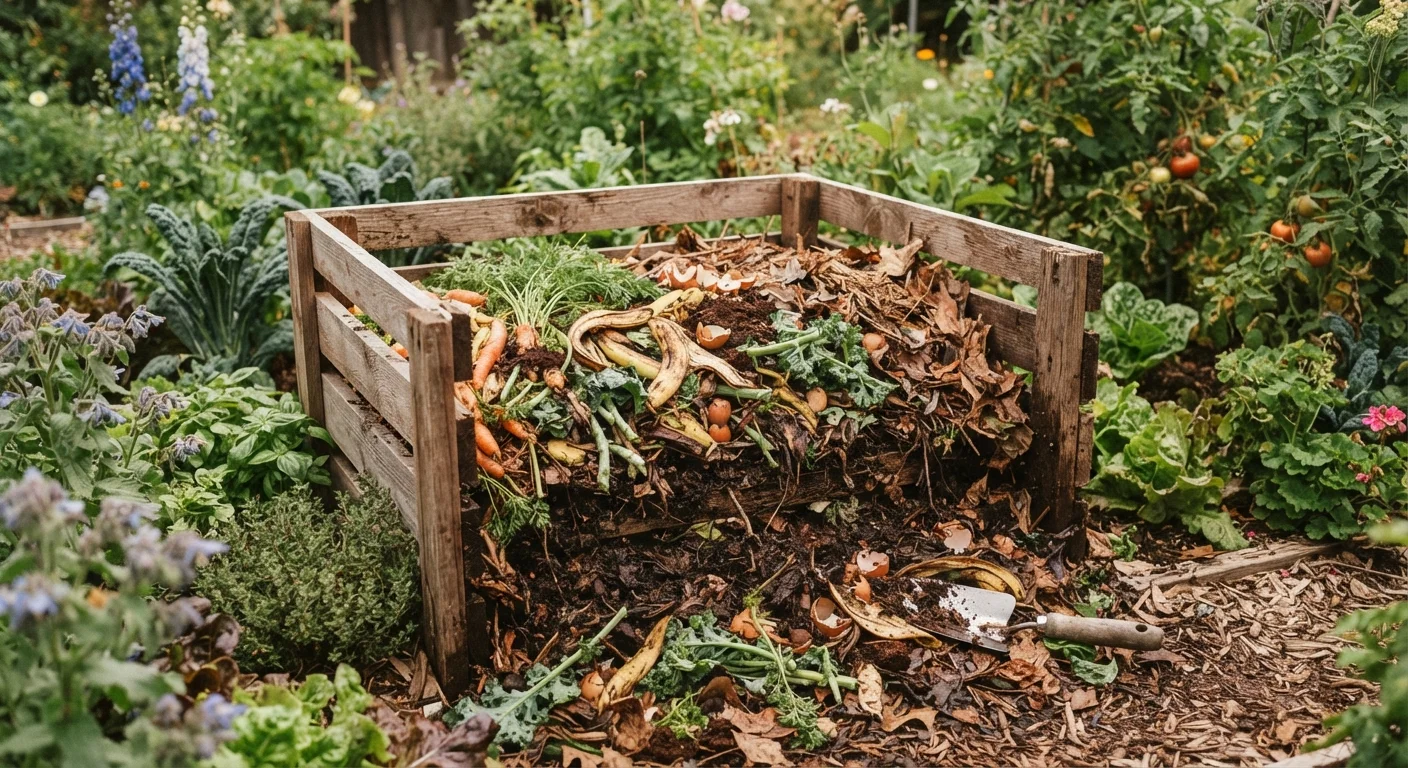
Composting is the managed decomposition of organic matter - kitchen scraps, yard trimmings, and other biodegradable materials - into a dark, crumbly substance called humus. When mixed into garden soil, finished compost improves texture, boosts the microbial community that feeds plant roots, and helps soil hold moisture without becoming waterlogged.
Unlike synthetic fertilizers, which deliver concentrated nutrients quickly, compost works gradually, releasing nutrients as microbes continue breaking down organic matter. For a fuller comparison of how each approach feeds your plants, see our article on organic vs. synthetic fertilizers in the home garden.
Humus
The stable, dark organic matter that remains after decomposition is complete. It improves soil structure and acts as a slow-release nutrient source for plants.
Greens
Nitrogen-rich compost materials such as vegetable scraps and fresh grass clippings. They provide the energy that decomposing microbes need to thrive.
Browns
Carbon-rich materials like dry leaves and shredded cardboard. They provide structure to the pile and balance out moisture-heavy greens.
Aerobic decomposition
Breakdown of organic matter using oxygen. Aerobic conditions produce compost faster and with far less odor than oxygen-starved (anaerobic) conditions.
Vermicomposting
A composting method that uses worms - typically red wigglers - to break down food scraps into a rich, fine compost called worm castings.
Hot composting
An active composting technique where a large, well-managed pile reaches internal temperatures high enough to kill weed seeds and speed decomposition significantly.
Choosing a Composting Method
There is no single right way to compost. The method that suits you depends on your available space, how much material you generate, and how hands-on you want to be.
- Open pile or bin: The simplest setup - a contained heap in a corner of the yard. Low effort, but slower to finish.
- Tumbler: A sealed rotating drum that keeps pests out and heats up faster. Good for suburban yards with limited space.
- Hot (active) composting: A larger, carefully layered pile that you turn frequently. Reaches high internal temperatures, kills most weed seeds, and produces compost in as little as 8-12 weeks.
- Vermicomposting: Uses worms - most commonly red wigglers - to break down food scraps indoors or in a shaded outdoor bin. Ideal for small spaces or apartment dwellers.
Whatever method you choose, place your compost system on level ground with drainage, near your garden but not immediately against your house foundation.
What to Add - and What to Keep Out
A healthy compost pile is built on a balance of two material categories:
- Greens (nitrogen-rich)
- Vegetable and fruit scraps, coffee grounds and filters, fresh grass clippings, plant trimmings.
- Browns (carbon-rich)
- Dry leaves, cardboard torn into small pieces, straw, paper bags, wood chips, sawdust from untreated wood.
A general rule of thumb is to aim for roughly two to three parts browns for every one part greens by volume. Too many greens creates a slimy, smelly pile; too many browns slows decomposition significantly.
Materials to Always Exclude
Never add meat, fish, bones, dairy products, or oily foods - these attract pests and create persistent odors. Also exclude pet waste, diseased or pest-infested plants, treated wood products, and anything coated with synthetic chemicals. These materials can introduce pathogens or toxins that finished compost should never contain.
Composting yard debris from your spring yard cleanup - like dry leaves, spent annuals, and untreated wood chips - is one of the easiest ways to keep a good supply of browns on hand.
Maintaining Your Compost Pile
Active management makes the difference between compost that finishes in weeks and a pile that stagnates for months. Three factors matter most:
- Moisture: The pile should feel like a wrung-out sponge - damp but not dripping. Add water during dry spells, or cover the pile to prevent soaking during heavy rain.
- Aeration: Turn the pile every one to two weeks using a garden fork or compost aerator. Introducing oxygen prevents anaerobic (odor-causing) decomposition and keeps temperatures elevated.
- Particle size: Shredding or chopping materials before adding them dramatically speeds breakdown. Whole citrus peels or large branches decompose slowly; smaller pieces give microbes more surface area to work with.
Keep a Small Bin in Your Kitchen
A countertop container with a tight-fitting lid makes it easy to collect scraps throughout the day without repeated trips to the outdoor pile. Empty it every two to three days to prevent odors. Compostable liner bags make cleanup simple if you prefer not to wash the container frequently.
You'll know compost is finished when it looks dark and uniform, smells earthy (not putrid), and you can no longer identify the original materials. If the pile feels cold and inactive in winter, activity will naturally resume as temperatures rise in spring.
Using Finished Compost in Your Yard and Garden
Finished compost is versatile. Common applications include:
- Soil amendment: Work 2-3 inches of compost into the top 6-8 inches of a planting bed before sowing seeds or transplanting.
- Topdressing: Spread a thin layer (about half an inch) over established lawn areas to improve soil biology without disrupting grass roots.
- Mulch layer: Apply around trees, shrubs, and perennials to retain moisture and moderate soil temperature.
- Potting mix component: Blend finished compost with other potting materials for container gardens - typically no more than 25-30% compost by volume to avoid compaction.
Compost is particularly valuable in vegetable beds, where it supports the kind of rich, active soil that productive plants prefer. Our guide on growing a vegetable garden covers exactly how to prep and enrich beds before planting season.
US Composting Council
A professional organization that publishes educational resources on compost quality, testing standards, and home composting best practices across the US.
Local Cooperative Extension Service
Every US state has a land-grant university extension service that offers free, regionally tailored composting guides, soil testing, and gardening advice specific to your climate zone.
EPA WasteWise Composting Resources
The US Environmental Protection Agency provides publicly available guidance on home composting methods, materials, and the environmental benefits of diverting organic waste from landfills.