
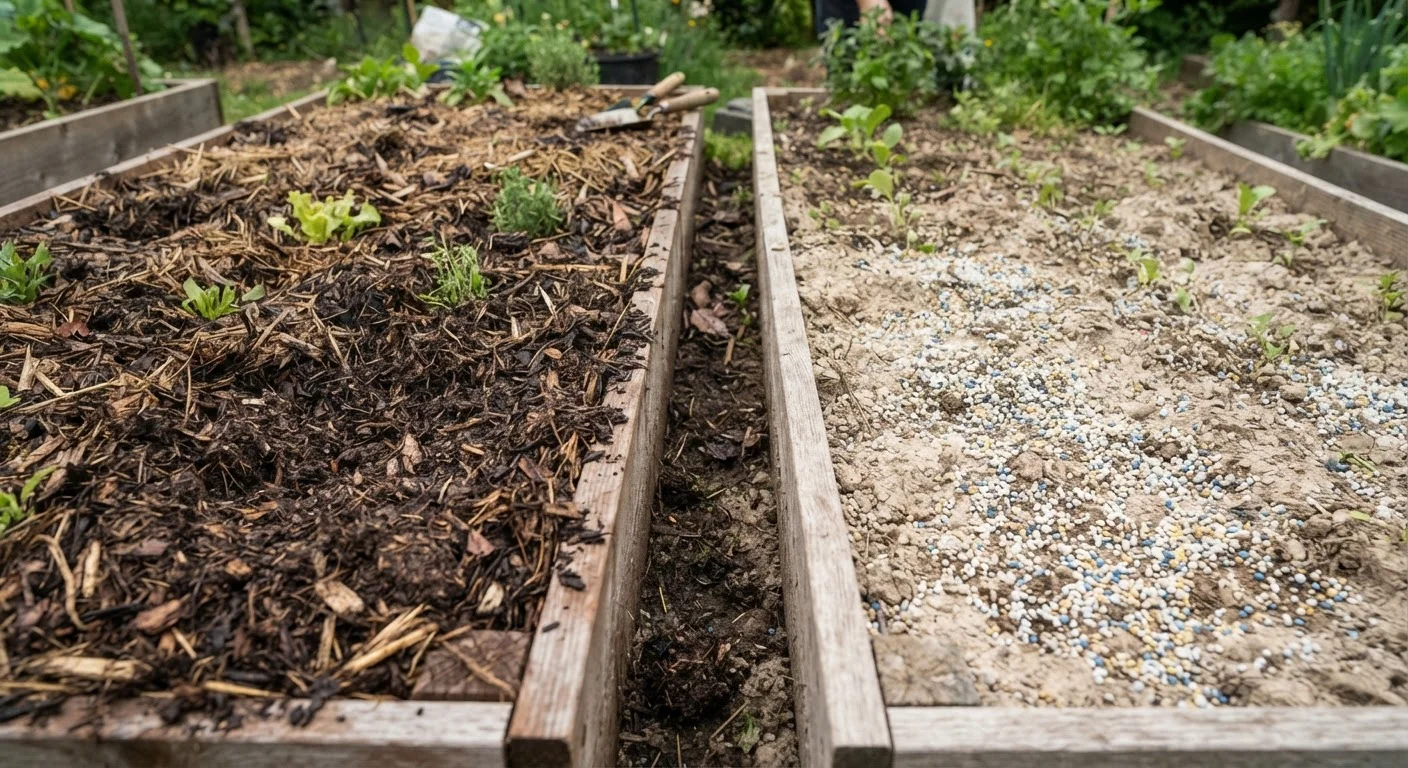
How Each Type Works
At the most basic level, both organic and synthetic fertilizers supply plants with the same core nutrients - primarily nitrogen (N), phosphorus (P), and potassium (K). The meaningful difference is in origin and how those nutrients reach plant roots.
Organic fertilizers come from naturally occurring materials: composted plant matter, animal manure, bone meal, blood meal, kelp, and similar sources. Soil microbes must break these materials down before plants can absorb the nutrients - a process that takes time but also feeds the microbial community that keeps soil alive. If you're building a vegetable garden from scratch, our vegetable garden guide covers how soil preparation fits into the full growing process.
Synthetic fertilizers are manufactured to deliver nutrients in forms plants can absorb almost immediately, bypassing the microbial step. This makes them predictable and fast-acting, which is useful when a nutrient deficiency shows up mid-season and you need a rapid response.
One factor both types interact with heavily is soil pH. A soil that is too acidic or too alkaline can lock out nutrients regardless of which fertilizer you use. Understanding soil pH before you fertilize helps ensure your inputs actually reach the plant.
Pros and Cons of Organic Fertilizers
Organic fertilizers offer gradual, sustained feeding alongside genuine long-term benefits to soil structure. Their main drawbacks relate to timing and predictability.
Improves soil structure and microbial activity
Organic matter feeds beneficial bacteria and fungi that aerate soil, improve drainage, and support root health - benefits that compound over multiple seasons.
Slow-release reduces nutrient burn risk
Because nutrients are released as organic matter breaks down, it is difficult to over-apply to the point of burning plants - a common beginner mistake with synthetics.
Lower runoff risk with proper use
Nutrients bound in organic material are less water-soluble, so they are less prone to washing out of the root zone during heavy rain or irrigation.
Can build self-sustaining soil fertility
Consistent use of organic inputs over several years can reduce the need for external fertilizers as the soil ecosystem becomes more productive on its own.
Slow to show visible results
Nutrient release depends on soil temperature and microbial activity, so plants may not respond visibly for weeks - frustrating when a deficiency needs quick correction.
Nutrient ratios are less predictable
Unlike synthetic blends with exact N-P-K labels, organic products can have variable nutrient content depending on their source, making precise dosing harder.
Typically higher cost per unit of nutrient
Pound for pound, organic fertilizers often deliver fewer nutrients than synthetic equivalents, meaning higher per-application costs for equivalent feeding.
May introduce weed seeds or pathogens
Poorly composted animal manure or plant-based fertilizers can carry weed seeds or pathogens if they were not processed at sufficient temperatures.
For gardeners interested in composting as a low-cost organic amendment strategy, this composting guide for beginners walks through how to get started with kitchen and yard waste.
Pros and Cons of Synthetic Fertilizers
Synthetic fertilizers give gardeners precise control over nutrient ratios and near-immediate uptake. That speed and precision come with environmental and soil-health trade-offs worth understanding before regular use.
~50%
Nitrogen potentially lost to leaching
University extension research has noted that a significant portion of synthetic nitrogen fertilizer can be lost through leaching and volatilization if not timed and applied correctly.
24-48 hrs
Typical uptake window for soluble synthetic N
Water-soluble synthetic nitrogen formulas can become available to plant roots within one to two days of application under normal soil moisture conditions.
The core concern with synthetic fertilizers is that water-soluble nutrients - especially nitrogen - can move through soil quickly. If plants don't absorb them before rain or irrigation carries them off, those nutrients can leach into groundwater or run off into nearby waterways. Careful application rates and timing reduce this risk considerably, but it requires attention.
Container gardening is one context where synthetics are frequently practical: potting mixes lack the microbial activity needed to break down organic inputs efficiently, so the direct-availability of synthetic nutrients is an advantage rather than a shortcut.
Choosing Based on Your Garden Goals
The choice between organic and synthetic fertilizers often comes down to three questions: How quickly do your plants need nutrients? How much do you want to invest in long-term soil health? And what are the environmental conditions around your garden?
A Note on Organic Certification
Not all products labeled 'natural' are certified organic, and the terms are not interchangeable. If organic certification matters to you - for example, in an edible garden - look specifically for products listed with OMRI (Organic Materials Review Institute) or approved under USDA National Organic Program standards. Reading the label carefully is the most reliable step.
A soil test - available through many county cooperative extension offices for a modest fee - is the most reliable starting point. It tells you which nutrients are already present, which are deficient, and what your pH is doing. Fertilizing without that baseline means guessing, which can lead to over-application and the problems that follow.
Some experienced gardeners use a hybrid approach: applying organic amendments like compost at the start of the season to build soil biology, then using a targeted synthetic product mid-season if a specific deficiency appears. This isn't an all-or-nothing decision. Your watering method also plays a role - drip versus sprinkler irrigation can affect how fertilizers move through your soil and how much runoff risk you carry.