Why pH Is the Hidden Factor in Plant Health
Many homeowners fertilize faithfully, water consistently, and still watch their grass thin out or their tomatoes yellow at the edges. The culprit is often not what they're adding to the soil - it's a pH level that prevents plants from using what's already there.
Soil pH directly controls the chemical availability of nutrients. Nitrogen, phosphorus, potassium, iron, manganese, and other essential elements all become more or less accessible to plant roots depending on how acidic or alkaline the surrounding soil is. At extreme pH levels - whether too low or too high - even a nutrient-rich soil can effectively starve the plants growing in it. This is sometimes called nutrient lock-out.
The practical implication is significant: applying more fertilizer to soil with the wrong pH often produces little benefit. Correcting the pH first is what allows plants to actually use both existing soil nutrients and anything you add. See our explanation of fertilizer N-P-K ratios to understand how these inputs fit into the bigger picture.
6.0-7.0
Optimal pH range for most lawn grasses
This range is widely cited by university extension programs across the US as the target for common cool- and warm-season turf grasses.
~1 unit
Common pH shift from high-rainfall leaching over several years
Soil scientists note that unmanaged soils in humid climates can drift one or more pH units toward acidity over time without periodic liming.
3-6 months
Typical time for lime to measurably shift pH
Cooperative extension guidelines consistently advise re-testing soil several months after amendment application rather than assuming immediate change.
What the Numbers Mean in Practice
The pH scale runs from 0 to 14, with 7.0 as the neutral midpoint. Most common lawn grasses - including Kentucky bluegrass, tall fescue, and Bermuda grass - perform well in the 6.0-7.0 range. Vegetable gardens generally favor 6.0-6.8. Some ornamentals, such as blueberries and azaleas, are exceptions that prefer more acidic conditions around 4.5-5.5.
Soil naturally tends to become more acidic over time, particularly in regions with high rainfall, where water leaches basic minerals like calcium and magnesium from the root zone. In drier regions, soils are more likely to lean alkaline. Local geography, bedrock type, and even irrigation water chemistry can all influence pH.
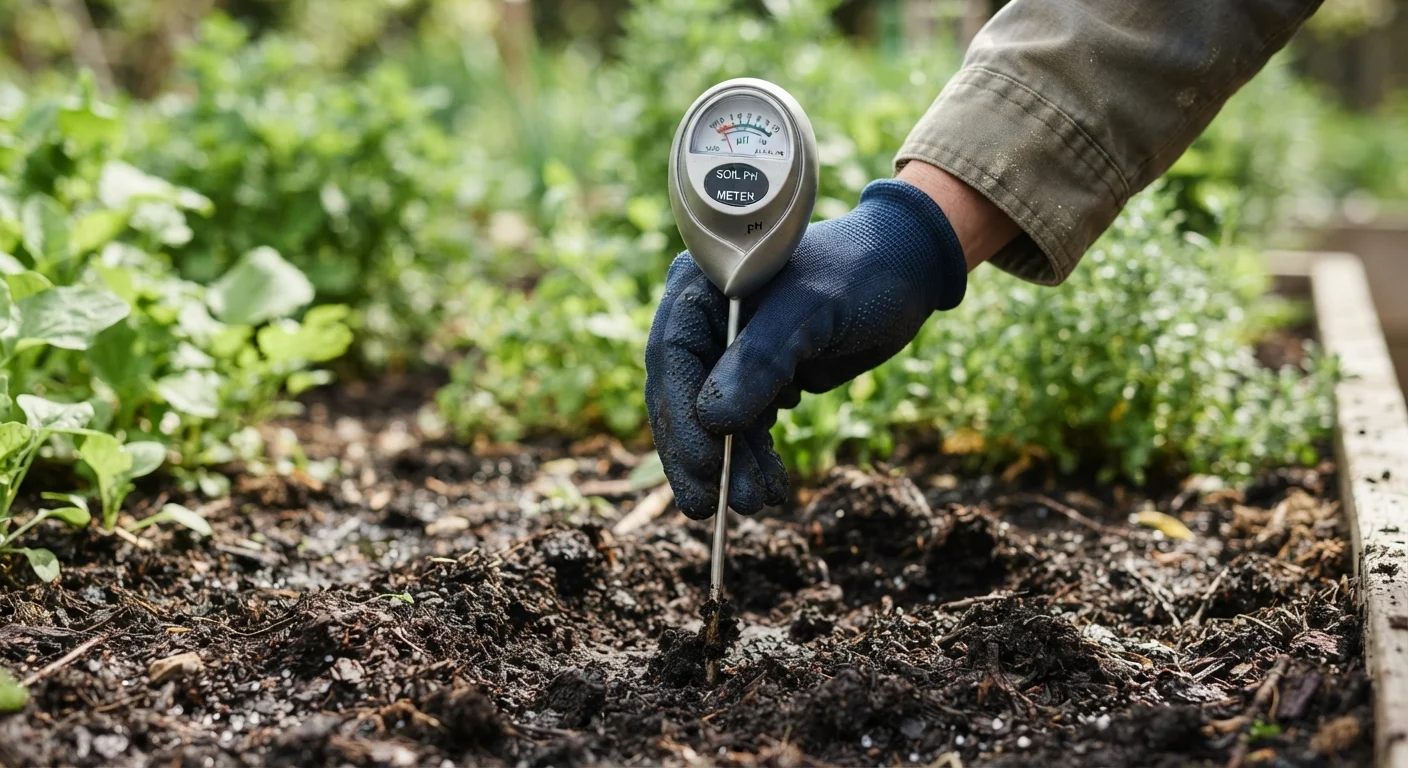
Because pH varies by location - even within a single yard - a soil test is the only reliable way to understand what you're working with. Visual symptoms like pale leaves or patchy growth can suggest a pH issue, but they can also point to other causes like compaction or disease. Testing removes the guesswork.
How to Adjust Soil pH
Once you have test results in hand, adjusting pH is a matter of choosing the right amendment and applying it at the correct rate. Moving too fast can swing pH past the target range, so gradual adjustment is the standard approach.
- To raise pH (make soil less acidic): Ground limestone - typically calcitic or dolomitic lime - is the most common amendment. Dolomitic lime also adds magnesium, which can be useful if your test reveals a deficiency. Application rates vary based on current pH, target pH, and soil texture; sandy soils require less lime than clay-heavy soils to achieve the same shift.
- To lower pH (make soil more acidic): Elemental sulfur is the standard choice. Soil bacteria convert it to sulfuric acid over time, gradually lowering pH. Acidifying fertilizers and organic matter like peat moss can also contribute, though their effect is modest compared to elemental sulfur.
Always follow the rates indicated on product packaging or recommended by your soil lab - more is not better when it comes to pH management. Re-test your soil three to six months after applying amendments to evaluate progress before applying more. Integrating pH awareness into your seasonal routine is worthwhile; our lawn care calendar guide explains how to build that kind of structured approach.
Test Before You Amend
Applying lime or sulfur without a current soil test is one of the most common gardening mistakes. Over-liming can push pH too high and create a new set of nutrient problems. Many cooperative extension services offer low-cost or subsidized soil testing for homeowners - check with your local office before purchasing amendments.
Putting pH in Context With Other Lawn and Garden Factors
Soil pH is one foundational piece of a larger system. Even with a corrected pH, plants can still struggle if soil is heavily compacted, drainage is poor, or watering practices don't support deep root development. Our guide on watering for healthy roots covers how moisture habits interact with soil health.
For homeowners interested in reducing the complexity of soil management over time, native plants offer a practical advantage: they're adapted to local soil conditions, including regional pH norms, and often require fewer corrective inputs than non-native species.
A well-functioning soil ecosystem - with appropriate pH, adequate organic matter, good structure, and consistent moisture - creates conditions where plants can largely care for themselves. pH testing and amendment is not a one-time fix but a periodic check-in, much like other routine lawn care tasks. Understanding the role pH plays makes it easier to interpret what your yard is telling you and respond with targeted, effective action rather than guesswork.