
Breaking Down the Three Numbers
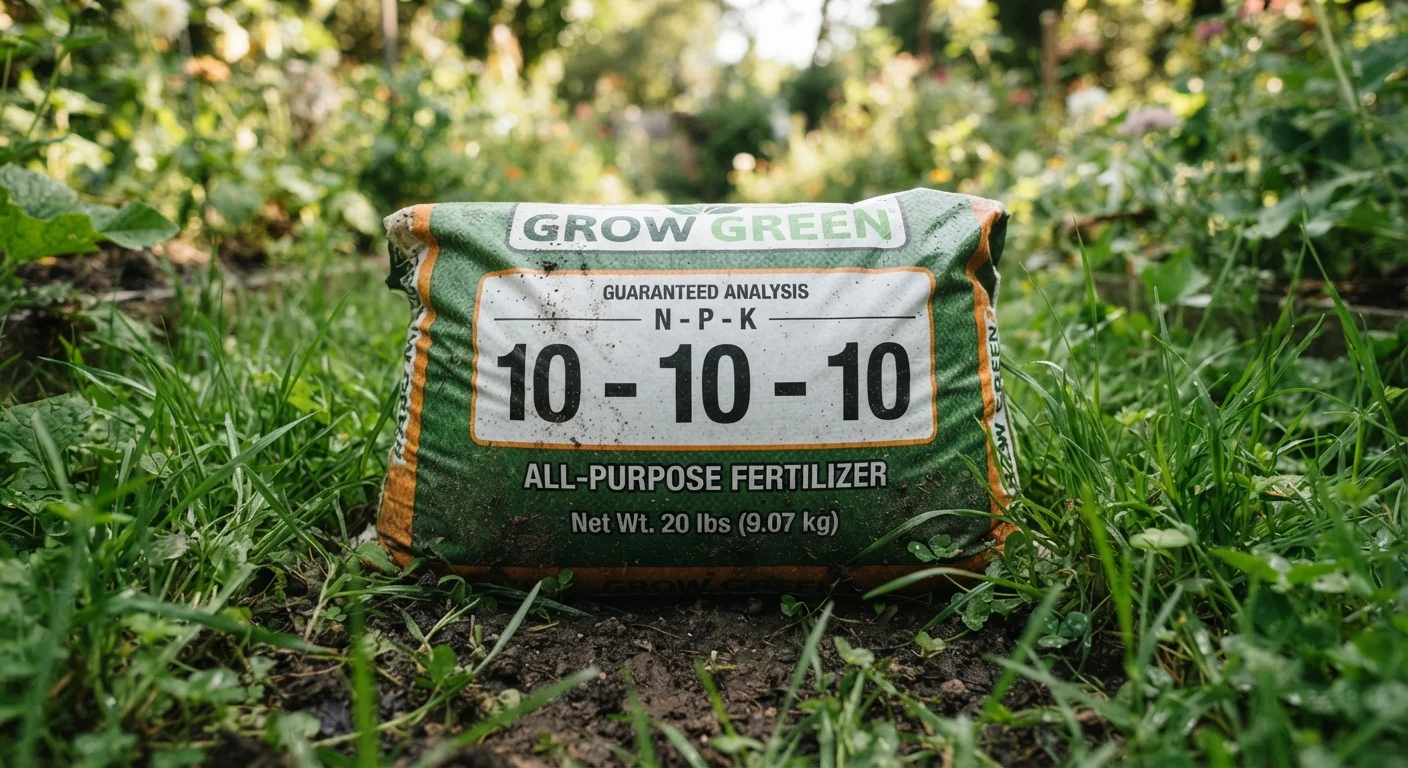
Pick up any fertilizer bag and you'll find a sequence like 24-0-11 or 10-10-10 prominently displayed. These three numbers - always listed in the same order - represent the percentage by weight of three macronutrients: nitrogen (N), phosphorus (P), and potassium (K).
A 50-pound bag labeled 20-5-10 contains 10 pounds of nitrogen, 2.5 pounds of phosphate, and 5 pounds of potash. The remaining 32.5 pounds is carrier material, which helps spread the nutrients evenly. Understanding these proportions helps you match the product to what your lawn actually needs rather than guessing.
3
Macronutrients in every N-P-K label
Nitrogen, phosphorus, and potassium are universally recognized as the three primary plant macronutrients essential for turf health.
~30%
Of a fertilizer bag that's actually nutrient
In a typical 10-10-10 fertilizer, only 30% of the bag's weight is active nutrient - the rest is filler material that aids uniform application.
1 per year
Recommended soil test frequency for home lawns
Many university extension programs recommend homeowners test lawn soil at least once a year to accurately identify nutrient needs before fertilizing.
What Each Nutrient Does for Your Lawn
Nitrogen (N) - the first number is what makes grass grow vigorously and look green. It fuels the production of chlorophyll, which gives plants their color and drives photosynthesis. Lawns that lack nitrogen often appear pale yellow or grow slowly. High-nitrogen fertilizers are commonly used during active growing seasons to push lush, dense turf.
Phosphorus (P) - the second number plays a critical role in root development and energy transfer within the plant. It's especially important when establishing new grass from seed or sod, as strong roots help turf anchor itself and absorb water more efficiently. Many established lawns in average soil conditions already have sufficient phosphorus, which is why some fertilizers show a zero in this position.
Potassium (K) - the third number supports overall plant resilience. It helps grass withstand stress from drought, cold, foot traffic, and disease. Think of potassium as the nutrient that builds durability rather than driving visible growth. Lawns heading into winter or recovering from heat stress often benefit from adequate potassium levels.
Start With a Soil Test Before Buying
Before selecting any fertilizer, invest in a soil test through your local cooperative extension service. The results remove the guesswork by showing exactly which nutrients are lacking in your specific soil. Applying a targeted ratio based on test results is more effective - and more cost-efficient - than using a general-purpose formula.
How to Choose the Right Ratio
There's no universal fertilizer ratio that works perfectly for every lawn. The right choice depends on your grass type, the time of year, and - most importantly - what nutrients your soil already contains. Applying nutrients that aren't deficient wastes money and can disrupt the soil's natural balance.
A soil test is the most practical starting point. Many university cooperative extension services offer low-cost testing kits that measure existing nitrogen, phosphorus, and potassium levels, along with soil pH. The results tell you what's missing so you can target your fertilizer selection accordingly. For more on how pH influences nutrient absorption, see how soil pH affects nutrient uptake.
As a general rule of thumb: lawns in active growth phases often benefit from a higher first number; newly seeded areas may need a higher middle number; and stressed or cool-season grasses may respond well to a higher third number. But these are starting points, not prescriptions - your soil test results should guide the final decision.
Common Mistakes to Avoid
One of the most frequent errors homeowners make is applying more fertilizer than the label recommends, assuming that more nutrients means faster results. In practice, excess nitrogen can chemically burn grass blades, leaving brown patches and weakening the root system. It can also contribute to nutrient runoff, which affects local waterways.
Another common mistake is fertilizing at the wrong time of year. Applying a high-nitrogen formula late in the growing season can push tender new growth that's vulnerable to frost damage. Timing your applications to match your grass type's active growth period leads to more efficient nutrient uptake and better outcomes overall.
Finally, it's worth knowing that fertilizer type matters as much as the ratio. The same N-P-K numbers can appear on both organic and synthetic products, but they behave differently in the soil. Organic versus synthetic fertilizers differ in how quickly nutrients become available and how they affect soil biology over time - factors worth considering alongside the numbers on the label.