
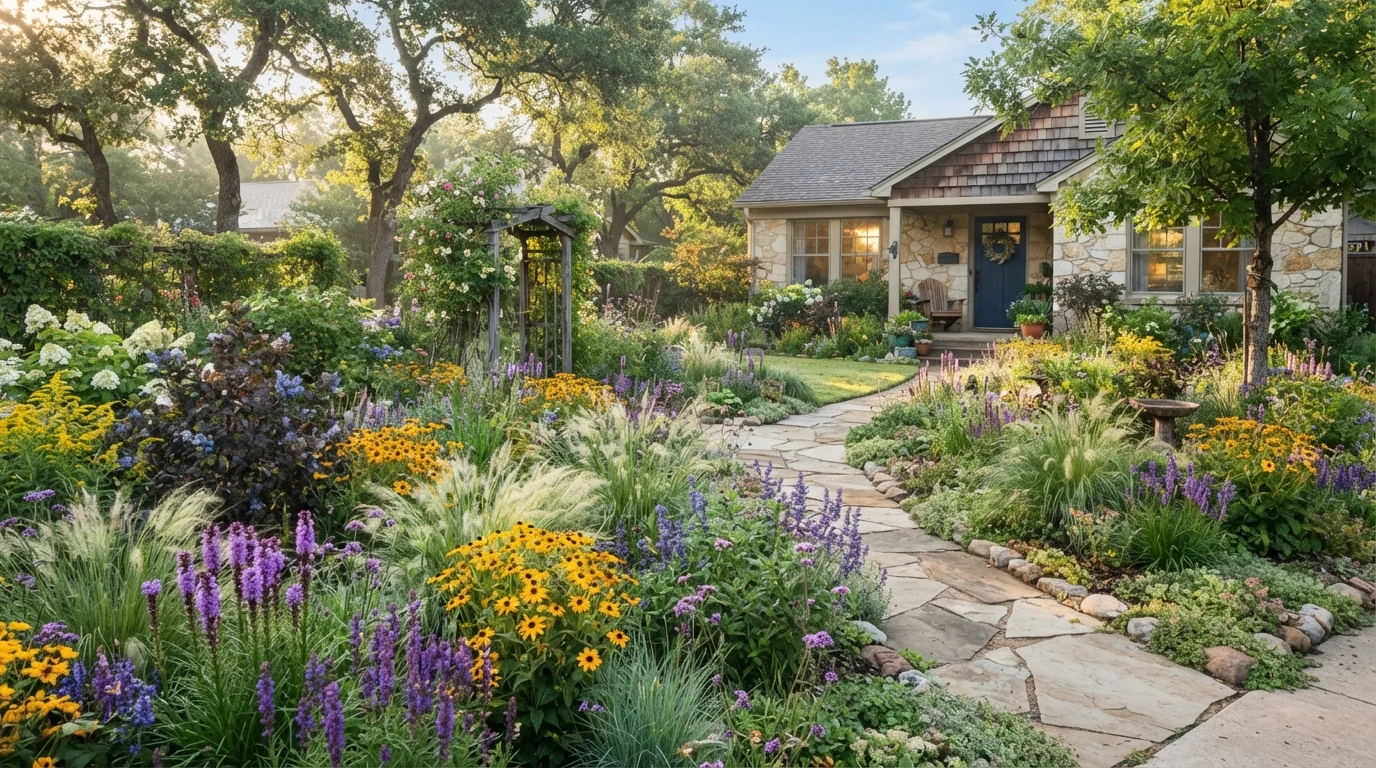
What Makes a Plant "Native" - and Why It Matters
A plant is considered native when it evolved in a particular region over thousands of years, developing alongside local soils, rainfall patterns, temperature extremes, and wildlife. This long evolutionary relationship means native plants are generally calibrated to local conditions in ways that introduced, or non-native, species are not.
For homeowners, this distinction has real practical consequences. Non-native ornamentals are often selected for visual appeal without regard for how well they match local climate or soil. They may need regular watering, fertilizing, and pest management just to stay healthy. Native plants, by contrast, are usually already equipped to handle the conditions in their region - including periodic drought, local soil chemistry, and native insects.
It is worth noting that "native" is not a national label. A plant native to the Gulf Coast may struggle in New England, and vice versa. When selecting plants, always identify species native to your specific ecoregion or state rather than relying on broad regional claims. Your local university extension service or state native plant society can provide reliable, region-specific guidance.
The Low-Maintenance Case for Native Plants
The low-maintenance reputation of native plants is largely earned - but it comes with an important qualification: it applies most fully after the establishment phase. During the first one to three growing seasons, newly planted natives still need consistent moisture and some attention to help their root systems develop. After that, the payoff tends to be significant.
50-75%
Potential reduction in landscape water use
The EPA's WaterSense program notes that switching from traditional turf to drought-tolerant and native plantings can reduce outdoor water use substantially, though exact savings vary by region and plant selection.
1-3 seasons
Typical native plant establishment period
Most horticultural resources and extension services describe this timeframe as when native plants transition from needing supplemental care to largely self-sufficient growth.
4,000+
Native bee species in North America
According to the Xerces Society for Invertebrate Conservation, North America hosts over 4,000 bee species, many of which depend on native plants for the pollen and nectar they need to survive.
Once established, native plants typically develop deep, extensive root systems that access groundwater more effectively than shallow-rooted non-natives. This is one reason they can often get by on rainfall alone in their home regions. If you are already thinking about irrigation setup, our comparison of drip irrigation and sprinkler systems can help you plan for the establishment period efficiently.
Fertilizer needs are also typically lower. Native plants evolved in local soils and generally do not require the nutrient supplements that many non-native species depend on. Similarly, because local pest populations and native plants have co-evolved, many natives have developed natural defenses that reduce - though not eliminate - pest pressure.
Start Small to Build Confidence
If you are new to native plant gardening, begin with a manageable planting area of 50-100 square feet rather than overhauling your entire yard at once. This lets you observe how specific species perform in your conditions, manage the establishment-period watering easily, and expand gradually with confidence. A single well-chosen native planting bed can deliver real ecological and maintenance benefits while you learn.
Ecological Benefits Beyond Your Yard
One of the most frequently cited benefits of native landscaping is its support for local wildlife - particularly pollinators. Native bees, butterflies, and moths often have evolved dependencies on specific native plant species for pollen, nectar, or foliage to support their larvae. A yard planted primarily with non-native ornamentals may look full but function as an ecological desert for these species.
Native plants also tend to support birds more effectively. Many bird species rely on insects that themselves depend on native plant hosts. A landscape with strong native plant diversity often supports a more complex local food web, from ground beetles to songbirds.
Beyond wildlife, native plants can reduce stormwater runoff by improving soil structure and water infiltration through their deep root systems. This is a meaningful benefit in areas prone to heavy rain events or poor drainage.
How to Start Incorporating Native Plants
Transitioning to a native plant landscape does not require tearing out everything you have. A practical approach is to start with one or two areas - perhaps a low-traffic corner of the yard, a section of garden border, or a spot where existing turf consistently struggles - and introduce native species there first.
When selecting plants, prioritize those adapted to your specific light conditions and soil type. Understanding your soil's characteristics, including pH, will help you choose species that will thrive rather than just survive. Our article on soil pH and plant struggles covers how soil chemistry affects plant health in practical terms.
Watering during establishment is important. Pairing new native plantings with good watering habits - such as deep, infrequent irrigation rather than shallow daily watering - helps root systems develop more effectively. See our guide to watering practices that support healthy roots for detail on this approach.
Finally, resist the urge to over-manage. Native plants often benefit from less tidying than conventional gardens - leaving seed heads through winter, for example, provides food for birds and shelter for beneficial insects.