How Each System Works
Understanding the mechanics behind each irrigation method helps clarify why each suits particular garden types.
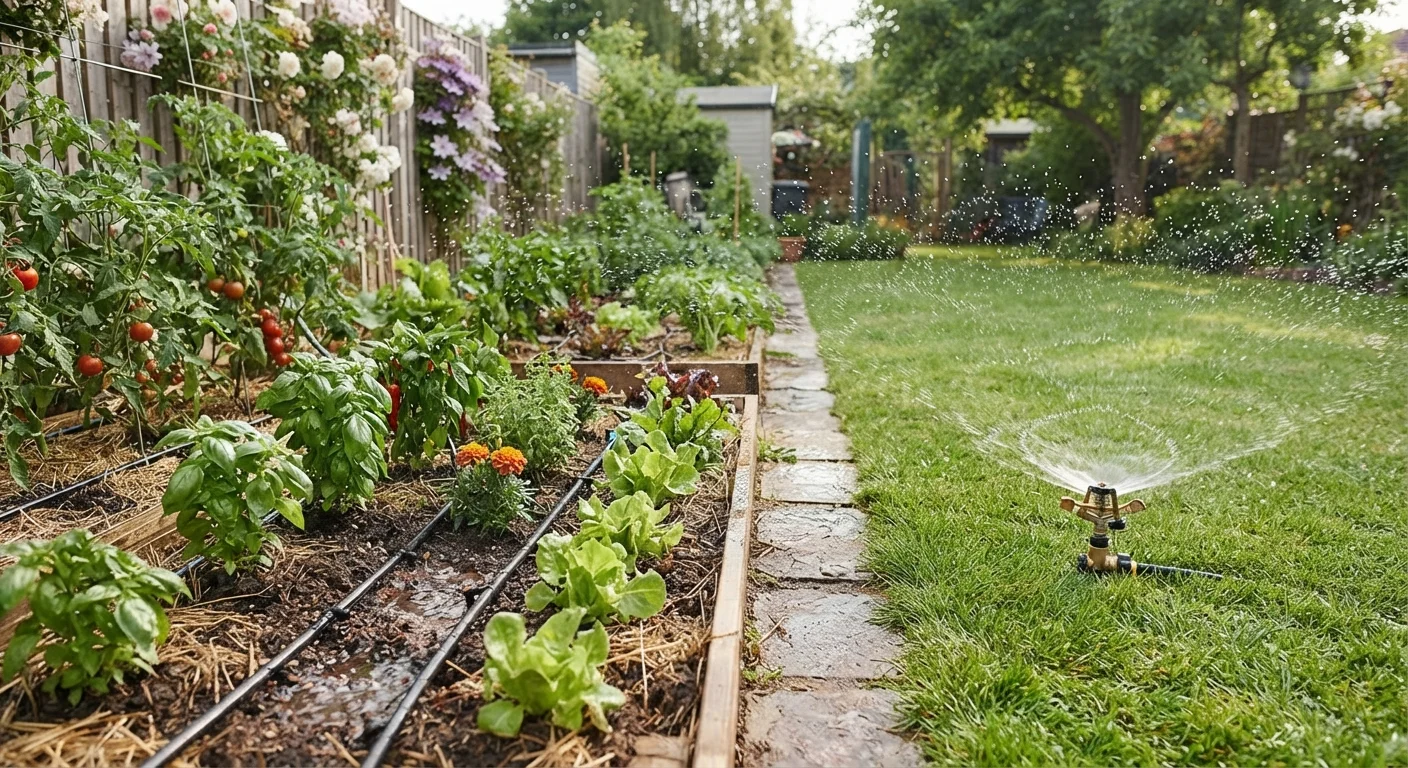
Drip irrigation uses a network of flexible tubing, emitters, and sometimes soaker hoses to deliver water slowly and directly to the base of individual plants. Water seeps into the soil near the root zone at a controlled flow rate - typically measured in gallons per hour - rather than broadcasting moisture across the surface. Because water goes exactly where plants need it, very little is lost to evaporation or surface runoff.
Sprinkler systems distribute water overhead through rotating heads, pop-up nozzles, or oscillating spray arms. Water travels through the air before reaching the soil, mimicking rainfall across a broad area. This makes sprinklers well-suited to lawn coverage, but overhead delivery also means more water is intercepted by foliage, lost to wind drift, or evaporated before it reaches roots.
Both systems can be connected to automatic timers and soil moisture sensors. Learning watering habits that support deep root growth can help you get the most from either setup, since frequency and duration matter as much as the delivery method.
| Criterion | Drip Irrigation | Sprinkler Systems |
|---|---|---|
| Best suited for | Garden beds, shrubs, vegetables | Lawns and large turf areas |
| Water delivery method | Slow drip at root zone | Overhead spray coverage |
| Evaporation loss | Low | Moderate to high |
| Installation complexity | Moderate; planning-intensive | Low to high depending on type |
| Upfront cost (typical range) | Moderate to high | Low (hose-end) to high (in-ground) |
| Maintenance requirements | Filter cleaning; emitter checks | Head alignment; winterization |
| Foliage wetness | Minimal - soil-level delivery | High - overhead spray |
| Automation compatibility | Yes - timers and sensors | Yes - timers and sensors |
Installation, Cost, and Maintenance
Installation complexity differs substantially between the two systems, and those differences affect both upfront cost and long-term upkeep.
Drip irrigation requires mapping emitter placement to each plant or planting zone, which takes more planning time. Kits for small garden beds are widely available and manageable for a confident DIYer, but larger or more permanent installations - particularly those tied into a home's main water supply - may benefit from professional assessment. Emitters can clog over time, especially in areas with hard water, and tubing is vulnerable to UV degradation if left exposed. Filters and pressure regulators are typically required components.
Sprinkler systems range from simple hose-end units to in-ground systems with multiple zones. In-ground systems involve trenching, which typically requires a permit in many jurisdictions - verify your local codes before beginning. They also require winterization in freezing climates (blowing compressed air through lines to prevent pipe damage). Head alignment and coverage overlap must be calibrated to avoid dry spots or soggy zones.
30-50%
Potential water savings with drip vs. sprinkler
The U.S. Environmental Protection Agency (EPA) estimates that drip irrigation can be 30-50% more efficient than conventional sprinkler systems in garden bed applications.
50%
Of US household water used outdoors
The EPA estimates that roughly half of residential water use goes to landscape irrigation, making system efficiency a meaningful factor in overall household water consumption.
Both system types benefit from periodic inspection. Broken emitters, clogged heads, or shifted sprinkler angles can silently waste significant water before anyone notices. Our guide on recognizing overwatering damage can help you spot when your system may be delivering too much, regardless of type.
Water Efficiency and Plant Health
Water efficiency is one of the most discussed differences between these two systems - and for good reason, particularly in regions with water restrictions or high utility costs.
Drip irrigation is generally regarded as more water-efficient for garden beds. Because water is applied slowly at soil level, there is less opportunity for evaporation or runoff. Keeping foliage dry also lowers the risk of fungal diseases, which can be a meaningful advantage in vegetable gardens or flower beds. Pairing drip irrigation with a well-chosen mulch layer around drip lines can further reduce soil moisture loss.
Sprinklers are less efficient per gallon applied but are often the only practical choice for turfgrass, which forms a dense, continuous surface that drip lines cannot easily serve. Watering early in the morning - when wind is typically calmer and temperatures are lower - reduces evaporation loss from sprinkler systems. Automatic shutoff via rain sensors or smart controllers can prevent unnecessary watering cycles after rainfall.
Choosing plants adapted to your local rainfall patterns also reduces dependence on any irrigation system. Native plants often require less supplemental watering than non-native ornamentals, potentially reducing the load on whichever system you choose.
Check Local Water Regulations Before Installing
Many US municipalities have watering schedules, restrictions, or rebate programs tied to irrigation system type. Some areas offer rebates specifically for converting from sprinkler to drip systems. Contact your local water utility before installation to understand what rules apply and whether any financial incentives are available in your area.