
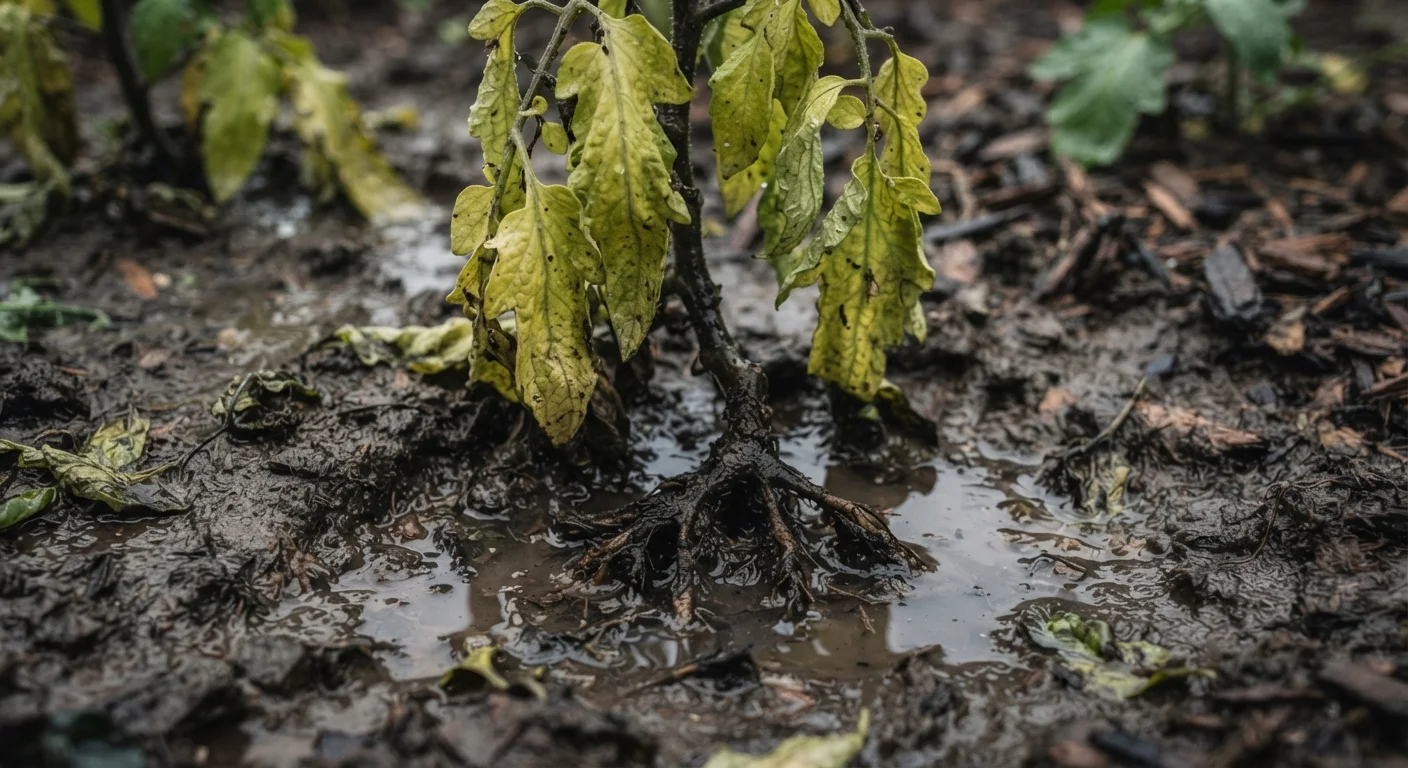
The Counterintuitive Truth About Too Much Water
Most gardeners instinctively reach for the hose when plants look stressed. Drooping leaves, dull color, and slow growth all trigger concern - and watering feels like the responsible response. The problem is that all of those symptoms can just as easily signal too much water as too little, and applying more water to an already saturated plant can push it past recovery.
When soil stays waterlogged, air pockets fill with water. Plant roots need oxygen to function; without it, they begin to suffocate within days. Stressed, oxygen-deprived roots then become vulnerable to soil-borne pathogens - particularly Pythium and Phytophthora, the fungal-like microorganisms responsible for root rot. Once root rot sets in, the plant can no longer absorb water or nutrients efficiently, which ironically makes it look like it needs more water. The cycle is difficult to break without deliberate intervention.
Drought stress, while damaging, is often reversible. Most plants can recover from temporary dryness if water is restored promptly. Root rot from chronic overwatering is frequently fatal - and it typically progresses underground, out of sight, before any visible warning appears.
How to Recognize Overwatering Before It's Too Late
Learning to distinguish overwatering from underwatering is one of the most valuable skills a gardener can develop. The following are the most reliable signals that your soil moisture level has crossed from healthy to harmful:
- Persistently yellowing leaves - especially on lower foliage - that don't improve after a few dry days
- Soil that stays wet or spongy more than two to three days after watering or rain
- Mold, algae, or mushrooms appearing at the soil surface
- A sour or sulfurous smell coming from the soil, indicating anaerobic (oxygen-free) decomposition
- Wilting despite wet soil - the most telling sign, since drought-stressed plants wilt in dry soil, not saturated ground
- Soft, brown, mushy roots visible when a plant is removed from a pot
Before watering any plant, push a finger two inches into the soil. If it feels moist at that depth, hold off. This simple check takes seconds and prevents the most common cause of unnecessary watering.
~50%
Of landscape water applied beyond plant needs
The U.S. Environmental Protection Agency estimates that roughly half of the water used for outdoor irrigation is wasted due to inefficient practices, including overwatering.
2-3 days
Time before oxygen deprivation damages roots in saturated soil
Horticultural research indicates that many common garden plants begin showing root stress when soil oxygen is depleted for more than 48-72 hours continuously.
Common Overwatering Mistakes - and How to Avoid Them
Watering on a fixed daily schedule regardless of weather or soil conditions.
Why it happens: Timers and routines feel like responsible gardening, and many gardeners set them once and forget to adjust for rain or temperature changes.
Treating wilting as a reliable sign that water is needed.
Why it happens: Wilting is the most visible plant distress signal, and watering is the instinctive response. Many gardeners don't realize that waterlogged roots can also cause wilting.
Using the same watering routine for all plants regardless of their individual needs.
Why it happens: Gardeners often water everything at the same time as a matter of convenience, without accounting for the fact that succulents, vegetables, shrubs, and lawn grass have very different moisture requirements.
Ignoring the role of soil type in how quickly water drains away.
Why it happens: Standard watering advice often assumes average loamy soil. Gardeners with heavy clay soil may not realize their ground holds water far longer, making normal watering frequencies excessive.
Overwatering container plants by not accounting for reduced evaporation and drainage limitations.
Why it happens: Pots look dry on the surface quickly because the top layer dries fast, leading gardeners to water frequently even when the lower soil is still saturated.
For guidance on building a smarter irrigation setup that makes it easier to apply the right amount of water, see our comparison of drip irrigation vs. sprinkler systems.
Recovering an Overwatered Garden
Root Rot Can Be Irreversible If Caught Late
Once root rot has progressed significantly, even correcting the watering schedule may not save a plant. If a plant continues to decline after you've reduced watering and improved drainage, inspect the roots directly. Healthy roots are firm and white or tan; rotted roots are soft, brown, and may smell foul. Severely affected plants may need to be removed to prevent spreading soil-borne pathogens to neighboring plants.
If you suspect overwatering, the first step is to stop irrigating and allow the soil to dry to an appropriate moisture level. For container plants, remove the pot from its saucer, check the drainage holes for blockage, and consider repotting into fresh, well-draining mix if root rot is visible. Trim any blackened or mushy roots with clean scissors before repotting.
In garden beds, improving drainage is the longer-term solution. Incorporating organic matter such as compost can improve the structure of heavy clay soils over time. Raised beds are worth considering for plants with low drought tolerance that are especially susceptible to waterlogging in your region.
Once drainage improves, shift to a deep, infrequent watering approach rather than frequent light sessions. This encourages roots to grow downward toward consistent moisture rather than staying shallow and dependent on surface irrigation. It also allows the upper soil layer to dry between sessions - an environment far less hospitable to root rot pathogens.
For vegetable gardeners dealing with this issue, our complete vegetable garden guide covers soil preparation and watering fundamentals that help prevent overwatering from the start.