Choosing the Right Location
Site selection is the single decision that most influences whether a vegetable garden thrives or struggles. Most vegetables - including tomatoes, peppers, beans, and squash - require at least six hours of direct sunlight per day. Leafy greens such as lettuce and spinach tolerate four to five hours, but fruiting crops are unforgiving of shade.
Beyond sun, consider proximity to a water source and protection from strong wind. Sloped ground can cause erosion and uneven moisture distribution. A relatively flat, open area close to the house tends to make routine care easier, which means the garden actually gets tended.
Observe Before You Plant
Spend a full day watching how sunlight moves across your intended garden site before committing to it. Areas that appear open in the morning may fall into deep shade by early afternoon as the sun shifts. This simple observation step prevents one of the most common new-garden mistakes.
Preparing and Improving Your Soil
Healthy soil is the engine of a productive garden. Before planting, test your soil's pH and nutrient levels - inexpensive kits are available at most garden centers, and many university cooperative extension programs offer low-cost lab testing. Most vegetables grow best in soil with a pH between 6.0 and 7.0.
Work in generous amounts of compost or aged organic matter to improve both drainage in clay soils and moisture retention in sandy ones. Our beginner's guide to composting explains how to produce this amendment at home from kitchen and yard waste. Aim to loosen soil to a depth of at least 12 inches so roots can establish without resistance.
Get a basic soil test before adding any amendments. It tells you exactly what's missing so you're not guessing - and it prevents over-correcting, which is a surprisingly common way to harm otherwise healthy soil.
Soil tests remove guesswork and help gardeners target amendments precisely, which is more cost-effective and less likely to create nutrient imbalances than blanket applications.
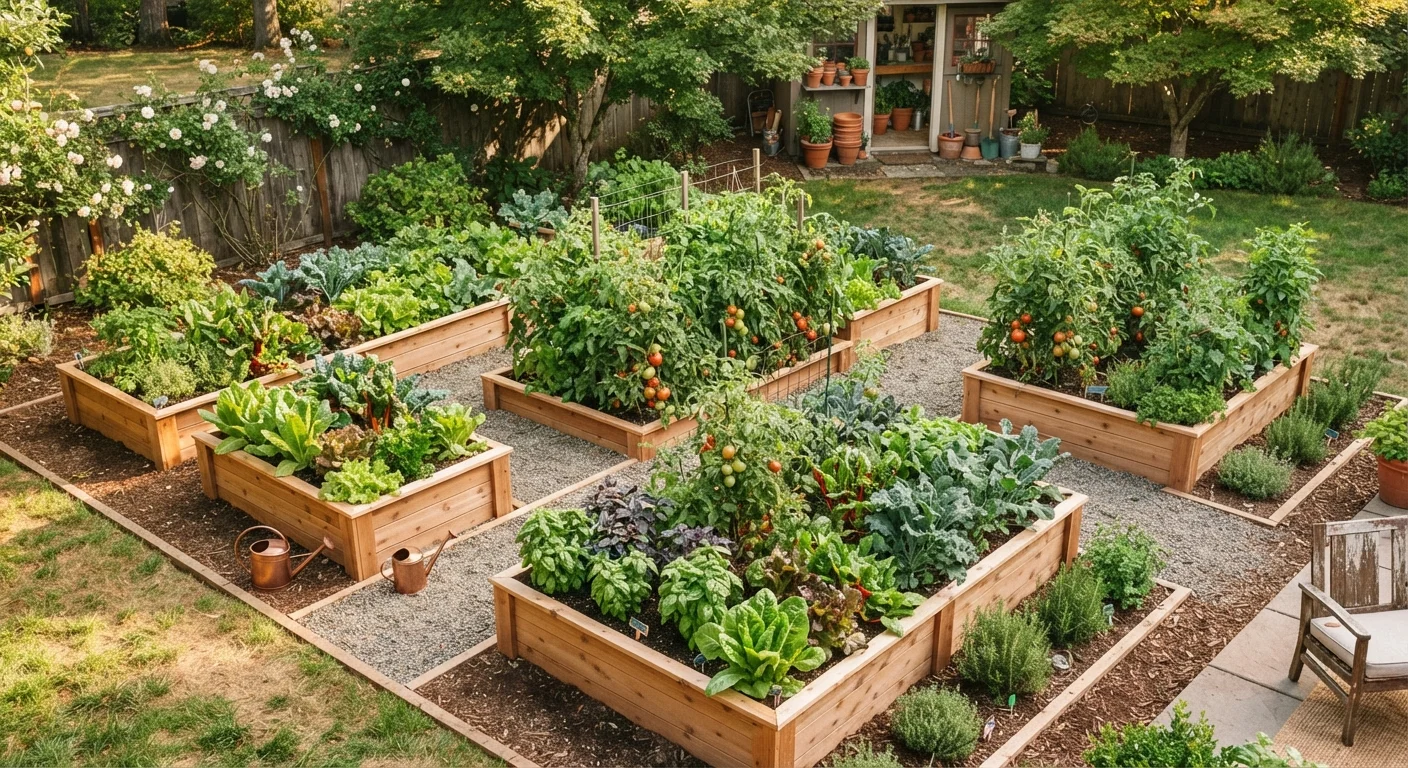
Build your beds with a 4-foot maximum width so you can reach the center from either side without stepping in and compacting the soil. Compaction is one of the most overlooked reasons vegetable roots underperform.
Compacted soil restricts root growth and reduces aeration and water infiltration; avoiding foot traffic in planting areas is a low-effort way to protect soil structure season after season.
Deciding What to Grow
Start by identifying your local frost dates - the average dates of the last spring frost and first fall frost in your area. The USDA Plant Hardiness Zone Map and your local cooperative extension office are reliable references. These dates define your growing window and determine which crops are realistic.
For first-time gardeners, crops like zucchini, green beans, lettuce, radishes, and cherry tomatoes are relatively forgiving and quick to produce. As confidence builds, more demanding crops like melons, corn, or brassicas (broccoli, cabbage) can be added. Growing what your household actually eats also keeps motivation high through the season.
Consider your space realistically. Vining crops such as cucumbers and squash need room to spread, while vertical support structures let you grow pole beans or indeterminate tomatoes in a smaller footprint.
88%
US gardeners who grow vegetables
According to the National Gardening Association, vegetable gardening consistently ranks as the most common type of food gardening among US households that garden.
6+ hrs
Daily sunlight most vegetables require
Most fruiting vegetables need a minimum of six hours of direct sun per day; fewer hours typically results in reduced yield and increased susceptibility to disease.
6.0-7.0
Ideal soil pH range for vegetables
Most vegetable crops perform best within a slightly acidic to neutral pH range; outside this range, nutrient uptake becomes less efficient regardless of what is added to the soil.
Planting and Spacing
Seeds can be started indoors four to eight weeks before your last frost date for crops that need a long growing season, or direct-sown outdoors once soil has warmed sufficiently. Transplants purchased from a nursery are a practical shortcut when indoor seed-starting isn't feasible.
Follow seed packet or plant tag spacing recommendations. Crowding plants reduces airflow, invites disease, and forces competition for water and nutrients. Raised beds - typically 4 feet wide to allow easy reach from either side - offer good drainage and allow you to build up a superior soil mix rather than amending in-ground soil extensively.
Don't Rush Warm-Season Planting
Planting warm-season crops like tomatoes or peppers before the soil has reached at least 60°F (16°C) can stunt growth and leave transplants vulnerable to cold damage even if frost is not forecast. Cold soil slows root development regardless of air temperature. Use an inexpensive soil thermometer to confirm readiness before transplanting.
Watering and Feeding Your Garden
Consistent moisture is critical, but the method matters. Deep, infrequent watering - soaking the root zone thoroughly every few days rather than sprinkling daily - encourages roots to grow downward and access water reserves more efficiently. Our article on watering practices for healthy roots covers this approach in detail.
Drip irrigation is particularly well-suited to vegetable gardens because it delivers water directly to the soil surface, keeping foliage dry and reducing fungal disease risk. See our comparison of drip irrigation vs. sprinkler systems to understand the tradeoffs.
For feeding, compost-amended soil often reduces the need for supplemental fertilizer. When additional nutrients are required, a balanced approach informed by your soil test results avoids over-application, which can harm plants or run off into waterways. Our guide to organic vs. synthetic fertilizers lays out the key differences between the two main approaches.
Managing Pests and Disease
Observation is the most effective pest management tool. Walk the garden several times a week and look for chewed leaves, discoloration, wilting, or visible insects. Catching problems early keeps them from escalating.
Cultural practices - crop rotation, adequate spacing, removing dead plant material, and watering at the base rather than overhead - prevent many common issues without any chemical input. Rotating plant families to different beds each season disrupts the life cycles of soil-dwelling pathogens and pests that target specific crops.
When intervention is needed, start with the least disruptive approach: hand-picking larger insects, using row cover fabric to exclude pests, or introducing beneficial insects. Any product applied to edible crops should be used according to label directions, and harvest intervals should be observed.
Read Labels Before Applying Any Product to Edible Crops
Not all pesticides or fungicides are approved for use on food crops, and those that are carry specific pre-harvest intervals - the minimum number of days between application and harvest. Ignoring these intervals creates a food safety risk. Always verify that any product is labeled for edible use and follow the stated harvest interval exactly.
Harvesting and Keeping the Garden Productive
Harvest vegetables at peak maturity for the best flavor and to keep plants producing. Many crops - beans, zucchini, cucumbers, and herbs - will slow or stop production if fruit is left to over-ripen on the plant. Check plants every two to three days during peak season.
Succession planting - sowing new seeds every two to three weeks rather than all at once - extends your harvest window and prevents gluts. As one crop finishes, pull it out and replant the space with a second crop suited to the remaining season: cool-season crops like spinach and turnips can follow warm-season crops in late summer.
End-of-season care sets up next year's garden. Turn finished plant matter into the compost pile (avoiding diseased material), add a fresh layer of compost to beds, and note what worked and what didn't. That record-keeping habit compounds over seasons into a garden tailored precisely to your site and preferences.