Why Mulch Matters in Garden Beds
Mulch performs several functions simultaneously: it limits weed germination, slows moisture evaporation from the soil, moderates soil temperature, and - depending on the material - can enrich the soil as it breaks down. Most garden extension programs recommend a layer of 2 to 4 inches in planted beds, keeping material a few inches away from plant stems and tree trunks to prevent rot.
Choosing the wrong type doesn't necessarily ruin a garden, but it can mean more maintenance, poorer plant performance, or unnecessary expense. Understanding what each category does helps you match material to purpose. Effective mulching also pairs well with thoughtful watering strategy - see our comparison of drip irrigation vs. sprinkler systems for more on how water delivery and mulch work together.
Organic Mulch Options: Wood Chips, Bark, Straw, and Leaves
Organic mulches are plant-based materials that decompose gradually, adding organic matter to your soil over time. This decomposition feeds soil microbes and can slowly improve drainage in clay soils or water retention in sandy ones.
Wood Chips and Shredded Bark
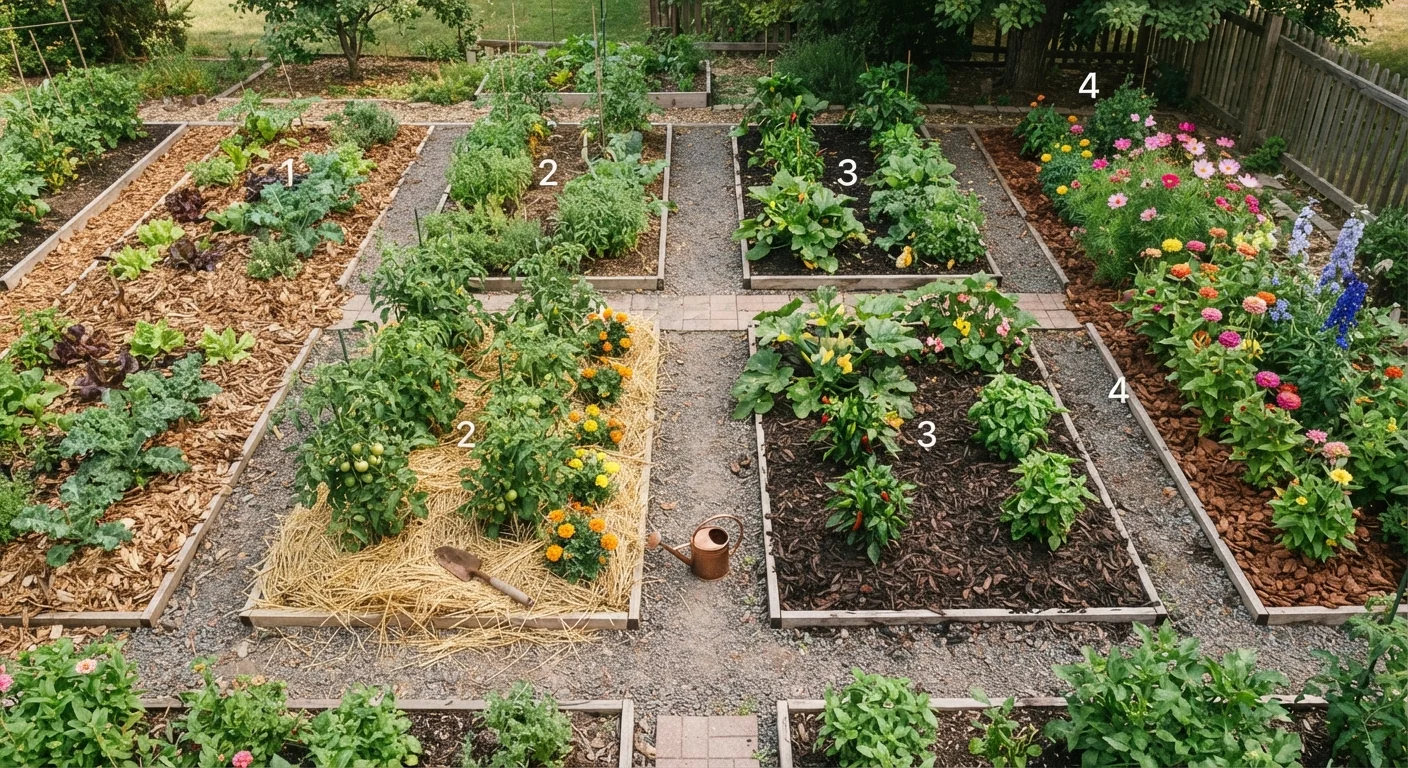
Among the most widely available options, wood chips and shredded bark are suited to ornamental beds and around trees and shrubs. They decompose slowly - typically over one to three years - offering durable weed suppression and a tidy appearance. One commonly cited concern is nitrogen tie-up: as wood decomposes, soil microbes temporarily use nitrogen from the surrounding soil. This is mostly a surface-level effect and rarely harms established plants, but it's worth avoiding freshly chipped wood against vegetable seedlings.
Straw
A popular choice for vegetable gardens, straw (not hay, which contains seeds) breaks down within a single growing season, making it easy to till in at year's end. It insulates soil well in colder months and keeps mud off low-growing crops. The trade-off is its shorter lifespan - you'll reapply more frequently.
Shredded Leaves
One of the most cost-effective mulch options, shredded leaves are available free to most homeowners each fall. They mat down less than whole leaves and break down into a rich humus. They suit perennial beds particularly well and complement soil-building approaches discussed in our guide to organic vs. synthetic fertilizers.
| Wood Chips / Bark | Straw | Shredded Leaves | Rubber | Gravel / Stone | |
|---|---|---|---|---|---|
| Soil improvement | Yes, over time | Yes, within a season | Yes, rich humus | None | None |
| Weed suppression | Good | Moderate | Good when shredded | Very good | Good |
| Moisture retention | Good | Good | Good | Moderate | Low |
| Longevity | 1-3 years | One season | One season | Permanent | Permanent |
| Best use case | Ornamental beds, trees | Vegetable gardens | Perennial beds | Pathways, play areas | Xeriscape, rock gardens |
| Relative cost | Low to moderate | Low | Very low (free) | Moderate to high | Moderate to high |
Inorganic Mulch Options: Rubber, Gravel, and Landscape Fabric
Inorganic mulches don't decompose, which means they don't improve soil chemistry - but they also don't need frequent replacement and tend to excel at weed and moisture control in specific situations.
Rubber Mulch
Made from recycled tires, rubber mulch is used in playground surfaces and sometimes in ornamental beds. It suppresses weeds reliably and doesn't blow away easily. However, it does not improve soil, can retain heat (which may stress plant roots in hot climates), and raises environmental questions about long-term leaching. It's generally better suited to non-planting areas than active garden beds.
Gravel and Crushed Stone
Stone mulches excel in xeriscape or rock garden designs and around drought-tolerant plants. They shed water quickly, which suits dry climates but can be counterproductive in humid regions or for moisture-loving plants. Stone is essentially permanent - a key advantage if you want a maintenance-free look, but a significant drawback if you ever want to change plantings.
Landscape Fabric
Often used beneath other mulches to suppress weeds, landscape fabric can be effective short-term but tends to degrade over several years and can complicate future planting. Many gardeners find that a thick layer of organic mulch achieves similar weed suppression without the long-term drawbacks.
Apply Mulch at the Right Depth
Aim for 2 to 4 inches of mulch across garden beds. Less than 2 inches often allows weeds to break through; more than 4 inches can prevent rainfall from reaching roots and may cause anaerobic conditions in the soil. Always pull mulch back a few inches from plant stems and tree trunks to allow airflow and reduce disease risk.
Matching Mulch to Your Garden's Needs
The most useful question to ask isn't which mulch is best overall - it's which one aligns with your specific goals. For vegetable gardens that change each season, light organic options like straw or shredded leaves offer flexibility. Established ornamental shrub beds benefit from the slow decomposition of bark or wood chips. Pathways between rows call for something durable, like coarse wood chips or gravel.
Climate also shapes the decision. In regions with hot, dry summers, a thicker organic layer helps retain soil moisture longer - working in tandem with efficient irrigation. In wet climates, stone mulch around plants prone to crown rot may reduce disease pressure. Gardeners in colder zones often use straw as winter insulation over perennial roots, removing it in spring.
Whatever material you choose, consistency in application depth and keeping mulch away from plant crowns are the practices most likely to protect your beds and reduce maintenance over time. For a broader look at evidence-based yard care, our article on lawn myths that waste time and water covers additional common misconceptions worth knowing.