What Compacted Soil Actually Does to Your Lawn
Soil compaction happens gradually. Every time a lawn experiences foot traffic, heavy rain, or the weight of mowing equipment, soil particles are pressed closer together. In clay-heavy soils especially, this can become a significant problem within a single growing season. The result is a dense layer that resists water infiltration, limits root expansion, and reduces the oxygen available to soil microorganisms - all things a lawn depends on to stay green and thick.
Compaction doesn't always look like an obvious problem from the surface. A lawn can appear reasonably green while the soil beneath is struggling to support deep, healthy roots. That's why understanding the specific warning signs matters more than checking your lawn on appearance alone. Pairing this awareness with a seasonal lawn care calendar helps ensure you address compaction at the right time of year.
~40%
Of urban lawns affected by soil compaction
Soil scientists and cooperative extension programs commonly cite high foot-traffic and clay-heavy soils as the leading contributors to compaction in residential yards across the US.
2-3 inches
Depth of core aeration tine penetration
Most core aerators are designed to extract plugs at this depth, which is where the majority of grass root activity and water absorption occurs.
1-2x per year
Recommended aeration frequency for compacted lawns
University extension services generally recommend annual aeration for lawns with heavy clay soil or high traffic, while sandy or low-traffic lawns may need it less often.
Signs Your Lawn Is Telling You It Needs Aeration
Several observable signs suggest that compaction has reached a level where aeration would meaningfully help:
- Water pools or runs off quickly: If rain or irrigation water sits on the surface instead of soaking in, the soil may be too compacted to absorb it at a normal rate. This is one of the clearest functional signals.
- The soil feels hard underfoot: A simple test - pushing a screwdriver or pencil 6 inches into the soil - should meet little resistance in healthy ground. If it's difficult to push in, compaction is likely the cause.
- Grass thins in high-traffic areas: Paths between garden beds, routes to a gate, or spots where children or pets frequently run often show the earliest signs of compaction-related thinning.
- Visible thatch layer: A spongy surface feel combined with a brownish layer between the grass blades and soil indicates accumulated thatch, which can contribute to moisture and airflow problems at the root zone.
- Fertilizer and water seem ineffective: When nutrients and moisture can't penetrate compacted soil efficiently, even a well-maintained watering schedule and fertilizer routine may underdeliver. Deep, infrequent watering that encourage deep root growth is harder to achieve in compacted conditions.
Test Before You Aerate
Before renting an aerator, do the screwdriver test: push a standard screwdriver into moist soil. If it meets strong resistance before 6 inches, compaction is likely significant enough to warrant aeration. If it slides in easily, your soil may not need it this season. This quick check prevents unnecessary wear on a healthy lawn.
How the Aeration Process Works
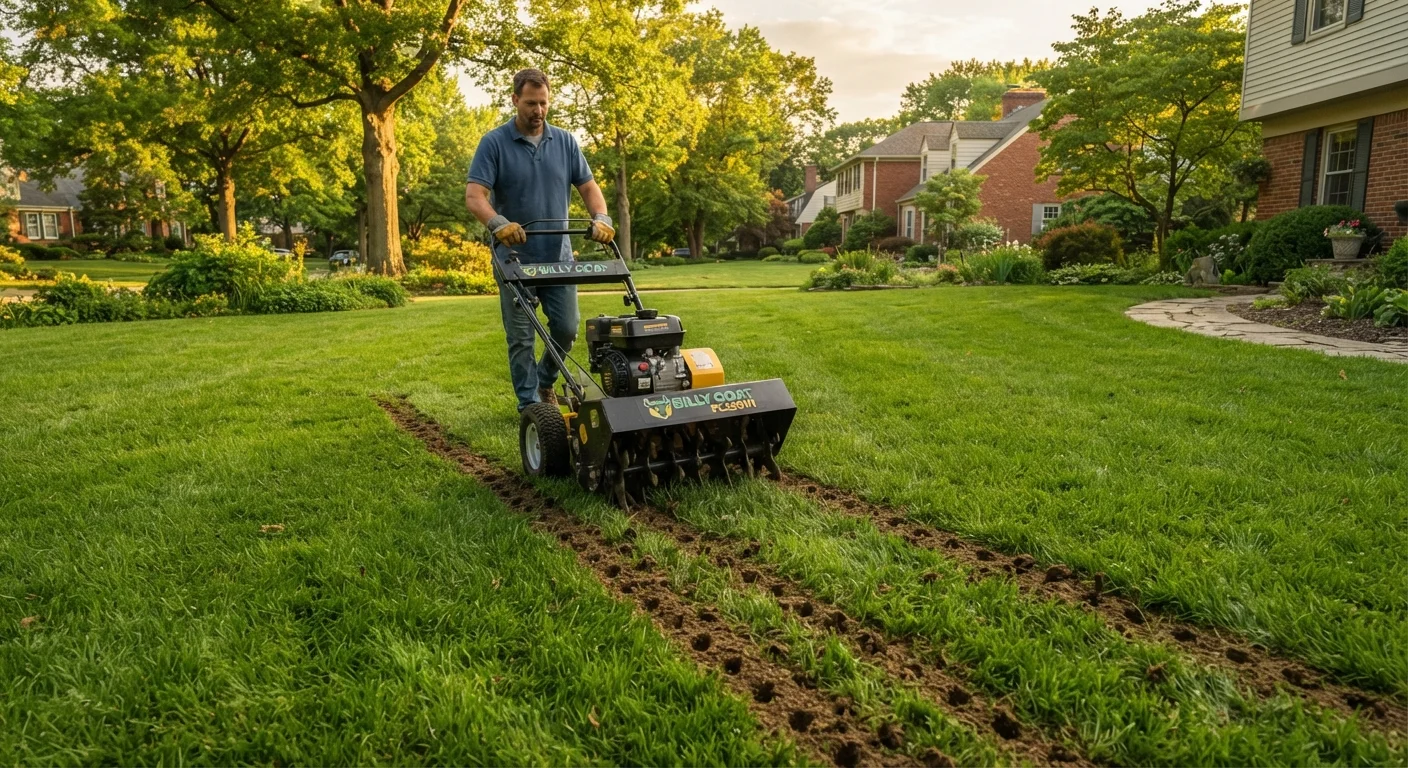
Core aeration - the method most lawn care professionals and extension services recommend - uses a machine fitted with hollow tines. As the aerator passes over the lawn, these tines penetrate the soil and extract small cylindrical plugs, typically 2-3 inches deep and spaced a few inches apart. The plugs are deposited on the surface and left to decompose naturally over the following weeks.
The resulting channels allow water and fertilizer to move directly into the root zone, while also creating space for roots to extend more freely. Oxygen levels in the soil improve, which supports the microbial activity that breaks down organic matter and feeds grass naturally.
Spike aeration - in which solid tines or spikes simply puncture the soil - is a common alternative, but it displaces rather than removes soil. In compacted or clay-dense soils, this can actually worsen compaction around the spike holes. Core aeration is the more reliable choice in most situations.
Timing matters significantly. Cool-season grasses such as fescue, bluegrass, and ryegrass respond best to fall aeration, when the soil is still warm but summer heat stress has passed. Warm-season grasses like bermudagrass and zoysia benefit most from late spring aeration as they enter their active growth period. Aerating outside these windows reduces the lawn's ability to recover and fill in the aeration holes. If you're unsure how soil health factors interact with your lawn's performance, addressing pH and compaction together can produce noticeably better results.
Making the Most of Aeration
Aeration is most effective when it's part of a coordinated approach rather than a standalone task. The window immediately after core aeration is one of the best times to overseed thin patches, since grass seed dropped into open aeration holes has far better soil contact and germination conditions than seed scattered on an intact surface. Fertilizer applied post-aeration also reaches the root zone more efficiently.
Keep the lawn well-watered in the weeks following aeration to support both seed germination and root recovery. Avoid heavy foot traffic while the lawn is actively filling in the aeration channels.
It's also worth noting that not every lawn needs aeration every year. A well-drained, lightly used lawn with sandy soil may only need aeration every two to three years. Many common lawn habits are based more on routine than on what the lawn actually needs - aeration is most valuable when the signs of compaction are genuinely present, not simply scheduled by default.
If you're planning a broader seasonal refresh, aeration fits naturally into a spring yard cleanup checklist or a fall lawn renovation alongside overseeding and topdressing.