Why a Travel Budget Is Different from Everyday Budgeting
Most personal budgets are built around a monthly rhythm: income arrives, fixed bills go out, and discretionary spending fills the gaps. A travel budget works differently. It asks you to estimate a large, one-time pool of spending - often covering 7 to 21 days - before most of the actual purchases have been made.
This distinction matters because the planning horizon is compressed and the costs are lumpy. You may pay for flights months in advance, then lodge expenses on a credit card that clears weeks later, then spend cash daily on food and transport. If you haven't mapped all of these categories before departure, the totals can surprise you badly.
The good news is that travel budgeting follows the same core logic as any other budgeting: estimate income (your travel fund), list expected outflows by category, and plan for variance. If you haven't yet built a general budgeting habit, our first budget guide covers the foundational concepts. For a deeper look at how travel spending fits within a full financial plan, see the complete personal budgeting guide.
The Core Cost Categories Every Trip Budget Needs
A reliable travel budget accounts for six major cost categories. Missing even one can create a significant gap between your plan and your actual spending.
Travel fund
A dedicated pool of savings set aside specifically to cover trip costs, separate from everyday spending money or an emergency fund.
Daily spending rate
The average amount you expect to spend per day on food, local transport, and activities - used as a real-time benchmark while traveling.
Contingency buffer
A reserved amount - typically 10-15% of total estimated trip cost - held back to cover unexpected or unplanned expenses during travel.
Pre-trip costs
Expenses paid before departure, such as flights and travel insurance, that are committed and cannot easily be recovered once booked.
In-trip costs
Day-to-day expenses incurred during travel - meals, local transport, activities - that remain variable and can be adjusted in real time.
Travel insurance premium
The amount paid to purchase a travel insurance policy, which may cover trip cancellation, medical emergencies, or lost baggage depending on the plan selected.
- Transportation: Flights or ground transport to and from your destination, plus local transit, rideshares, or car rental during the trip. Don't forget airport transfer costs on both ends.
- Lodging: Hotels, short-term rentals, hostels, or other accommodations for every night of the trip. Taxes and resort fees are frequently added at checkout and are easy to underestimate.
- Food and drink: Meals, snacks, coffee, and any groceries if you plan to cook. A useful rule of thumb is to estimate a daily food budget per person and multiply by trip length, then add 20% for variance.
- Activities and entrance fees: Tours, museum admissions, park passes, experiences, and any paid entertainment. These are highly variable and destination-dependent.
- Travel insurance: A cost many first-time travelers skip, though it can be significant if a medical event, trip cancellation, or lost baggage occurs. Premiums vary widely based on trip cost, destination, and traveler age.
- Contingency reserve: An amount set aside for unplanned costs - covered in detail in the next section.
For a full reference list of expense line items within each category, see our travel cost categories guide.
How to Estimate Costs Before You Book Anything
Estimation is the most underrated skill in travel budgeting. The goal at this stage is not precision - it's a defensible range that lets you decide whether a trip is financially feasible before you commit to any bookings.
Start with a Research Session, Not a Number
Many first-time planners set a total trip budget before researching what things actually cost, then work backward - which often leads to wishful estimates. It's more reliable to look up real prices first and let the total emerge from the data. Even a rough one-hour research session produces a far more defensible estimate than a round number chosen in advance.
Use a three-step approach:
- Research actual prices, not assumptions. Spend 30-60 minutes looking up real flight prices for your travel window, accommodation rates on booking platforms, and average daily costs for your destination. Travel cost indices published by travel media outlets and government tourism boards can provide useful benchmarks, though individual costs will vary.
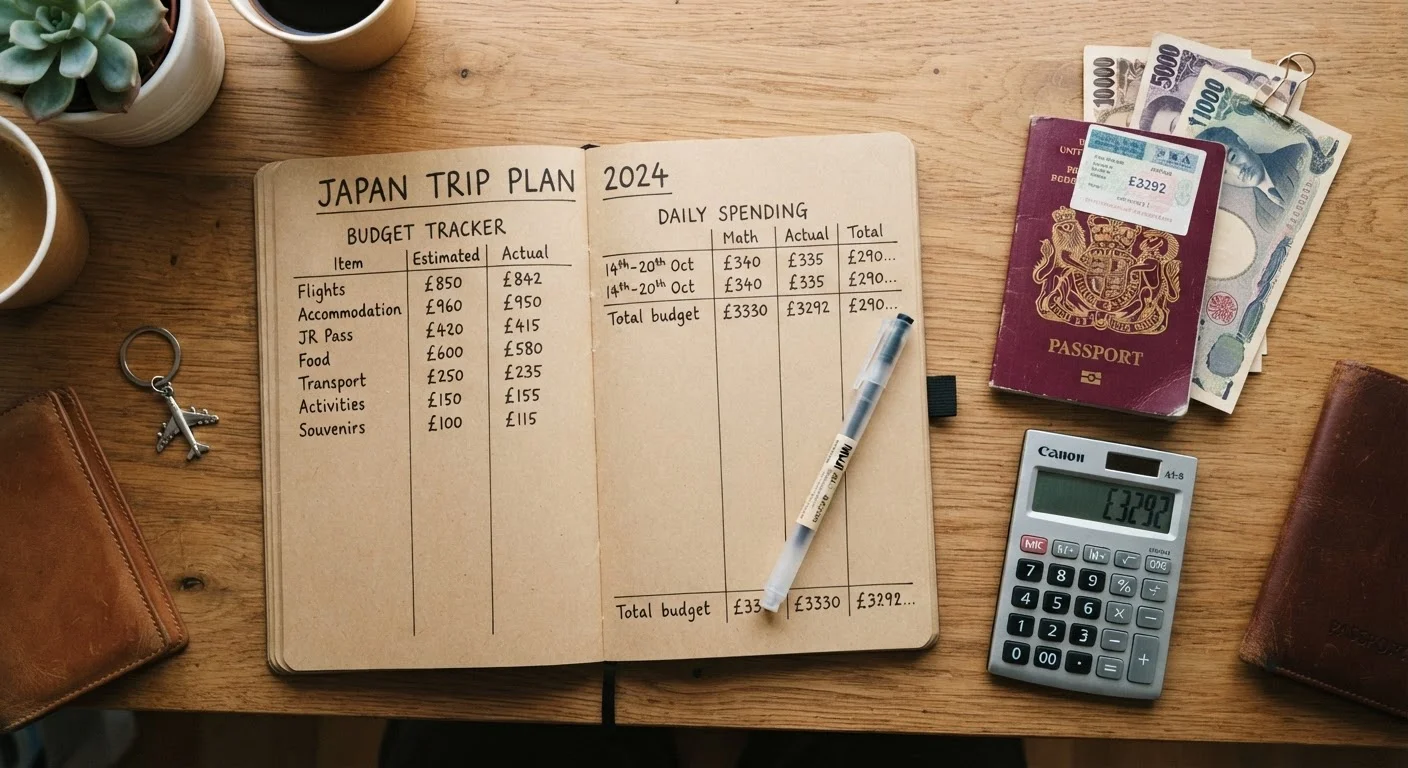
- Build a per-day spending rate. Divide your food, local transport, and activities budget by the number of travel days. This daily rate becomes your operational benchmark once you're on the road.
- Separate pre-trip and in-trip costs. Flights, travel insurance, and some accommodation are often paid before departure. Separating these from daily spending helps you track which funds are already committed and which remain liquid.
Once you have a rough total, a day-by-day spending plan can help you turn that estimate into an operational schedule you can actually follow during the trip. For the full logistics picture alongside your budget, the trip logistics framework covers every planning stage from dates to final confirmation.
Building Your Buffer: The Contingency Rule
Even a carefully researched travel budget will encounter unexpected costs. A missed connection, a prescription needed abroad, an activity that wasn't on the radar, a taxi when the transit line is closed - these are normal events, not exceptional ones.
A standard contingency rule is to add 10-15% of your total estimated trip cost as a reserved buffer. This amount should be accessible but mentally earmarked - not available for discretionary spending unless an actual unplanned expense arises.
Don't Spend Your Contingency Early
It's tempting to dip into your contingency reserve when you spot an appealing optional activity or an upgrade mid-trip. Doing so eliminates your safety net for genuine emergencies. Treat the buffer as unavailable unless an unplanned, necessary expense arises - not as a discretionary pool that unlocks once other categories are on track.
Where travelers run into trouble is treating the contingency as bonus spending money when the trip is going smoothly. Reserve it until you're home. If it goes unspent, it rolls back into your savings or seed-funds the next trip.
Understanding why budgets overrun - both structurally and behaviorally - is useful before you travel. Our article on why post-trip spending exceeds the plan explains the most common causes and how to account for them upfront.
Tracking Spending During the Trip
A budget that isn't monitored during the trip is just a number on paper. Real-time tracking - logging each expense on the day it occurs - is what keeps a plan functional when you're in the field.
You don't need a sophisticated system. A shared spreadsheet, a phone's notes app, or a dedicated expense-tracking application all work. The habit that matters most is daily logging: a five-minute review each evening of what was spent versus what was planned for that day. Small overruns caught early can be corrected; overruns discovered at the end of a week are much harder to reverse.
For a practical method of maintaining your budget in real time while traveling, see our guide to keeping a running travel budget on the road.
After you return, set aside time to compare your actual spending against your estimates by category. The gaps you find - where you consistently over- or under-estimated - are the most useful inputs you'll have for planning your next trip accurately. A post-trip review, even a simple one, compresses the learning curve significantly.
This article provides general travel budgeting information for educational purposes. Prices, fees, exchange rates, and travel conditions vary and may change. Verify current costs and entry requirements with official sources before booking or traveling.