What a Budget Actually Is (and Isn't)
A budget is simply a written plan for how you intend to use your money over a set period - usually one month. That's it. It is not a punishment, a sign that you're in trouble, or a rigid cage that bans enjoyment. It is a tool for making deliberate choices rather than reactive ones.
Many people avoid budgeting because they assume it means tracking every coffee purchase in a spreadsheet or living without anything fun. In reality, a budget can include entertainment, dining out, and hobbies - the point is that those choices are planned rather than accidental. As this plain-language explainer covers, living within your means is less about deprivation and more about alignment between what you value and where your money actually goes.
The other common misconception is that budgeting is only for people in financial trouble. In fact, it is most powerful as a proactive habit - one that helps you reach goals, reduce financial stress, and make confident decisions regardless of your income level.
Net income
The money you actually take home after taxes and deductions - the figure your budget should be built on, not your gross (pre-tax) salary.
Fixed expense
A recurring cost that stays the same each month, such as rent or a car loan payment. These are predictable and easy to plan for.
Variable expense
A cost that changes from month to month, like groceries, gas, or dining out. These require more active tracking because they fluctuate.
Budget surplus
When your income exceeds your total planned expenses - a positive gap that can be directed toward savings, debt repayment, or future goals.
Zero-based budgeting
A method where you assign every dollar of income a specific purpose, so that income minus all allocations equals zero - meaning no dollar is unaccounted for.
50/30/20 rule
A simple framework that divides after-tax income into three buckets: 50% for needs, 30% for wants, and 20% for savings and debt repayment.
Know Your Numbers: Income and Expenses
Before you can build a budget, you need two core figures: what comes in and what goes out.
Step 1 - Calculate Your Monthly Take-Home Income
Use your net income - the amount deposited into your account after taxes and any automatic deductions (like employer-sponsored retirement contributions or health insurance premiums). If your income varies month to month, calculate a conservative average using your last three to six months of earnings.
Step 2 - List and Categorize Your Expenses
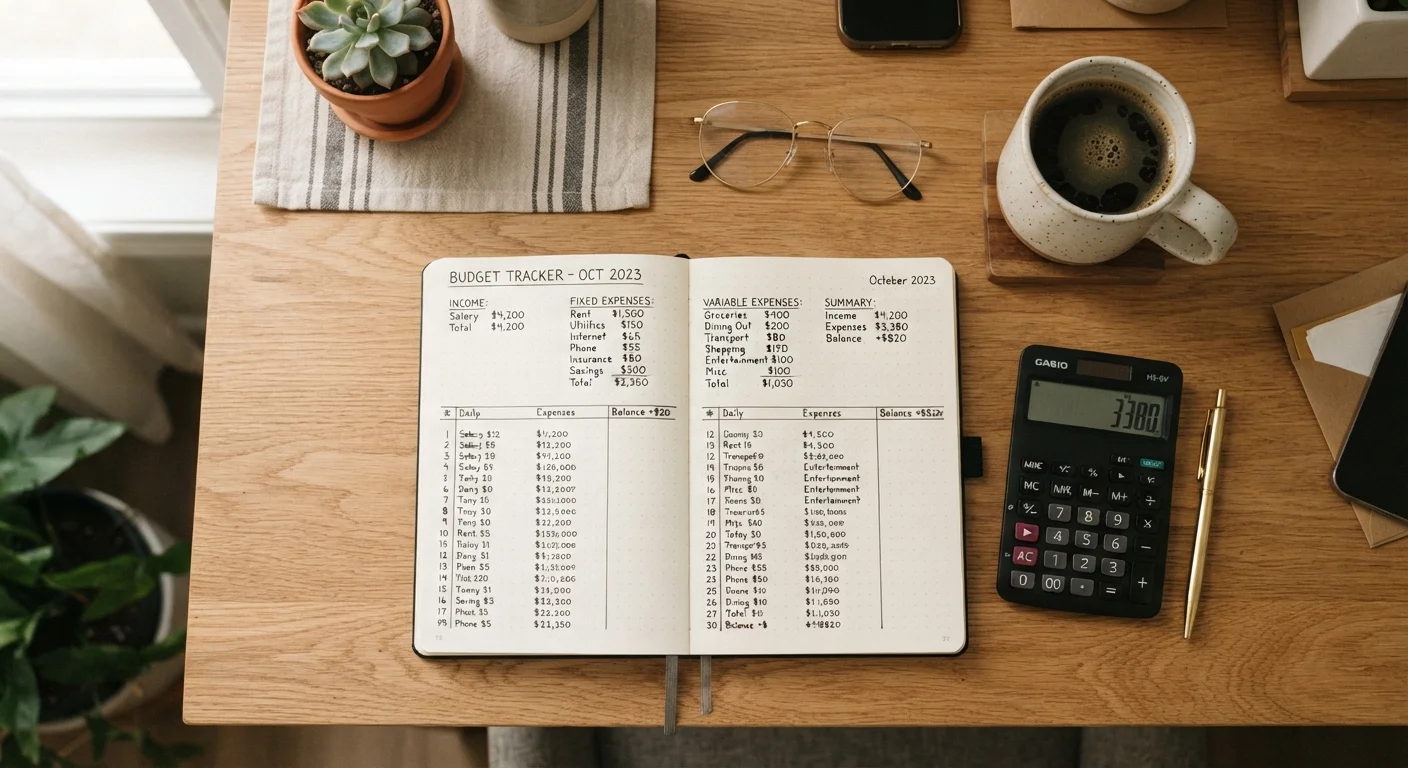
Pull up two to three months of bank and credit card statements. Write down every recurring expense and sort them into two groups:
- Fixed expenses - amounts that stay the same each month, such as rent, loan payments, or insurance premiums.
- Variable expenses - amounts that fluctuate, such as groceries, utilities, gas, and dining out.
Don't forget irregular expenses that don't appear monthly - car registration, annual subscriptions, holiday gifts. Divide annual costs by 12 and include that monthly amount in your plan. This is one of the most commonly overlooked steps for first-time budgeters.
Once listed, add up both columns. The gap between your income and your total expenses tells you whether you currently have a surplus, a shortfall, or are roughly breaking even.
Choose a Budgeting Framework That Fits Your Life
A framework gives your budget structure without requiring you to invent a system from scratch. Here are three approaches that work well for beginners:
The 50/30/20 Rule
Divide your after-tax income into three broad categories: 50% toward needs (housing, groceries, utilities, minimum debt payments), 30% toward wants (dining, entertainment, subscriptions), and 20% toward savings and extra debt repayment. This method is flexible and forgiving - ideal for those who want guardrails without micromanaging.
Zero-Based Budgeting
Every dollar of income is assigned a specific purpose until you reach zero - not zero in your account, but zero unassigned dollars. This approach requires more planning upfront but gives you maximum control and visibility. It works especially well if you tend to have spending leaks you can't explain at the end of the month.
The Envelope Method
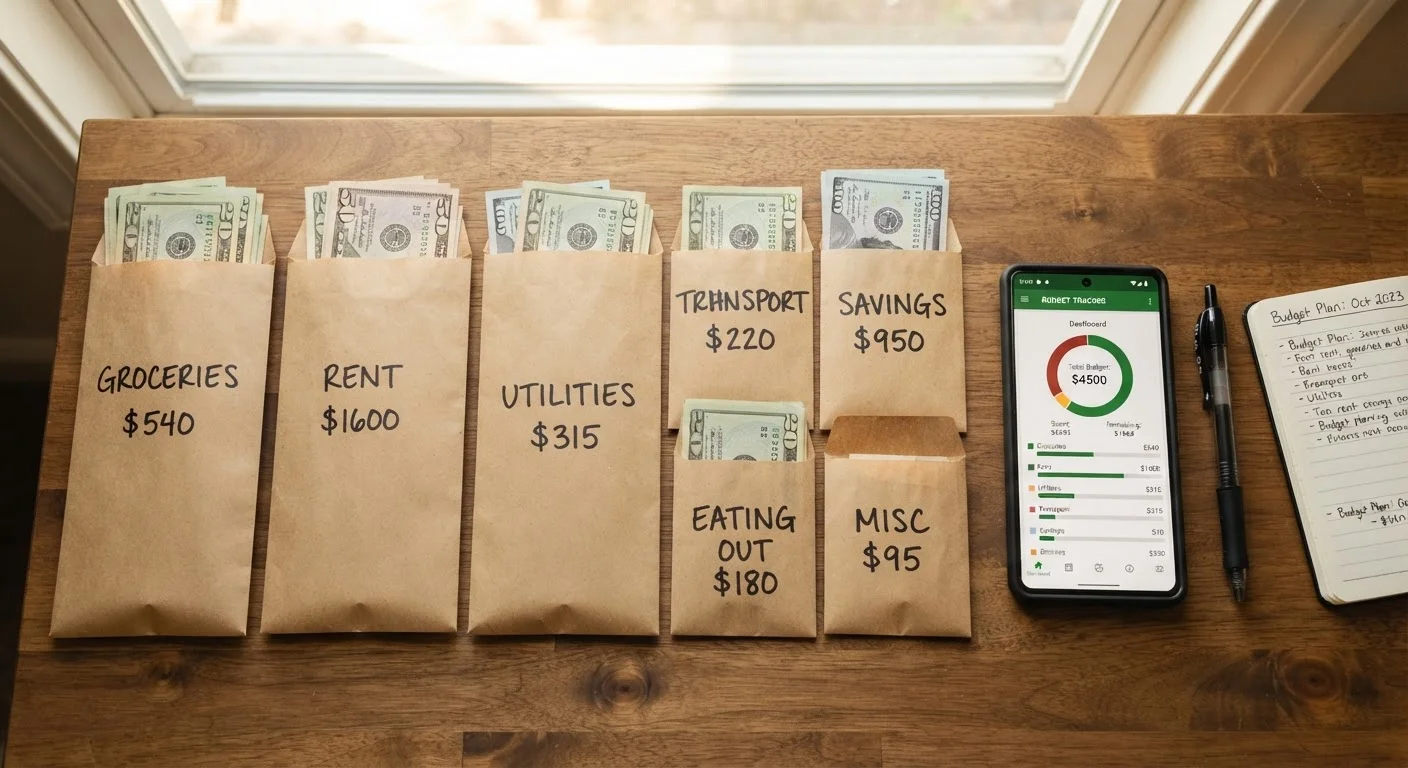
Cash is divided into labeled envelopes for each spending category. When an envelope is empty, spending in that category stops for the month. This is a highly tactile approach that can be effective for people who find digital tracking abstract or easy to ignore.
None of these methods is objectively superior - the one you'll actually stick with is the right one. For a more detailed step-by-step walkthrough of setting up your first monthly structure, see Building a Monthly Budget Step by Step.
Try One Method for a Full Month First
Resist the urge to switch budgeting frameworks after a week or two. Each method takes at least one full billing cycle to reveal whether it fits your habits. Commit to a single approach for 30 days, then evaluate what worked and what didn't before making changes.
Put Your Budget Into Practice
Having a budget on paper is only the beginning. The practice of budgeting is a monthly habit, not a one-time setup.
Pick a tracking method you'll actually use - a free spreadsheet, a notes app, or a dedicated budgeting application. The tool is secondary; consistency is the real driver of results.
Check in weekly. A brief five-minute review of where you stand in each category prevents the common experience of discovering mid-month that a category is already blown. Awareness is the mechanism through which budgets change behavior.
Treat your savings as a fixed expense. Allocating savings at the start of the month - before discretionary spending - is a foundational habit in personal finance. Even a modest monthly contribution builds meaningful reserves over time and helps you avoid the trap of saving only what's left over.
Budgeting also connects naturally to broader financial habits. If you're new to thinking about saving and debt simultaneously, this introduction to saving and debt covers how the two interact in practical terms. And if specific goals like travel are part of your financial picture, travel budgeting frameworks show how these same principles apply to trip planning.
Common First-Timer Mistakes to Avoid
Understanding where new budgets break down is just as useful as knowing how to build one. Research and practitioner experience consistently point to a handful of recurring issues:
- Building an aspirational budget, not a realistic one. Setting spending targets far below your actual habits sets you up for early failure. Start by documenting what you actually spend, then make incremental adjustments.
- Forgetting irregular expenses. Annual fees, seasonal costs, and one-time purchases derail budgets that only account for monthly recurring charges. Build in a buffer or a dedicated irregular-expenses category.
- Treating one bad month as proof the system doesn't work. Overspending in a category is information, not evidence of failure. Adjust the budget or the behavior - but don't abandon the process.
- Ignoring small recurring charges. Subscription services, streaming platforms, and low-cost apps add up quickly. Auditing these regularly is a simple way to reclaim budget flexibility.
Most early budget failures are structural, not motivational. For a deeper look at why this happens - and how to set up conditions for longer-term success - Why Budgets Fail in the First 60 Days is a useful follow-up read. You may also find it helpful to revisit common budgeting myths that may be shaping your expectations before you even begin.
Don't Skip the Irregular Expenses Step
One of the most reliable ways a new budget collapses is an unexpected but predictable expense - a car registration renewal, a yearly insurance premium, holiday spending - that wasn't accounted for. Before finalizing your budget, list every non-monthly cost you can anticipate in the next 12 months and divide each by 12 to find your monthly set-aside amount.
This article provides general financial education and is not personalized financial advice. Consider consulting a qualified financial professional for guidance specific to your situation.