
Why Saving and Debt Are Two Sides of the Same Coin
Personal finance can feel overwhelming when you're starting from scratch - but at its core, it comes down to two forces working against each other: saving (money growing for you) and debt (money being claimed from you). Understanding how these two interact is the single most useful thing a beginner can learn.
When you carry high-interest debt, every dollar sitting idle in a low-yield account may technically be costing you money - because the interest charged on the debt outpaces any interest earned. Conversely, having no savings at all means any unexpected expense (a car repair, a medical bill) can force you into new debt. The relationship is circular, which is why neither topic can be understood in isolation.
This guide breaks both concepts down clearly so you can begin making decisions that are right for your situation. For a deeper look at how credit and borrowing fit into this picture, the Credit and Borrowing starter guide is a useful companion.
Start Small, Stay Consistent
You don't need a large income to begin making progress. Even setting aside $10 or $20 per paycheck builds the habit of saving and creates a small buffer against unexpected expenses. Consistency matters more than the amount when you're just starting out.
How Saving Works: The Basics
Saving means setting aside a portion of your income rather than spending it. The purpose is threefold: to cover emergencies, to reach short-term goals (like a security deposit), and to build long-term financial security. Even modest, consistent contributions accumulate over time through a mechanism called compound interest - where the interest you earn itself earns interest.
For example, money held in an interest-bearing account grows gradually without any additional effort on your part. The rate of growth depends on the APY offered and how frequently interest compounds. While savings account rates fluctuate with broader economic conditions, the principle of consistent saving remains sound regardless of the rate environment.
A common framework is to prioritize savings in this order:
- Starter emergency fund - a buffer (often cited as $500-$1,000) to handle small unexpected expenses without turning to credit.
- Employer-matched retirement contributions - if your employer matches contributions to a workplace retirement plan, contributing enough to capture that match is widely considered a high-priority financial move.
- Expanded emergency fund - building toward three to six months of essential expenses over time.
- Other goals - a home down payment, education, travel, or other personal priorities.
To understand how a budget supports this kind of systematic saving, the Budgeting Basics hub covers the core frameworks in detail.
How Debt Works: What You're Really Paying For
Debt is borrowed money that must be repaid - typically with interest. The principal is the original amount borrowed; the interest is the lender's fee for making funds available to you. Together, these determine the true cost of any loan or credit product.
The most important number to understand is the APR, which expresses the annual cost of borrowing as a percentage. A credit card with a 24% APR costs far more over time than a car loan at 6% APR, even if the credit card balance is smaller - because unpaid balances compound, and compound interest works against you when you're the borrower.
Debt broadly falls into two categories:
- Revolving debt - like credit cards, where you can borrow up to a limit repeatedly and your required payment varies with your balance.
- Installment debt - like mortgages, auto loans, or student loans, where you borrow a fixed amount and repay it in set monthly payments over a defined term.
Neither type is inherently dangerous - the interest rate and your ability to manage repayments are what matter. For a thorough explanation of how credit scores, loan types, and interest interact, see the complete consumer reference on credit and debt.
Missing a Payment Has Lasting Consequences
Late or missed payments can trigger penalty fees, a higher APR on your account, and a negative mark on your credit report that may remain visible for up to seven years. If you're struggling to make a minimum payment, contacting your lender before missing the due date often opens options - such as a temporary hardship arrangement - that wouldn't be available after the fact.
Finding Your Starting Point
Before deciding how to allocate money between saving and debt repayment, it helps to take a clear-eyed inventory of where you stand. This means listing:
- All debts - with the balance, minimum payment, and APR for each.
- Current savings - what you have in accessible accounts and any retirement accounts.
- Monthly income and essential expenses - so you can identify what's left over each month.
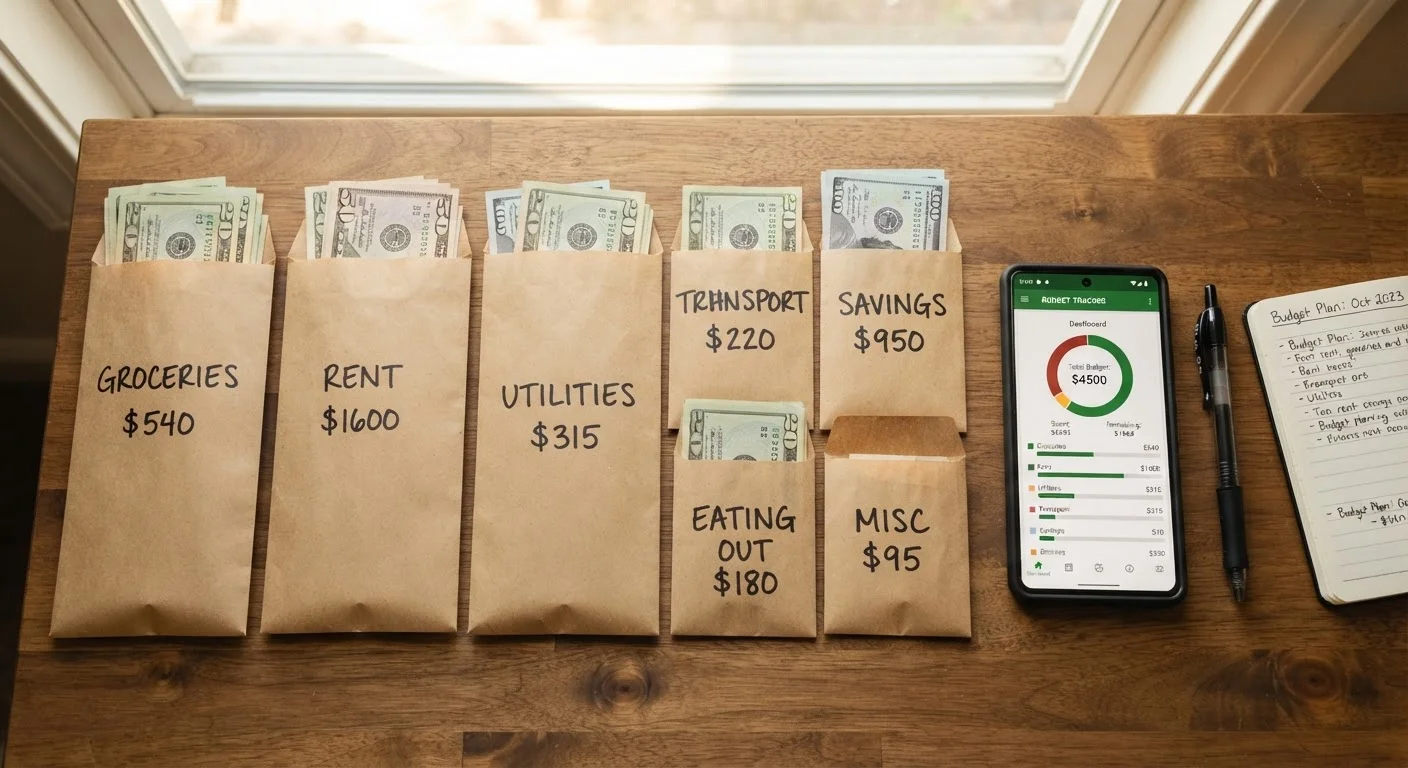
Once you can see your full financial picture on paper (or in a spreadsheet), patterns become visible. If your highest-interest debt carries an APR above what any savings account offers, directing extra cash toward that debt typically reduces your overall costs. If you have no savings at all, even a small, automatic transfer to a savings account each payday creates a buffer that reduces the risk of new debt.
The math behind the debt-first vs. savings-first question is genuinely nuanced - our article on what the math actually shows explores the scenarios in detail. But for most beginners, the practical starting point is a budget: you cannot allocate money intentionally if you don't know where it currently goes. The first budget guide walks through building one from scratch.
This article is for general informational and educational purposes only and does not constitute personalized financial, tax, or legal advice. Please consult a qualified financial professional before making decisions specific to your circumstances.
Key Concepts to Know Before You Go Further
The language of personal finance can be a barrier for beginners. Familiarizing yourself with a handful of core terms makes every subsequent conversation - with a bank, a financial adviser, or an article like this one - easier to navigate.
Principal
The original amount of money borrowed or deposited, before any interest is added. When you take out a loan, you repay the principal plus interest.
Interest rate
The percentage a lender charges for the use of borrowed money, or the percentage a financial institution pays you for keeping money in an account.
Compound interest
Interest calculated on both the original principal and the interest already earned (or owed). Over time, this causes balances to grow - or costs to increase - at an accelerating pace.
APR
Annual Percentage Rate - the yearly cost of borrowing expressed as a percentage. It helps you compare the true cost of different loans or credit products on an equal basis.
Emergency fund
A dedicated pool of savings set aside specifically to cover unexpected expenses, such as a medical bill or car repair, without needing to borrow money.
Liquidity
How quickly and easily an asset can be converted into cash. Money in a checking or savings account is highly liquid; money tied up in a home or retirement account is less so.
For a more complete plain-language glossary covering APR, principal, compounding, liquidity, net worth, and more, visit the key terms reference guide. And if you want to understand how credit scores fit into the broader picture of borrowing, the Credit and Loans hub is a logical next step.