
Why Interest Rates Are the Core of This Decision
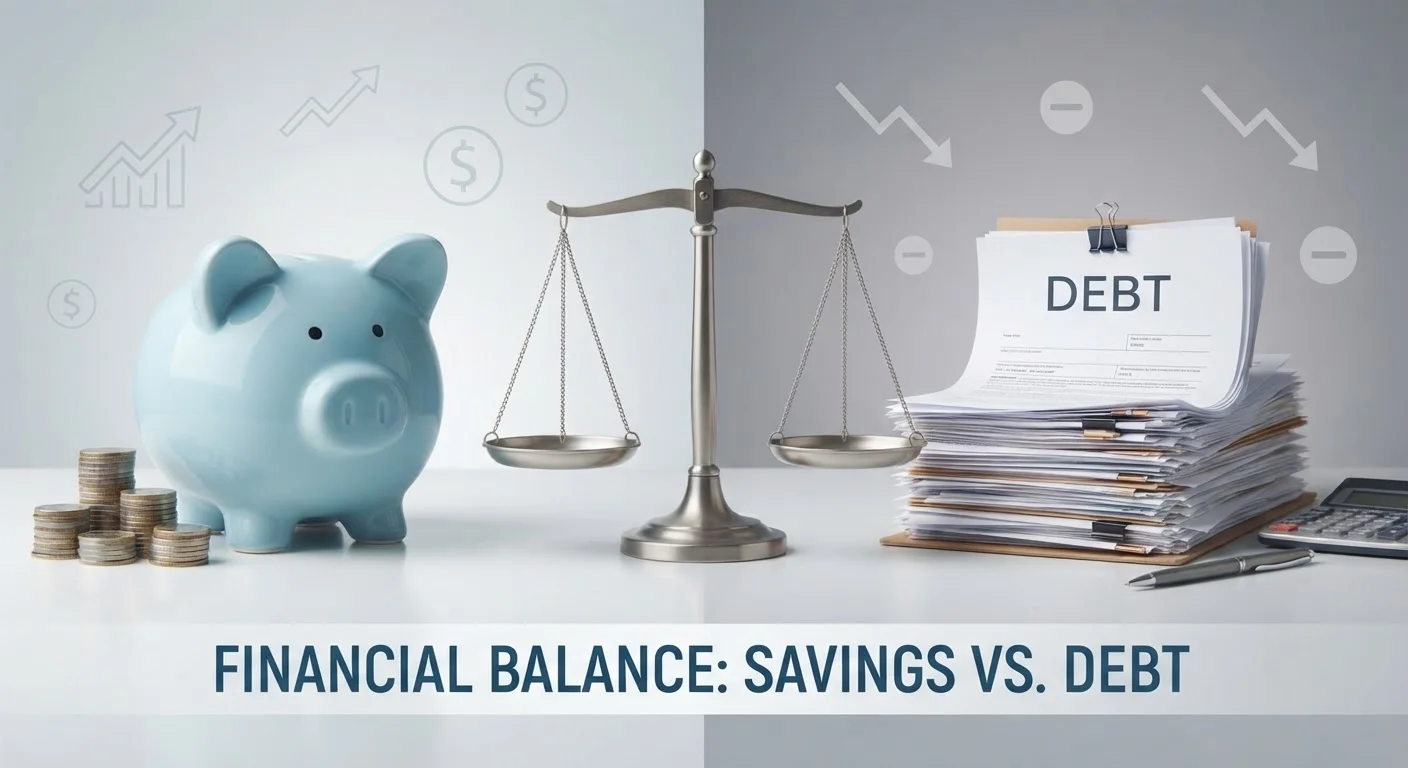
The debt-first versus savings-first debate is ultimately an arithmetic problem dressed up in emotional clothing. At its center is one straightforward comparison: the interest rate you pay on debt versus the return you could realistically earn by saving or investing that same dollar.
When debt carries an interest rate higher than what your savings will return, every extra dollar sent to that debt produces a guaranteed, risk-free benefit equal to that rate. Paying down a credit card charging 22% APR is the financial equivalent of earning 22% on an investment - a figure no savings account or low-risk fund reliably delivers.
Conversely, when debt carries a low fixed rate - say, a 3.5% mortgage or a subsidized federal student loan - the calculus shifts. Over a long time horizon, a diversified investment portfolio has historically averaged higher returns than that, meaning aggressive paydown may actually leave you worse off in net-worth terms. This is general educational context, not a guarantee; actual investment returns vary and involve risk.
| Criterion | Debt-First Approach | Savings-First Approach |
|---|---|---|
| Core logic | Eliminate guaranteed interest costs | Build assets and financial resilience |
| Best interest rate scenario | Debt rate above ~7-8% | Debt rate below ~5% |
| Emergency fund treatment | Small buffer first, then all toward debt | Full fund before accelerating debt |
| Retirement contributions | Minimum to get employer match only | Maximize match; contribute more if rate allows |
| Risk profile | Lower risk - guaranteed interest savings | Higher risk - investment returns not guaranteed |
| Psychological benefit | Faster debt freedom, reduced financial stress | Growing asset base provides security and momentum |
If you are newer to the mechanics of debt and savings interacting, our introduction to saving and debt lays out the foundational concepts without jargon.
The Non-Negotiables That Come Before the Debate
Before applying the interest-rate framework, two financial building blocks generally warrant priority regardless of which overall approach you favor.
A Starter Emergency Fund
Financial stability requires some cash cushion. Without one, a car repair or medical bill becomes new high-interest debt that unravels your payoff progress. Most financial educators suggest accumulating at least $1,000 - or roughly one month of essential expenses - before directing extra cash toward debt beyond minimum payments. Our article on emergency funds explains how to size and build this layer on any income.
Employer Retirement Matching
If your employer matches 401(k) contributions and you are not yet contributing enough to capture the full match, that unclaimed match represents a benefit you are effectively leaving on the table. A 50% match on up to 6% of salary is equivalent to an immediate 50% return on those dollars - a rate almost no debt repayment strategy can beat. Contribute at least enough to capture the full employer match before accelerating debt payments.
When Signs Point to Savings Over Debt Payoff
There are specific circumstances - an unstable job, no cash buffer, or a looming large expense - where pausing aggressive debt payoff in favor of savings is the prudent call. Our article on recognizing those signals walks through the warning signs to watch for.
Once these two bases are covered, the interest-rate comparison described above becomes your primary guide. You can also explore how the 50/30/20 budget rule handles saving and debt simultaneously when you are ready to structure your monthly allocations.
When a Hybrid Approach Makes the Most Sense
Not all debt falls cleanly into the "pay off immediately" or "ignore and invest" camps. Moderate-interest debt - roughly 5-8% - sits in a gray zone where neither approach clearly dominates. In these cases, a hybrid strategy is commonly recommended: make all minimum payments on schedule, contribute enough to capture any employer retirement match, and then split remaining available funds between accelerated debt paydown and longer-term savings goals.
The exact split depends on your priorities. Some households favor a 70/30 debt-to-savings ratio; others prefer equal halves. What matters more than the precise ratio is consistency. Automated transfers remove the willpower requirement from this process - our guide on automating your finances with scheduled transfers shows how to set this up.
20%+
Typical credit card APR in recent years
According to Federal Reserve data, the average interest rate on credit card accounts carrying a balance has exceeded 20% in recent reporting periods - substantially above typical savings or investment returns.
~50%
Households with no retirement savings match captured
Research from Vanguard and other plan administrators has consistently shown a meaningful share of eligible employees do not contribute enough to receive their full employer 401(k) match, leaving significant compensation unreceived.
$1,000
Recommended minimum starter emergency fund
Many personal finance educators, including those at nonprofit credit counseling organizations, suggest $1,000 as the minimum cash buffer to hold before aggressively paying down debt beyond minimums.
If you have multiple debts at varying rates, the sequencing of payoff matters. The avalanche and snowball methods offer two structured frameworks for deciding which debt to target first.
For a detailed walkthrough on organizing your debts and building a plan, see our guide to building a debt repayment plan from scratch.
This article provides general financial education and is not personalized financial, tax, or investment advice. Your individual circumstances vary - consider consulting a licensed financial adviser before making significant changes to your debt repayment or savings strategy.