
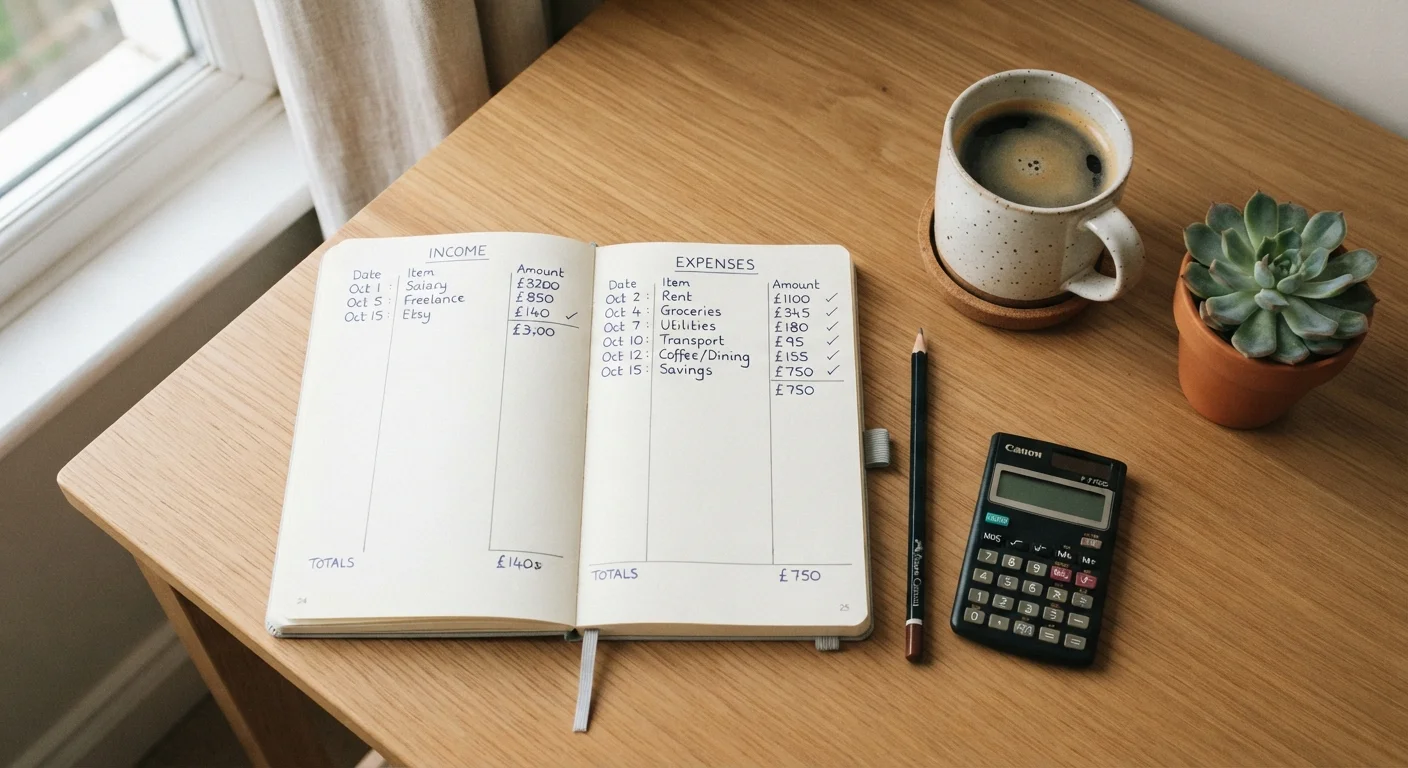
What a Personal Budget Actually Is
Strip away the spreadsheets and the apps, and a personal budget is simply this: a plan made in advance that matches your expected income to your intended spending and saving. That's it. It is not a record of past spending (that is tracking), and it is not a promise that things will go perfectly (they rarely do). It is a set of intentions, written down, that give your money a direction before it arrives.
The core elements of any budget are the same regardless of format:
- Income: All money coming in - wages, freelance earnings, benefits, side income.
- Fixed expenses: Costs that stay roughly the same each month, such as rent, loan payments, or insurance premiums.
- Variable expenses: Costs that fluctuate, such as groceries, utilities, and entertainment.
- Savings and debt repayment: Money intentionally set aside or applied to debt - treated in a budget as non-negotiable outflows, not afterthoughts.
When income exceeds the sum of all outflows, you have a surplus - money to direct toward goals. When outflows exceed income, you have a deficit - a signal that something needs to change. For a fuller breakdown of the vocabulary involved, see our guide to key budgeting terms.
~33%
U.S. adults with a detailed household budget
A Gallup survey found that fewer than one in three American adults maintains a detailed household budget, suggesting most people manage money without a formal plan.
$1,400
Median American monthly discretionary spending estimate
The Bureau of Labor Statistics Consumer Expenditure Survey tracks average household spending; discretionary categories routinely represent a substantial share of monthly outlays, making them the most adjustable lever in any budget.
56%
Adults who could not cover a $400 emergency (historically)
Federal Reserve surveys have historically found that a significant share of U.S. adults lacked accessible funds for an unexpected $400 expense - a gap that consistent budgeting and emergency saving directly address.
What 'Living Within Your Means' Really Means
The phrase sounds simple, but it carries real weight. Living within your means means that, over time, your total outflows - spending, debt payments, and ideally some savings - do not regularly exceed your take-home income. The word regularly matters: an occasional month where expenses run high is normal. A persistent pattern where spending outpaces income is a problem that compounds over time, typically through accumulating debt.
Importantly, living within your means does not require deprivation. It requires alignment: ensuring that how you spend money reflects choices you have made consciously, not defaults that accumulated without notice. Many people discover, once they write everything down, that their spending does not actually align with what they say they value. The budget surfaces that gap so you can close it.
Start With One Month of Tracking
Before building your first budget, spend one month recording every dollar you spend - in whatever format is easiest. Most people find that their actual spending differs significantly from what they expected. That real data makes your first budget far more accurate than estimates alone, and it removes the guesswork from setting realistic category limits.
It is also worth noting that living within your means looks different depending on income. A household earning $45,000 a year and one earning $150,000 face different constraints, but both can overspend - and both benefit from the same discipline of planning. For a deeper look at how budgeting myths distort our perception of who budgeting is for, see our piece on common budgeting myths.
Why Budgeting Matters - And Who It's For
Budgeting is often associated with financial struggle, but that framing misses most of its value. A budget is a tool for awareness and intention - two things that are useful in any financial situation. According to the Consumer Financial Protection Bureau (CFPB), one of the most common barriers to financial well-being is not low income but a lack of visibility into where money actually goes.
Awareness alone tends to shift behavior. When people see, clearly and in writing, that they are spending $400 a month on categories they consider low-priority, they make different choices - not because someone told them to, but because the information is in front of them. This is why even a rough, imperfect budget typically delivers more financial control than no budget at all.
Budgeting also creates a foundation for goals that require money over time - an emergency fund, a vacation, a down payment, debt freedom. Without a budget, those goals tend to remain wishes. With one, they become plans with timelines. The saving and debt hub explores how budgeting connects directly to both building savings and eliminating debt.
Simple Frameworks to Get Started
No single budgeting method works for everyone, and the method you will actually maintain is more valuable than the theoretically optimal one you abandon. Several widely recognized frameworks provide a reasonable starting point:
- 50/30/20: Allocate approximately 50% of take-home pay to needs, 30% to wants, and 20% to savings and debt repayment. Useful as a first approximation - adjust as your situation requires.
- Zero-based budgeting: Assign every dollar of income a specific purpose so that income minus all allocations equals zero. Requires more detail but leaves no money unaccounted for.
- Envelope method: Divide cash (or digital equivalents) into labeled categories at the start of the month. When an envelope is empty, spending in that category stops. Effective for variable-spending control.
None of these methods requires specialized software, though tools exist if you want them. A notebook, a simple spreadsheet, or even a notes app on your phone can hold a functional budget. The critical step is writing it down - the act of recording creates commitment and clarity that mental accounting cannot match.
Ready to build your first one? Our first budget guide walks through the process from scratch, and building a monthly budget step by step provides a detailed monthly walkthrough once you understand the basics.
This article is for general informational and educational purposes only and does not constitute personalized financial advice. Consult a qualified financial professional for guidance tailored to your individual circumstances.