
Why Budgeting Vocabulary Matters
Budgeting guides are filled with terms that can feel unfamiliar at first glance. When you understand the language, the concepts themselves become far less intimidating - and you can make better decisions faster. This reference covers the core vocabulary that appears most often in personal budgeting conversations, whether you're building your first budget or refining a system you've used for years.
Think of this page as a working glossary you can return to whenever a term stops you mid-read. Each definition below is written in plain language, with context for how the term actually applies to your finances.
Income
Money received on a regular basis from all sources - wages, freelance work, benefits, or investment distributions. In budgeting, you typically plan against your net income (take-home pay after taxes and deductions), not your gross income.
Fixed Expenses
Costs that stay the same amount each billing period, such as rent, a car payment, or a subscription at a set price. Because they don't fluctuate, fixed expenses are the easiest category to plan for in a budget.
Variable Expenses
Costs that change from month to month, such as groceries, gas, dining out, or utilities. These require estimation and monitoring because they can drift higher than expected.
Discretionary Spending
Money spent on non-essential wants - entertainment, hobbies, restaurants, or clothing beyond basic needs. Discretionary spending is often the first category reviewed when looking for room to save, though it isn't inherently bad to have.
Cash Flow
The movement of money into and out of your budget over a period of time. Positive cash flow means more money is coming in than going out; negative cash flow means you're spending more than you earn.
Budget Surplus
The amount left over after all expenses are subtracted from income. A surplus creates the opportunity to save, invest, or pay down debt - it represents financial breathing room.
Budget Deficit
Occurs when total spending exceeds total income in a given period. Running a persistent deficit typically leads to debt accumulation and is a signal that spending or income needs to change.
Sinking Fund
A dedicated savings pool built up gradually to cover a known future expense, such as a car repair, holiday gifts, or an annual insurance premium. Setting aside a small amount each month prevents large irregular costs from disrupting your budget.
Emergency Fund
Savings set aside specifically for unexpected financial shocks - job loss, medical bills, or urgent home repairs. A common guideline suggests keeping three to six months of essential expenses in an accessible account, though individual circumstances vary.
Zero-Based Budgeting
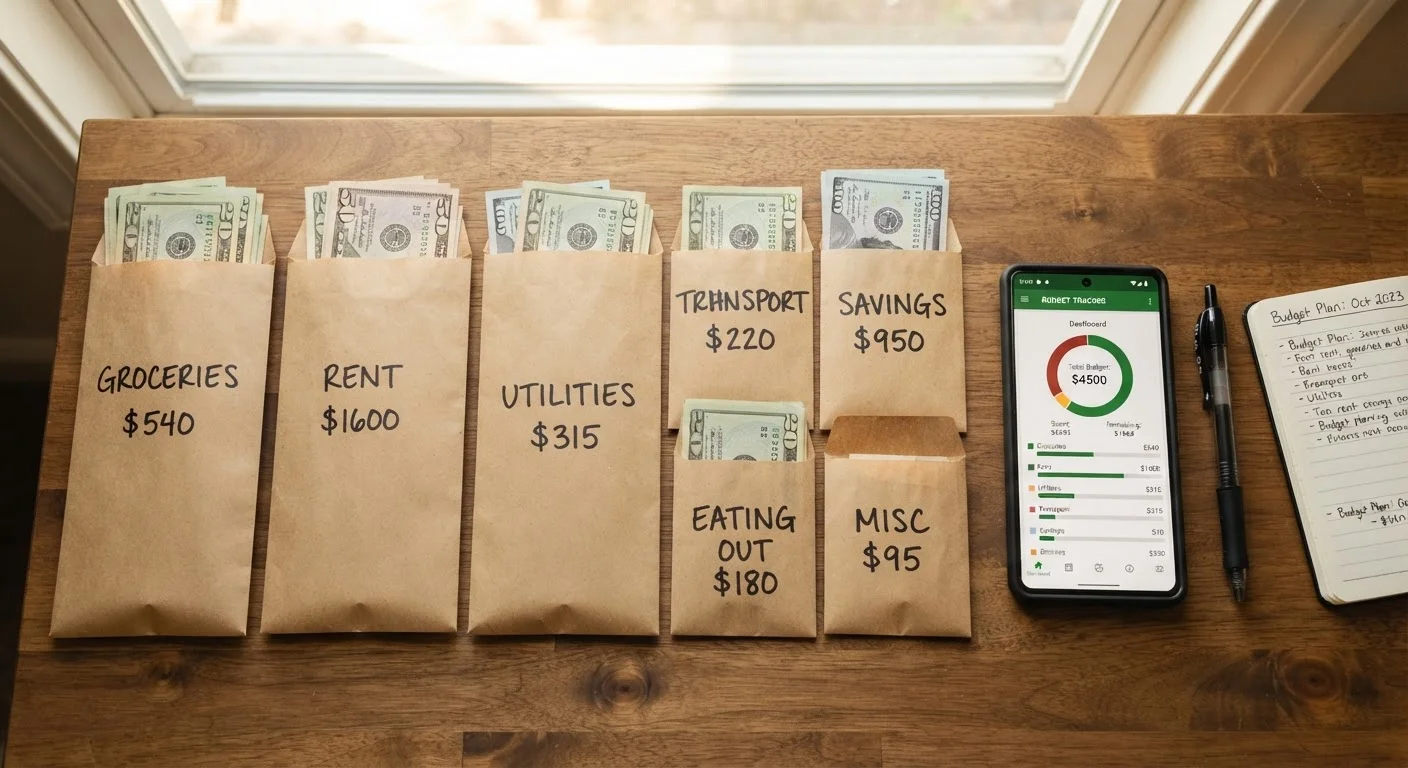
A method where every dollar of income is assigned a purpose - expenses, savings, or debt repayment - so the budget totals zero at the end. This approach encourages intentional allocation of all available funds rather than letting money drift.
Pay Yourself First
A savings strategy where a set amount is moved to savings or an investment account immediately when income arrives, before discretionary spending occurs. This prioritizes long-term goals over short-term wants.
Net Worth
The total value of what you own (assets) minus what you owe (liabilities). While not a day-to-day budgeting term, tracking net worth over time shows whether your overall financial position is improving.
This article is for general informational and educational purposes only and does not constitute personalized financial advice. Consult a qualified financial professional for guidance specific to your situation.
Core Budgeting Concepts at a Glance
The terms below form the foundation of almost every budgeting method you'll encounter. Knowing them helps you read financial content critically and apply the right strategies to your own situation. For a broader look at how these concepts connect, see the complete guide to personal budgeting.
| 50/30/20 Rule | Allocate roughly 50% of net income to needs, 30% to wants, and 20% to savings or debt repayment. (Popularized in personal finance literature as a simple starting framework) |
| Emergency Fund Target | 3-6 months of essential living expenses (General personal finance guideline; individual needs vary) |
| Fixed vs. Variable Split | Fixed expenses are predictable; variable expenses require monthly tracking |
| Zero-Based Budget Goal | Income minus all allocations equals $0 - every dollar has a job |
| Sinking Fund Use Case | Divide a known annual cost by 12 to find your monthly sinking fund contribution |
| Discretionary Spending | Non-essential spending - the most flexible category for budget adjustments |
Once you're comfortable with this vocabulary, it's worth exploring how related terms in saving and debt management fit together - the key debt and savings terms reference covers APR, compounding, liquidity, and net worth in the same plain-language format.
If you've ever wondered whether budgeting is only for people in financial trouble, or that it means giving up enjoyment, common budgeting myths addresses those misconceptions directly. And for a straightforward explanation of what living within your means actually looks like day-to-day, personal budgeting demystified is a useful companion read.