Why Budgeting Matters
A budget is a written plan that tells your money where to go before it arrives - or before it disappears. Without one, most people spend reactively and find themselves uncertain about why their account balance is lower than expected. The Consumer Financial Protection Bureau (CFPB) consistently identifies a lack of spending awareness as one of the primary barriers to saving.
Budgeting does not require a high income or advanced financial knowledge. It requires honesty about your numbers and a method that matches your life. If you are new to managing money more intentionally, the practical introduction to saving and debt is a strong starting point before diving into specific budgeting approaches.
~1 in 3
US adults with a written budget
Federal Reserve surveys consistently find that a minority of American adults track their spending with a formal budget.
$5,011
Average US household monthly spending
According to the U.S. Bureau of Labor Statistics Consumer Expenditure Survey, the average American household spends roughly $60,000 annually across all categories.
3-6 months
Recommended emergency fund coverage
The CFPB and most mainstream financial guidance recommend holding three to six months of essential expenses in an accessible savings account.
Core Budgeting Methods Explained
No single budgeting approach works for everyone. Below are four widely used frameworks, each with distinct mechanics and ideal use cases.
50/30/20 Rule
Divide your after-tax income into three categories: 50% for needs (housing, utilities, groceries), 30% for wants (dining out, entertainment), and 20% for savings and debt repayment. This method is popular for its simplicity and works well for people with stable, predictable income.
Zero-Based Budgeting
Every dollar of income is assigned a job - expenses, savings, or debt payments - until the remaining balance equals zero. This approach maximizes intentionality and is especially useful for those who want granular control, though it requires more time to maintain each month.
Pay-Yourself-First
Before paying any bill or discretionary expense, you move a set amount into savings or an investment account. The remainder is available for spending. This method is effective for people who struggle to save what is left over at month's end - because there is rarely much left over.
Envelope Budgeting
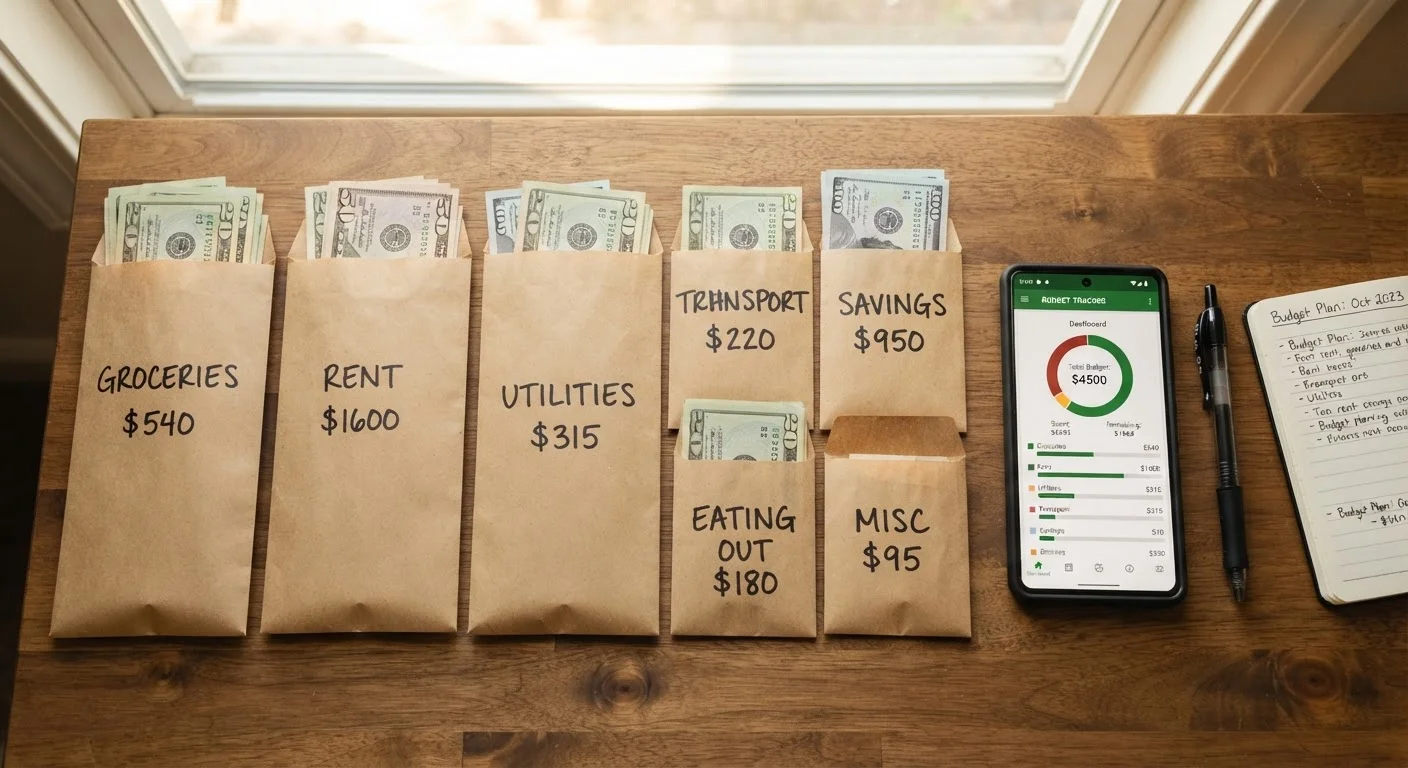
Cash is divided into labeled envelopes for each spending category. When an envelope is empty, that category is done for the month. A digital version tracks the same logic in an app. This works well for people who overspend in specific categories and benefit from a tactile limit.
Unfamiliar with terms like discretionary spending or sinking fund? The key budgeting terms reference defines the vocabulary used across all these methods.
When choosing a budgeting method, match it to your income pattern first. Salaried workers can plan monthly; freelancers and gig workers often do better budgeting from their lowest expected paycheck to avoid shortfalls.
Income variability is the leading reason variable-income earners abandon fixed budgets - anchoring to a floor income creates a more durable plan.
Before you cut any spending category, audit your bank statements for three consecutive months and calculate real averages. Budgets built on wishful numbers fail within weeks.
Accurate baselines are the single biggest predictor of whether a first-time budget survives past month two.
How to Build Your First Budget
Building a budget follows a logical sequence regardless of which method you choose.
- Calculate your net income. Use take-home pay - after taxes and payroll deductions - not your gross salary. If income varies, use a conservative monthly estimate based on your three lowest recent months.
- List fixed expenses. These are consistent amounts due each month: rent or mortgage, car payment, insurance premiums, subscriptions.
- Estimate variable expenses. These fluctuate: groceries, gas, utilities, dining out. Pull three months of bank or credit card statements to find realistic averages.
- Account for irregular expenses. Annual or semi-annual costs - car registration, holiday gifts, medical co-pays - are the most common budget-breakers. Divide the annual total by 12 and treat that figure as a monthly expense, setting the money aside in a dedicated savings bucket (often called a sinking fund).
- Assign remaining dollars to savings or debt. Whatever is left after expenses should have a deliberate destination, not just sit in checking.
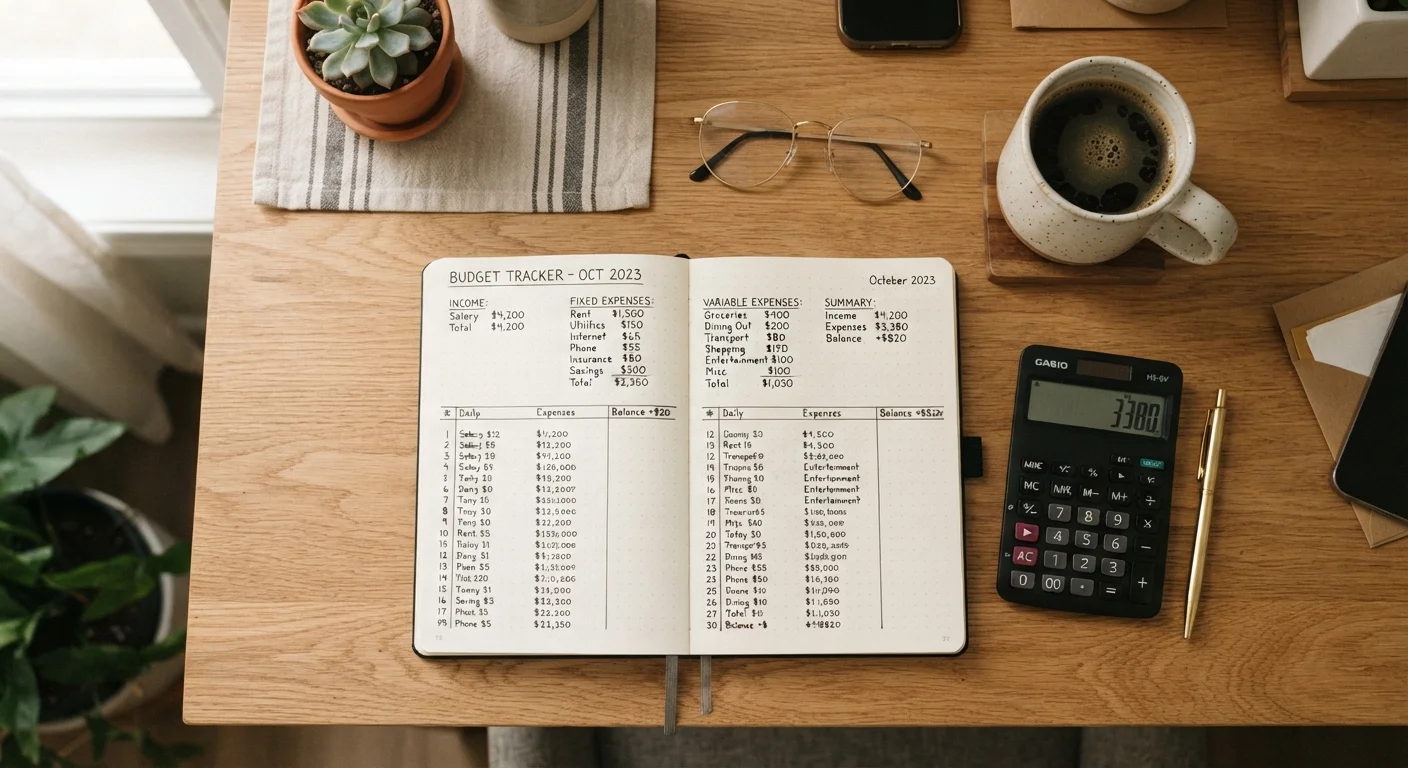
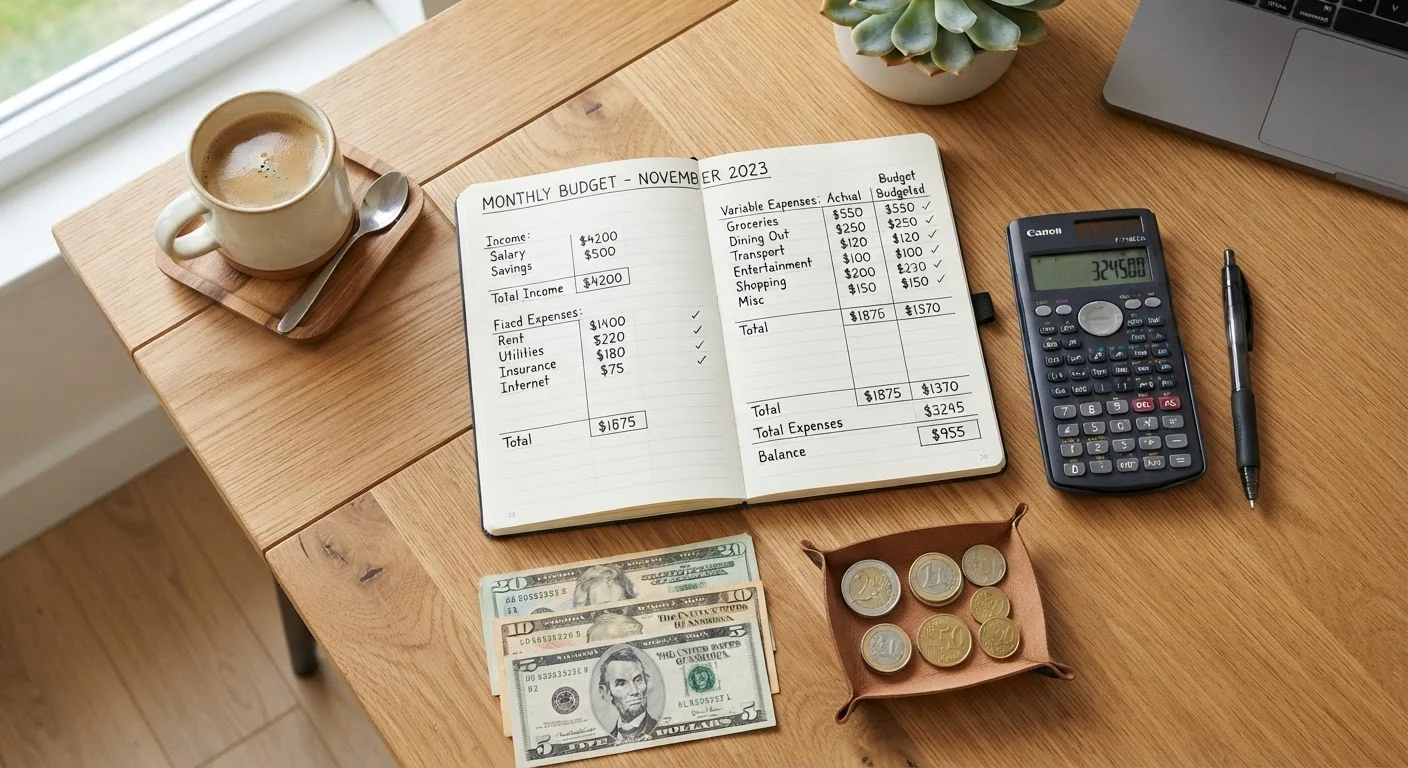
- Track and adjust weekly. A budget is a living document. Use a spreadsheet, app, or even a notebook - whichever you will actually open.
Common Budgeting Mistakes to Avoid
Irregular Expenses Break Most Budgets
One-time or annual costs - car registration, holiday spending, insurance premiums paid semi-annually - are the most frequent reason budgets fail. If you do not plan for them monthly, they will feel like emergencies even though they are entirely predictable. Build them into your monthly plan from day one.
Even well-intentioned budgets fail for predictable reasons. Knowing them in advance reduces the odds you will repeat them.
- Using gross income instead of net. Planning around pre-tax dollars inflates the money you actually have.
- Forgetting irregular expenses. These are budget-busters - car maintenance, vet bills, annual subscriptions. If it costs money at any point in the year, it belongs in the budget.
- Setting unrealistic spending limits. Cutting a grocery budget by 40% in month one is likely to fail. Start with accurate baselines, then reduce gradually.
- Treating the budget as a one-time task. A budget written in January and never reviewed is useless by March. Life changes - income, rent, family size - demand regular updates.
- Ignoring small recurring charges. Streaming services, app subscriptions, and gym memberships add up quickly and often go unnoticed until a bank statement audit reveals the true total.
Habits That Support Long-Term Financial Stability
A budget is a tool, not a destination. The habits built around it determine whether it actually produces financial stability over time.
Automate what you can
Automatic transfers to savings on payday remove the temptation to spend first and save later. Many financial institutions allow you to schedule these transfers at no cost.
Do a monthly budget review
At the end of each month, compare what you planned to what you actually spent. Look for patterns - not to assign blame, but to update your plan. A 30-minute monthly review is one of the highest-return habits in personal finance.
Build a starter emergency fund
Before aggressively paying down debt or investing, most financial educators recommend accumulating at least one month of essential expenses in a liquid, accessible savings account. This cushion prevents a single unexpected event from derailing the entire budget. For deeper guidance on balancing saving and debt, explore the Saving & Debt resource hub.
Apply your budget beyond everyday spending
The same principles extend to specific financial goals. If travel is a priority, for example, the same sinking-fund logic applies - see the travel budgeting hub for how to adapt these concepts to trip planning.
This article is for general informational and educational purposes only and does not constitute personalized financial, tax, or legal advice. Consult a qualified financial professional for guidance specific to your circumstances.