Why a Daily Structure Beats a Lump-Sum Budget
Many travelers set a total trip budget, divide it by the number of days, and assume that average is a workable guide. In practice, this approach fails almost every time. Travel spending is inherently uneven - one day might involve a paid tour, boat transfer, and a restaurant dinner; the next might consist of a walk through a free neighborhood market and a meal from a street stall.
A day-by-day plan replaces that flat average with a realistic, activity-matched target for each day of the trip. The result is more than a financial exercise: it gives you a clear daily number to check against, so you know in real time whether you're on track - not after you've landed back home. If you're curious about the behavioral patterns that cause budgets to slip, see why post-trip spending exceeds the plan.
Use Your Itinerary as the Budget Scaffold
Your day-by-day schedule and your spending plan should mirror each other. If you're building your itinerary at the same time, cross-reference each planned activity against its estimated cost as you go. See how to structure a well-planned itinerary for a complementary framework.
This method also pairs naturally with tracking spending while on the road, since your daily targets become the benchmarks you compare actual receipts against each evening.
Building Your Day-by-Day Plan
What you will need
Spreadsheet (e.g., a grid in any spreadsheet application)
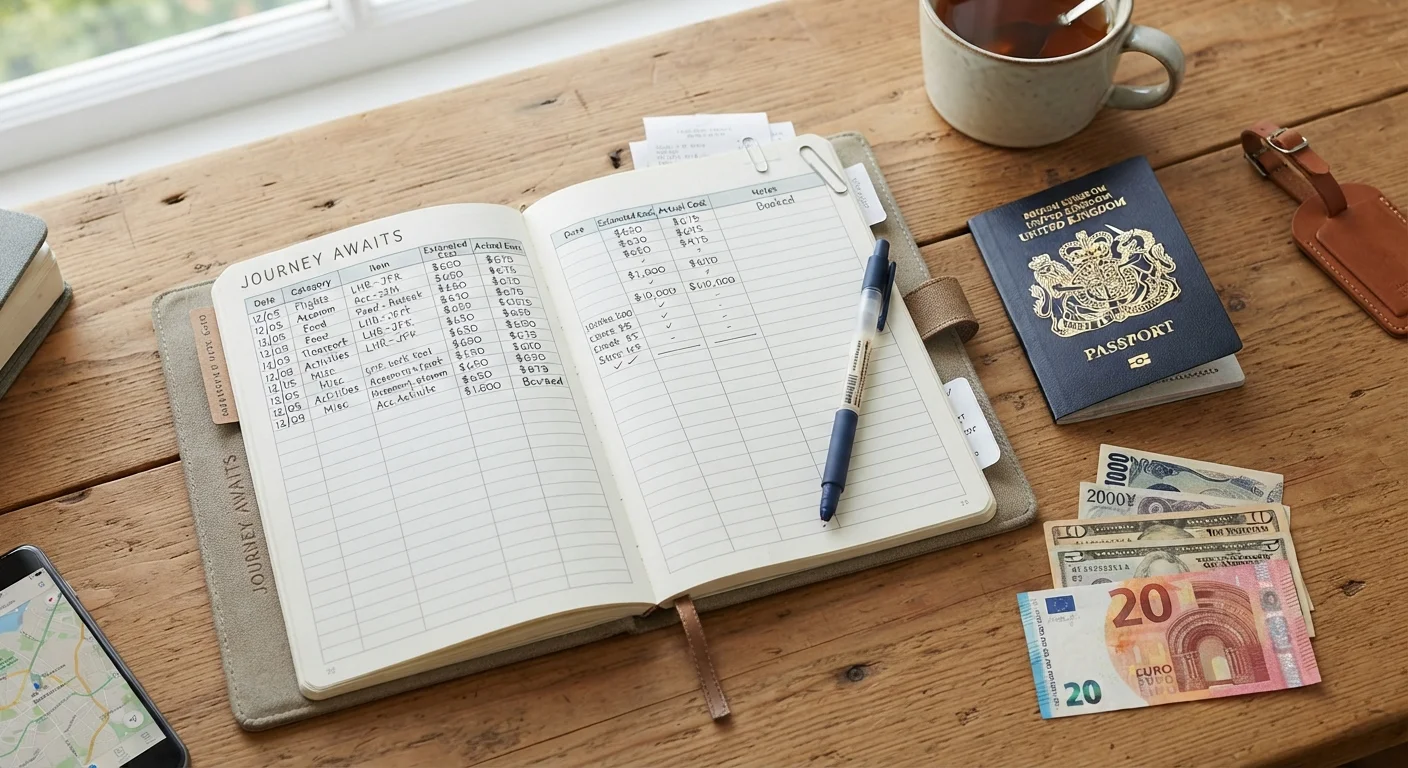
Create a row for each travel day and columns for each spending category so you can see totals at a glance.
Destination cost research sources
Use travel forums, government tourism sites, and published travel guides to estimate realistic local prices for meals, transport, and entry fees.
Currency conversion reference
Convert estimated local costs to USD so all figures sit in a single comparable unit during planning.
Expense tracking app
Log actual spending against your daily plan once the trip begins, enabling real-time comparison.
Separate fixed costs from variable daily spending
Before building a daily plan, remove expenses that are already set. Flights, accommodation, travel insurance, and pre-purchased passes are fixed costs - they don't change based on what you do each day. Subtract their total from your overall trip budget. The remainder is your variable spending pool - the amount you'll allocate day by day.
This separation prevents a common mistake: folding fixed costs into daily averages and arriving at an unrealistically small per-day figure.
List every travel day and classify its type
Open your spreadsheet and create one row per day from departure to return. Then assign each day a day type based on what it actually involves:
- Transit days - heavy on transport costs, lighter on meals and activities
- Arrival/departure days - airport transfers, tips, first or last meals; often underestimated
- Full activity days - tours, entry fees, guided experiences; typically the highest daily cost
- Slow/rest days - low-key exploration, local markets, free attractions; naturally lower spend
This classification is the foundation for uneven, realistic allocation rather than a flat daily average.
Research realistic per-day cost estimates for each category
For each day type, estimate costs across four standard variable categories:
- Food and drink - breakfast, lunch, dinner, snacks, coffee
- Local transportation - taxis, metro, buses, rental vehicles
- Activities and entry fees - museums, tours, tickets, gear rentals
- Incidentals - tips, toiletries, small souvenirs, laundry
Use destination-specific research - travel guidebooks, forum cost threads, official tourism sites - to anchor estimates in real local prices rather than intuition. Convert all figures to USD for consistency.
Assign a spending target to each individual day
With your day classifications and category estimates in hand, populate each row with a realistic daily total. A full-activity day in a mid-cost destination might carry a variable spend target of $120-$160 per person; a rest day in the same location might sit at $60-$80. These are targets, not ceilings.
Sum all daily targets and compare to your variable spending pool from Step 1. If the sum exceeds the pool, identify which days can absorb reductions - typically slow days or days with free activities - rather than cutting uniformly.
Add a contingency line and finalize the plan
Reserve 10-15% of your total variable spending pool as a contingency - a separate line item, not distributed across daily targets. This amount absorbs unplanned costs: a medical visit, a missed connection, a spontaneous experience worth the expense.
Once the contingency is set, your plan is complete. Review the full day-by-day grid to confirm it's internally consistent: totals add up, high-spend days are accounted for, and the contingency gives you a real cushion. Before departure, cross-check against the pre-trip budget checklist to verify nothing is missing.
Plans Are Estimates, Not Guarantees
A day-by-day spending plan is a structured estimate, not a precise forecast. Currency fluctuations, unexpected entry fees, health needs, or weather-related changes can all shift real costs. Build honest assumptions into your plan and include a contingency buffer - typically 10-15% of total variable spending - so surprises don't force you to cut the trip short.
Reviewing and Adjusting the Plan Mid-Trip
A day-by-day plan isn't a document you set and ignore. Check in briefly each evening - ideally taking less than five minutes - to compare what you actually spent against your daily target. A small, consistent overage is easier to correct early than a large accumulated shortfall discovered on day seven of ten.
If you're running over on a pattern (dining out more than estimated, for instance), adjust two or three upcoming daily targets rather than making a dramatic cut on a single day. Spreading the adjustment keeps the trip enjoyable and the budget intact.
Don't Conflate Total Budget With Daily Budget
A common planning error is dividing the total trip budget evenly across all days. This ignores high-cost days (arrival with airport transfers, a major excursion) and lower-cost days (slow travel, free attractions). Assign funds to each day based on what's actually planned, not an average.
For group trips, the same logic applies, though cost-splitting adds a layer of coordination. See approaches for splitting group travel costs for methods that reduce friction around shared expenses.
This article provides general travel budgeting education and is not personalized financial advice. Cost estimates vary significantly by destination, travel style, group size, and timing. Always verify current prices and entry requirements with official sources before traveling.