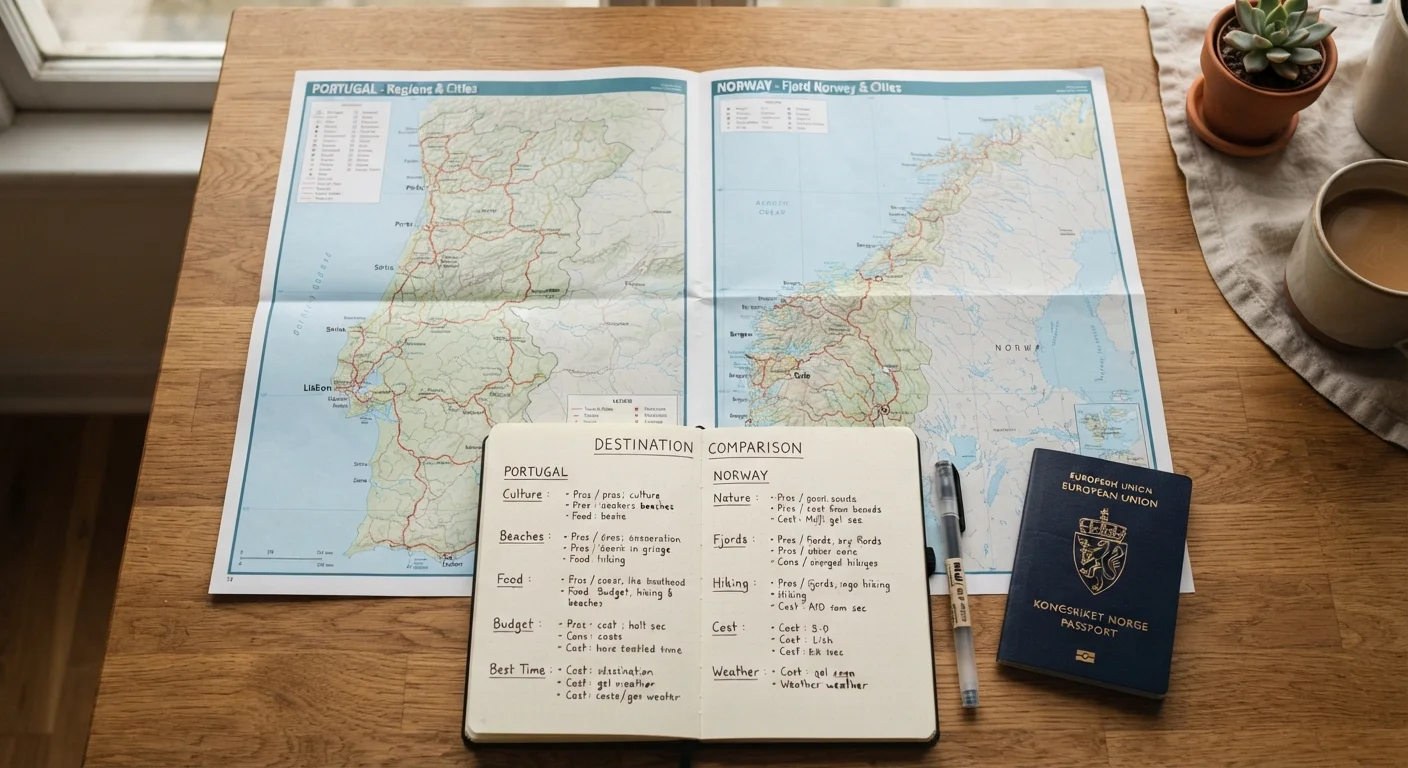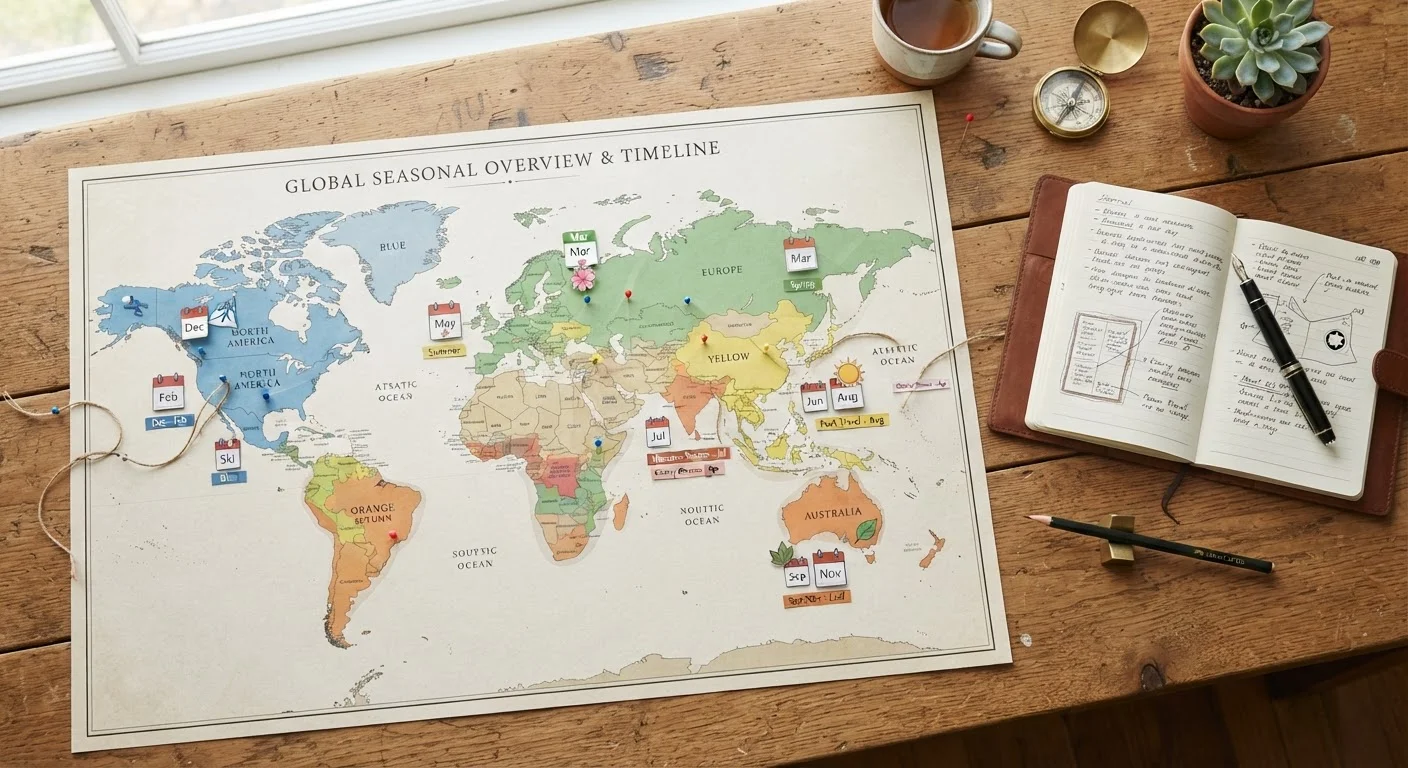

Set Your Parameters Before You Search Anything
The most common planning mistake is jumping straight into destination browsing without first anchoring the trip to fixed constraints. Before opening a single search tab, define three things: your available travel window, your group composition, and a rough spending ceiling.
Travel windows matter more than most people expect. A two-week gap in March versus a ten-day gap in July produces entirely different options in terms of flight pricing patterns, destination weather, and crowd levels. Write down your hard limits - earliest departure, latest return, any non-negotiable days off - before evaluating destinations.
Group composition shapes nearly every downstream decision. A solo traveler has different accommodation and transport needs than a couple, a family with children, or a group of friends. If you are traveling with others, align on budget expectations and non-negotiables early. For a deeper look at where solo and group planning diverge, see how solo and group logistics differ.
Before researching any destination, write down your absolute constraints - including blackout dates and hard budget ceilings - and keep them visible throughout planning. This prevents anchoring to options that cannot actually work.
Anchoring bias leads planners to fall in love with a destination before checking whether it fits their window or budget, which wastes time and creates disappointment.
Align on a per-person daily spending expectation with every traveler in your group before any bookings are made - not after a destination is chosen.
Misaligned budget expectations are a leading source of group travel friction and often surface only after non-refundable bookings are in place.
Research Your Destination With Purpose
Once your parameters are set, destination research becomes a filtering exercise rather than an open-ended scroll. Evaluate candidates against your specific window, budget, and group needs - not against a generic wishlist.
For each destination under consideration, verify: visa and entry requirements for US passport holders, seasonal weather and any weather-related closures, the ground transport infrastructure (public transit, car rental necessity, domestic flight requirements), and any health or safety advisories from official sources such as the US Department of State and the CDC. Always check these sources directly before booking, as conditions change and no third-party summary can be treated as authoritative.
If you are starting from scratch with no destination in mind, destination research from scratch walks through a structured shortlisting process. The destination research hub also provides frameworks for comparing multiple options side by side.
Build a Realistic Budget Framework
A budget is not a single number - it is a set of category-level estimates that add up to a total. The core categories for most trips are: flights, accommodation, ground transport, meals, activities and entrance fees, travel insurance, and a contingency buffer (typically 10-15% of the subtotal).
Flights and accommodation together usually represent 50-65% of a total trip budget for US travelers on international trips, though this varies significantly by destination and travel style. Research realistic price ranges for each category before committing to a destination, not after.
50-65%
Budget share: flights and accommodation combined
General industry estimates suggest flights and lodging account for the majority of international trip spending for US travelers, varying by destination and style.
10-15%
Recommended contingency buffer
Travel planning professionals commonly recommend reserving a 10-15% buffer above the itemized budget to cover unexpected costs such as delays or entry fees.
For a complete walkthrough of how to estimate and track each category, travel budgeting from scratch provides a step-by-step framework. General budgeting concepts and cost management strategies are also covered in the travel budgeting hub.
Sequence Your Bookings Strategically
Once destination and budget are confirmed, booking order matters. The correct sequence is: flights first, accommodation second, ground transport third, tours and experiences last. This order reflects cancellation flexibility - flights and accommodation are the hardest to recover from if plans shift, while activity bookings are often refundable or reschedulable closer to travel.
When booking flights, confirm that layover times are realistic - most travel advisors suggest a minimum of 90 minutes for domestic connections and 2-3 hours for international ones, though this varies by airport. For accommodation, read cancellation policies carefully before paying, and verify that the property type (hotel, apartment, hostel) aligns with your group's needs.
If your trip spans multiple cities, the sequencing problem becomes more complex. You will need to map transit connections between cities before locking in accommodation dates. organizing a multi-city trip addresses how to structure that process without creating conflicts between legs.
Watch Layover Times on Connecting Flights
Short layovers may appear to save money but carry meaningful risk if an inbound flight is delayed. A missed connection can cascade into overnight delays, additional hotel costs, and rebooking fees. Build in realistic buffer time, especially at large hub airports or on international itineraries where terminal changes are common.
Confirm Details and Prepare to Depart
In the week before departure, run a systematic confirmation pass across all bookings. Verify that names on tickets match your passport exactly, that accommodation check-in windows align with your arrival times, and that any required confirmations or vouchers are saved offline - not only in email.
Prepare a single travel document folder (physical or digital) containing: passport and any required visas, flight confirmations, accommodation confirmations, travel insurance policy number and emergency contact, and a basic itinerary with addresses and confirmation codes. Sharing a copy with a trusted contact at home is a practical safety measure.
Check entry requirements one final time within 72 hours of departure. Visa rules, health documentation requirements, and customs restrictions can change with little notice. The US Department of State's country information pages and your airline's own entry requirement tools are reliable starting points, but always verify with official sources.
Good logistics planning does not eliminate uncertainty - it reduces the cost of unexpected changes by ensuring you have the information and flexibility to adapt.