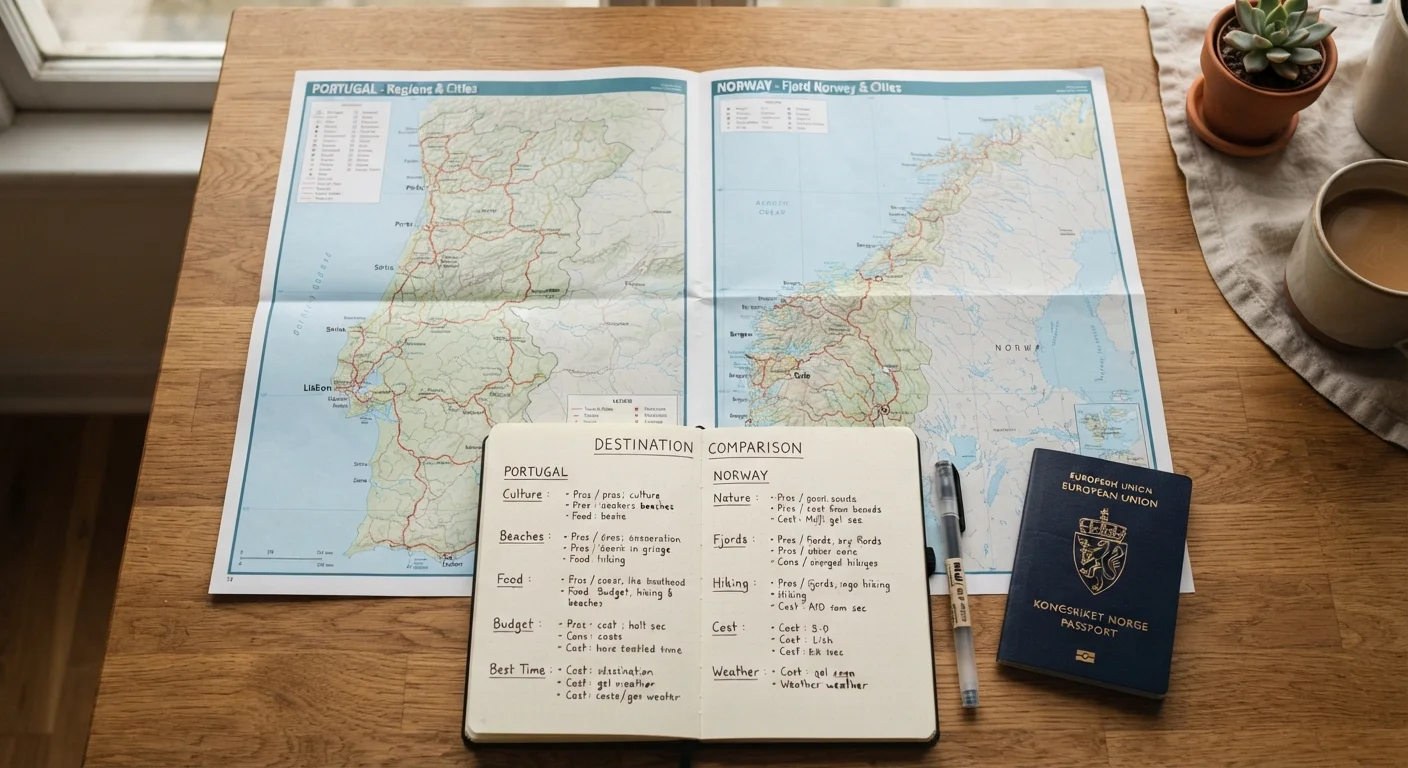

Why Multi-City Trips Require a Different Planning Approach
A single-destination trip has one set of logistics to manage: get there, find your hotel, explore. Add a second or third city and the complexity multiplies - not just in the number of bookings, but in the dependencies between them. A delayed train in City B doesn't just cause inconvenience; it can collapse your hotel check-in in City C and trigger a cascade of rescheduling.
The planning challenge is maintaining what might be called the thread: a coherent sequence of transport, accommodation, and activity that holds together even when individual pieces shift. This requires building your itinerary in the right order and keeping every confirmation in an accessible place throughout the trip.
For travelers newer to independent trip planning, destination research is a useful foundation before committing to a multi-city route. And if you're wondering how this type of planning differs depending on whether you're traveling solo or with a group, solo vs. group trip planning outlines where the approaches diverge.
What you will need
Tools and Materials You'll Need
Effective multi-city planning doesn't require specialized software, but it does require a consistent system. The tools below will help you build, track, and access your itinerary from the planning phase through your return home.
Cloud-based spreadsheet or document (e.g. Google Sheets or Docs)
Centralizes all confirmations, schedules, addresses, and contacts in one shareable location.
Mapping application
Helps visualize geographic sequence of cities to identify the most logical routing order.
Calendar or scheduling app
Plots nightly stays, transit days, and buffer time across your full travel window.
Offline navigation or travel app
Provides access to maps and saved confirmations when internet connectivity is unreliable.
Cost tracking is a separate but equally important layer. Your full trip budget should account for transport between cities, accommodation for every night, and daily spending estimates per destination. The travel budgeting hub offers frameworks for estimating and managing total trip costs.
Step-by-Step: Building Your Multi-City Itinerary
Follow these steps in order. Each stage builds on the one before it - skipping ahead, especially booking accommodation before transport, is the most common source of scheduling conflicts in multi-city planning.
Map your cities geographically before setting any dates
Before you assign a single night to any destination, open a map and plot all the cities you're considering. Look for a natural geographic arc - a loop, a line, or a hub-and-spoke pattern - that minimizes backtracking. Traveling in the order Chicago → Minneapolis → Denver is far more efficient than Chicago → Denver → Minneapolis → Chicago, even if the total distance looks similar on paper.
This step often reveals that one city on your wishlist is significantly out of the way, which is useful information to have before you've committed anything financially. For deeper destination comparison methods, see destination research from scratch.
Assign rough night counts to each city
Once your sequence is set, distribute your available nights across each destination. A practical rule: most cities reward a minimum of two full days to get past surface-level sightseeing, while major destinations with extensive museums, day trips, or surrounding regions may justify four or more nights.
Sum your nights across all cities, then subtract that total from your available days. The remaining days are your transit days and buffers - do not eliminate them to squeeze in more destinations. A trip that's too compressed tends to feel rushed and creates logistical fragility.
Book inter-city transport first
This is the step most travelers skip - they book hotels first and figure out transport later. The problem is that transport schedules, not accommodation, dictate when you actually arrive and depart each city. Book your flights, trains, or long-distance buses before locking in hotel nights so your accommodation dates reflect real arrival and departure times.
For help comparing transport modes by distance, cost, and flexibility, see this guide to choosing transport. If any legs involve connecting flights, review the trade-offs carefully - nonstop vs. connecting flights covers the key considerations.
Book accommodation aligned to your confirmed transport
Now that you know your actual arrival and departure times for each city, book accommodation with check-in and check-out dates that match. Pay attention to check-in cut-off times, especially for late-night arrivals - confirm in advance whether early or late check-in is possible and whether there are fees involved.
Choose accommodations with flexible cancellation policies wherever the price difference is manageable. This preserves your ability to adjust dates if transport changes or if an unexpected opportunity arises mid-trip.
Build your master itinerary document
Once transport and accommodation are confirmed, compile everything into a single reference document structured by date. Each day should show: city, accommodation name and address, any confirmed activities or reservations, and the following day's transport departure time and terminal or station details.
[tip_callout]
This document becomes your operational backbone. For a detailed look at how to structure a full itinerary from framework to daily schedule, see the anatomy of a well-planned itinerary. For a broader end-to-end planning overview, trip logistics from start to finish covers every stage.
Plan your packing strategy around the full route
Multi-city trips often involve varied climates, activity types, and luggage storage constraints that single-destination trips don't. Review your full city sequence and note any significant climate shifts, dress-code requirements, or activity gear needs. Pack to serve the whole route, not just the first destination.
If your itinerary is still somewhat fluid when it's time to pack, packing for a trip you haven't fully planned offers practical strategies for building in versatility without overpacking.
Avoid Booking Too Tightly Between Cities
Leaving less than a few hours between an inter-city arrival and a hotel check-in or tour booking creates fragile logistics. Delays in ground transport, flight connections, or border crossings can make tightly spaced segments collapse like dominoes. Build at least one recovery buffer - ideally a free half-day - between each major city transition.
Verify Entry Requirements Before Booking
Visa rules, passport validity requirements, and health documentation can vary significantly between destinations on the same itinerary. Always confirm entry requirements directly with official government sources - such as the US Department of State or the destination country's embassy - before purchasing non-refundable tickets. Requirements can change without advance notice, and travel providers are not responsible for ensuring your eligibility to enter.
Staying on Track Once You're Traveling
Even the best-planned itinerary will require real-time adjustments. The goal isn't a rigid schedule - it's a framework flexible enough to absorb small disruptions without losing shape.
Check your next day's transport details each evening rather than the morning of. Confirm departure platforms, terminals, or pickup locations the night before so you're not troubleshooting while rushing. If a delay or cancellation does occur, your master document gives you immediate access to booking reference numbers for rebooking conversations.
Keep a small amount of local currency accessible for transit situations where card readers are unavailable. And share your itinerary document with someone at home - a family member or trusted contact - who can assist remotely if you encounter a significant disruption.
Travel conditions, entry requirements, and transport schedules can change. Always verify critical details - particularly visa requirements, health documentation, and border rules - with official government and provider sources before and during your trip.