Why Exotic Pets Need Specialized Vets
Owning a rabbit, parrot, bearded dragon, or ferret comes with a responsibility many new owners don't fully anticipate: finding a veterinarian who actually knows how to care for that animal. General practice veterinary training in the US centers heavily on dogs and cats. Exotic species have very different anatomies, metabolisms, and disease profiles - meaning a vet without specific experience could miss a diagnosis or provide care that inadvertently harms your pet.
This isn't a criticism of general practitioners. It simply reflects the reality that veterinary school curricula can't cover every species in depth. Exotic animal medicine is a recognized specialty area, and many vets pursue additional training or certification to work with non-traditional pets. If you own - or are considering owning - a species outside the dog-and-cat world, understanding this distinction upfront can make a meaningful difference in your pet's long-term health.
See our honest look at small pet ownership tradeoffs for broader context on what caring for non-traditional species actually involves.
~6.9M
US households owning pet birds
According to the American Pet Products Association (APPA) National Pet Owners Survey, millions of US households keep birds - one of the most common exotic pet categories.
~6M
US households owning reptiles as pets
APPA survey data also indicates approximately 6 million US households keep reptiles, a group that overwhelmingly requires specialized veterinary expertise.
Limited
Vets with exotic animal board certification
Exotic animal board-certified veterinarians remain relatively scarce in the US compared to general practitioners, meaning geographic access to specialized care can vary significantly.
How to Find a Qualified Exotic Vet
The single most important step exotic pet owners can take is finding a qualified vet before a health crisis occurs. When an animal is acutely ill, searching for a specialist under pressure adds unnecessary stress and may delay care.
Start with professional directories. The Association of Exotic Mammal Veterinarians (AEMV), the Association of Avian Veterinarians (AAV), and the Association of Reptilian and Amphibian Veterinarians (ARAV) all maintain searchable lists of member vets. Board certification through the American Board of Veterinary Practitioners (ABVP) in a relevant species category is another strong indicator of specialized competence - though many excellent exotic vets have substantial experience without formal board certification.
When you call a clinic, ask directly: How many patients of your species does the vet see per week? What diagnostic equipment is on-site? Is there someone available for after-hours emergencies or a referral partner who handles them? These questions quickly reveal whether a clinic is genuinely set up for exotic care or treating it as an occasional sideline.
Establish Care Before You Need It
Don't wait for an emergency to find an exotic vet. Once you bring a new exotic pet home, locating a qualified practitioner should be one of your first steps - ideally within the first few weeks. Schedule an initial wellness exam to establish a health baseline and build a relationship with the clinic before any urgent situation arises.
What to Expect at an Exotic Pet Appointment
Exotic vet visits often look different from a typical dog or cat checkup. The appointment will usually begin with a detailed husbandry review - your vet will want to know what your pet eats, how its habitat is set up, temperature and humidity levels (for reptiles especially), and how its behavior has changed over time. This isn't small talk; husbandry errors are among the most common causes of health problems in exotic animals, and a thorough review helps the vet understand the animal's full environment.
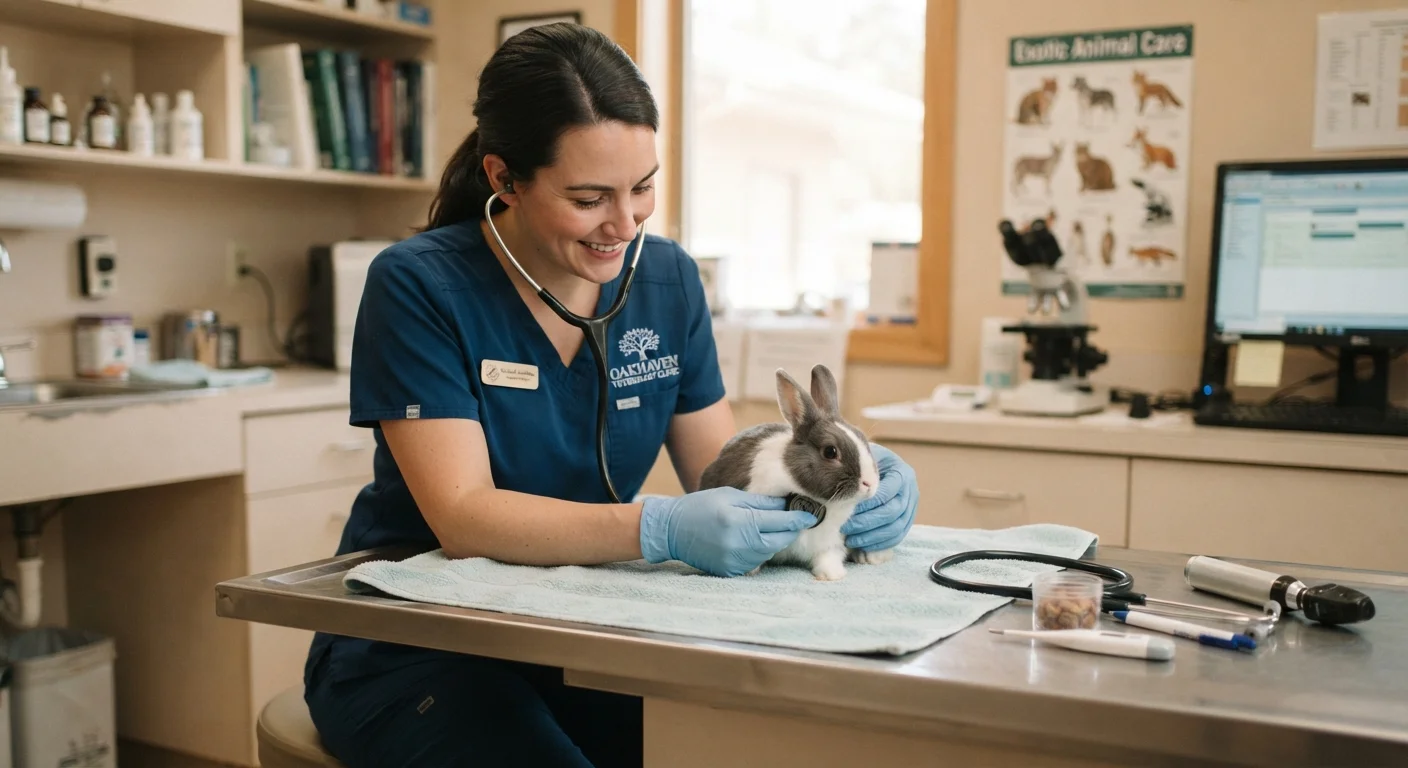
A physical exam follows, though the techniques differ by species. Reptiles may require a different handling approach than mammals; birds are often examined with minimal restraint to reduce stress. Depending on your pet's age and species, the vet may recommend baseline bloodwork, fecal parasite testing, or imaging.
Owners of rabbits will find our companion guide, rabbit care from day one, useful context for what a rabbit-savvy vet will likely assess. If you're more familiar with traditional pet care, it helps to compare: even routine cat appointments follow a very different structure, as explored in what to expect at your cat's first vet visit.
The Hidden Challenge: Exotic Animals Hide Illness
One of the most important things to understand about exotic pet health is that many species are prey animals by instinct. Rabbits, birds, guinea pigs, and reptiles are wired to conceal weakness - an animal that looks visibly sick in the wild is a target for predators. This survival behavior doesn't disappear in a domestic setting.
By the time an exotic pet shows obvious signs of illness - lethargy, loss of appetite, labored breathing - the condition may already be advanced. This makes routine wellness visits critical, not optional. Annual (or more frequent) exams give a vet the chance to detect problems through objective measures like weight trends, bloodwork, and physical findings before behavioral changes become apparent to owners.
This is one area where exotic pet care differs sharply from what dog owners may be accustomed to. For comparison, see our overview of preventive vet care for dogs - the underlying logic of catching problems early is the same, but the species-specific urgency differs considerably.
This article provides general educational information about exotic pet veterinary care. It is not a substitute for professional veterinary advice. Always consult a qualified veterinarian for guidance specific to your pet's health and species.