Why the First Vet Visit Matters
Getting a baseline health assessment early is one of the most important steps you can take as a new cat owner. Even if your cat appears healthy, a veterinarian can identify conditions that aren't visible to an untrained eye - from subtle dental issues to heart murmurs or early parasite infestations. Kittens especially benefit from early detection, as many congenital concerns are more manageable when caught young.
The first visit also establishes a relationship between your cat and your veterinary practice. Cats who visit regularly from a young age tend to be less reactive at future appointments. If you're still setting up your home, our new cat arrival checklist can help you make sure everything is in place before that first day.
Schedule Within the First Week
Most veterinarians recommend an initial exam within seven days of adoption or purchase. This window is especially important if you have other pets at home, since an undetected illness or parasite can spread quickly. Early visits also establish care continuity if your cat's health changes later.
What to Gather Before You Go
Coming prepared makes the appointment more efficient and gives your vet the full picture they need.
What you will need
If your cat came from a shelter or breeder, request any available medical documentation ahead of time. Even partial records - a single vaccination note, for example - help your vet avoid redundant procedures and flag gaps in care. If you can collect a small fresh stool sample (in a sealed container) the morning of the visit, many clinics will run an in-house fecal test to screen for intestinal parasites.
How to Reduce Carrier Stress
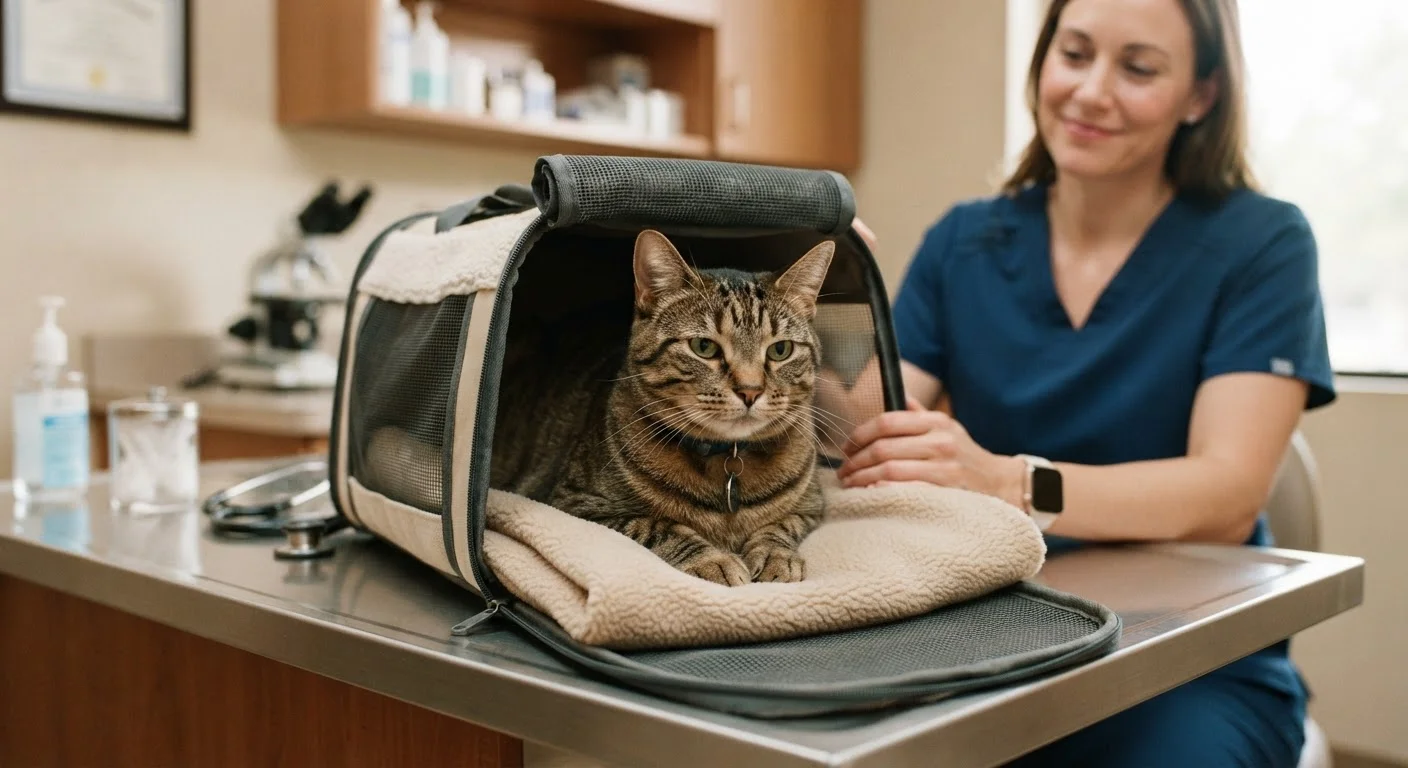
For many cats, the carrier itself is the most stressful part of the whole experience. If your cat only sees the carrier on vet days, it becomes associated with anxiety. A simple way to change this is to leave the carrier out in your home several days before the appointment, with a familiar blanket or a piece of your worn clothing inside. Let your cat investigate it voluntarily.
On appointment day, avoid rushing your cat into the carrier at the last minute. Spray the interior with a synthetic feline pheromone product (available at most pet supply retailers) about 30 minutes before loading. During transport, cover the carrier with a light cloth to reduce visual stimulation - cats feel more secure when they can't see unfamiliar surroundings moving past.
Avoid Feeding Right Before Travel
Some cats experience motion sickness in vehicles, which can make a stressful trip significantly worse. Withholding food for two to three hours before the appointment can reduce the likelihood of nausea or vomiting during transit. Always confirm this with your vet if your cat has an existing health condition.
What Happens During the Exam
A standard first feline exam typically follows a predictable sequence. Understanding each step can help you feel less anxious - and that calm tends to transfer to your cat.
Check-in and weight measurement
When you arrive, staff will record your cat's weight. This baseline number is critical - weight changes over time are one of the earliest indicators of health changes in cats, particularly as they age. Keep the carrier on the floor or a low surface rather than elevated to avoid added stress.
Physical examination head to tail
Your vet will systematically examine your cat's eyes, ears, mouth and teeth, lymph nodes, coat and skin, abdomen, and limbs. They'll listen to the heart and lungs with a stethoscope. This usually takes five to ten minutes. Your cat may resist handling - this is normal, not a sign of a problem.
Parasite screening
If you brought a stool sample, fecal testing checks for common intestinal parasites including roundworms, hookworms, and giardia. The vet may also check for external parasites like ear mites or fleas during the physical exam. Many newly adopted cats carry parasites even if they show no symptoms.
Vaccination and prevention planning
Your vet will review any existing vaccination records and administer or schedule any needed vaccines. They'll also discuss flea, tick, and heartworm prevention based on your cat's risk profile. Indoor-only cats still benefit from some preventive treatments, particularly for fleas, which can enter on clothing and shoes.
Discussion and follow-up scheduling
Use the last few minutes to ask any questions you've prepared. Topics worth raising include diet recommendations for your cat's life stage, spay or neuter timing if not already done, and microchipping if your cat isn't chipped. Before you leave, confirm the recommended timeline for the next visit.
After the exam, your vet will recommend a vaccination schedule based on your cat's age, lifestyle (indoor vs. outdoor), and any regional disease risks. Core vaccines - including rabies and feline distemper (FVRCP) - are standard for virtually all cats. Non-core vaccines such as feline leukemia virus (FeLV) are discussed based on exposure risk. For context on how this compares to canine preventive care, see our overview of preventive vet care for dogs.
This article is for general informational purposes only and is not a substitute for professional veterinary advice. Always consult a licensed veterinarian regarding your cat's specific health needs.