Why Preparation Before Arrival Matters
Bringing a new cat home is exciting, but cats are highly sensitive to environmental change. Unlike dogs, who often adapt quickly to new situations through social reassurance, cats are territorial animals whose sense of security is deeply tied to their physical surroundings. Walking into an unfamiliar home with unfamiliar smells, sounds, and layouts can trigger anxiety that lasts days or even weeks if the environment isn't set up thoughtfully.
The good news is that most adjustment challenges are preventable with the right preparation. Working through this checklist before your cat arrives - rather than scrambling on the day - gives you a calmer first experience and gives your cat the structured, safe introduction they need to settle in well.
This checklist applies whether you're welcoming a kitten, an adult rescue, or a cat you've had before in a different home. The same principles hold: reduce chaos, provide choice, and make safety non-negotiable. If you're also weighing the full scope of what cat ownership involves before committing, this readiness checklist offers a helpful comparison for evaluating household compatibility with any companion animal.
Don't Skip the Safe Room Phase
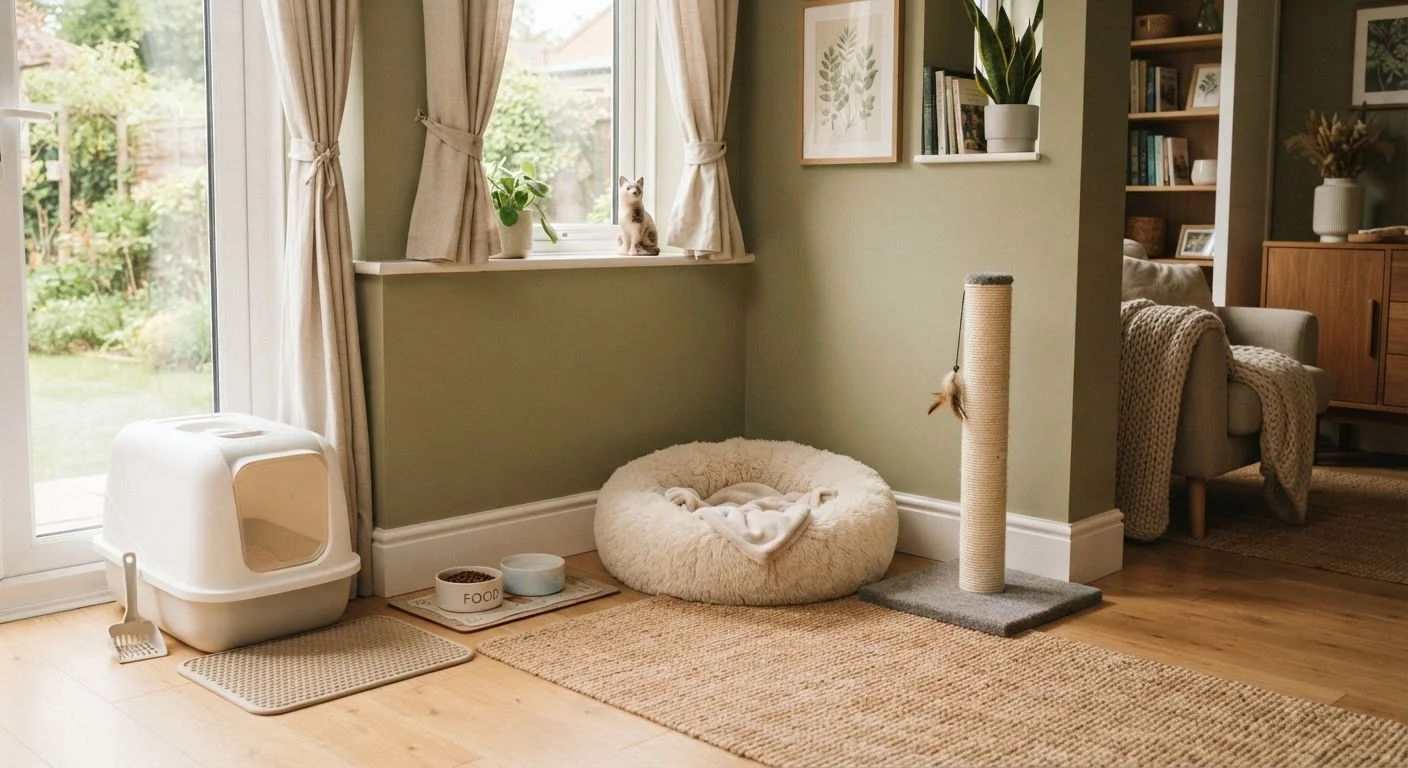
Giving a new cat immediate free run of the whole home is one of the most common mistakes new owners make. Cats feel safest when they can learn a space incrementally. Start with one room, let your cat signal comfort through relaxed body language and exploration, and only expand access gradually - typically over several days to a couple of weeks. Rushing this phase often leads to hiding behavior that can persist much longer than necessary.
Tools and Supplies You'll Need
Before working through the checklist, gather the core supplies. Having everything on hand - rather than making day-of runs to the store - keeps your focus where it belongs: on your new cat.
Hard-sided or soft cat carrier
Used to transport your cat safely on arrival day and to and from veterinary appointments.
Litter box (uncovered)
Provides a consistent toileting location; uncovered styles are generally less intimidating for new cats.
Unscented clumping litter
A neutral starting litter that most cats accept readily; scented varieties can be off-putting to sensitive noses.
Stainless steel or ceramic food and water bowls
Non-porous materials are easier to clean and don't retain odors the way plastic can.
Scratching post (sisal or cardboard)
Gives your cat an appropriate outlet for natural scratching behavior and helps protect furniture.
Wand or fishing-rod toy
Supports interactive play during the bonding period and helps your cat burn off stress-related energy.
Pheromone diffuser (feline synthetic calming type)
May help reduce anxiety in a new environment; typically plugged in to the safe room before arrival.
Microchip reader or ID tag collar with breakaway safety buckle
Ensures your cat can be identified if they escape during the initial adjustment period.
The Full Arrival Checklist
Work through these categories in order. The safe room setup and hazard checks are the highest-priority tasks; the enrichment and routine sections can be refined over your cat's first week as you learn their preferences.
Safe Room Setup
Hazard Removal and Home Safety
Litter Box Planning
Enrichment and Scratching
Veterinary and Health Prep
Lilies Are Extremely Toxic to Cats
All parts of true lily plants - including Easter, tiger, and Asiatic varieties - are highly toxic to cats and can cause acute kidney failure even in small amounts. This includes pollen and water from the vase. Remove any lily plants from your home entirely before your cat arrives, and verify with your veterinarian or the ASPCA's Animal Poison Control Center if you're unsure about a specific plant.
Once your cat has settled in, you'll also want to think ahead. Your cat's first vet visit is a key milestone - scheduling it early helps establish a health baseline and catch anything that wasn't flagged at adoption. And as grooming routines develop, grooming your cat at home is a practical resource for building a coat-care habit that suits your cat's fur type.
If you're adopting an older cat, it's also worth knowing that care needs shift significantly with age. The senior cat transition outlines what typically changes after age ten, so you can prepare for those needs well in advance.