Understanding Your Cat's Coat Before You Start
Not all cat coats behave the same way. A short-haired domestic shorthair sheds moderately and largely manages its own coat through self-grooming, while a Persian or Maine Coon can develop painful mats within days if left unattended. Before settling on a grooming routine, it's worth identifying which coat category your cat falls into.
- Short coats (e.g., American Shorthair, Siamese): Weekly brushing is usually sufficient to remove loose hair and distribute skin oils.
- Medium coats (e.g., Bengal, Ragdoll kittens): Two to three sessions per week help prevent early matting around the collar and hindquarters.
- Long coats (e.g., Persian, Norwegian Forest Cat): Daily or near-daily brushing is often necessary, especially during seasonal shedding periods.
- Hairless and rex coats (e.g., Sphynx, Cornish Rex): These cats don't shed in the traditional sense, but skin oils can accumulate; occasional warm-cloth wipe-downs may be recommended by your vet.
If you're new to cat ownership, our first-time cat owner guide covers how to build routines that fit your cat's specific temperament from day one.
Slicker brush
Removes loose hair and light tangles from medium and long coats without irritating the skin.
Fine-toothed flea comb
Checks for flea dirt and debris close to the skin during brushing sessions.
Wide-toothed comb
Works through thicker or longer fur and helps detect mat formation early.
Cat-specific nail clippers
Designed for the curved shape of cat nails to allow safe, clean trims.
Grooming glove
A gentler alternative for cats that resist traditional brushes; mimics petting while removing shed hair.
Cat-safe ear cleaning solution
Used to gently clean the outer ear canal and remove visible wax buildup.
How to Groom Your Cat Step by Step
Approach every grooming session as a low-pressure interaction. Choose a time when your cat is relaxed - after a meal or a nap - and keep sessions short initially, extending them only as your cat becomes more comfortable.
Set up a calm grooming space
Place a non-slip mat on a stable surface such as a table or the floor, depending on where your cat is most comfortable. Gather all tools beforehand so you're not reaching for things mid-session, which can startle your cat. Keep the area quiet and free from other pets.
Begin with a full-body visual and tactile check
Before any tool touches your cat, run your hands gently along their body from neck to tail. You're checking for lumps, tender spots, skin abnormalities, or signs of parasites. This also serves as a calming pre-groom ritual that signals what's coming.
Brush in the direction of hair growth
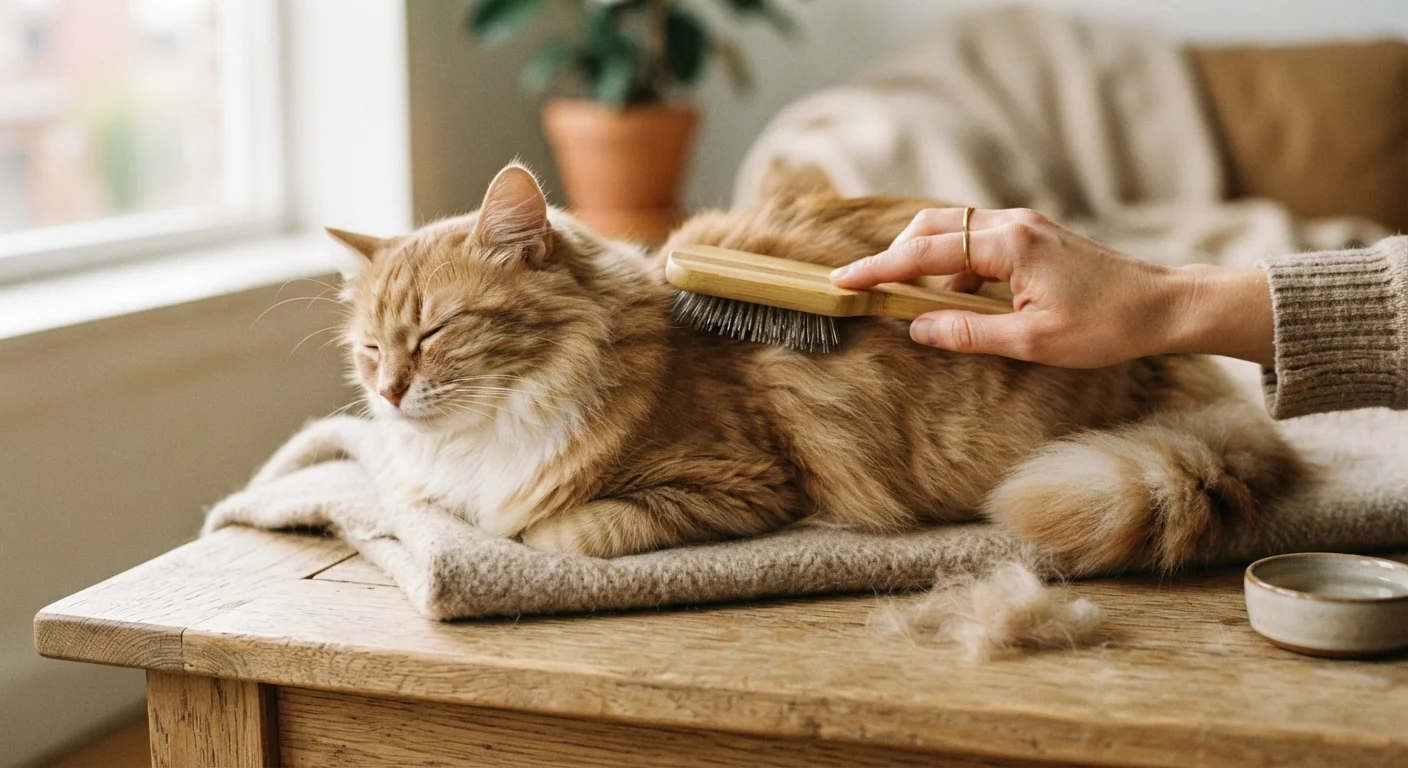
Using your slicker brush or grooming glove, work from the head toward the tail, following the natural direction of the coat. For long-haired cats, work in sections and use a wide-toothed comb first to separate the fur before using the brush. Pay extra attention to the armpits, groin, and behind the ears - common matting zones.
Check and clean the ears
Gently fold back each ear and look inside for wax buildup, debris, or any unusual odor. A small amount of light-brown wax is normal. If indicated, apply a few drops of cat-safe ear cleaning solution to a cotton ball (never a cotton swab inside the canal) and wipe only the visible outer area.
Trim the nails
Gently press each paw pad to extend the claw. Using cat-specific clippers, snip only the thin, clear tip of the nail - well away from the pink quick (the blood vessel visible inside the nail). Trim one or two nails per session if your cat is resistant, rather than forcing all at once.
Wipe the eye area if needed
Some cats - particularly flat-faced breeds like Persians - accumulate discharge in the corners of their eyes. Use a separate damp cotton ball for each eye and wipe gently from the inner corner outward. Never use the same cotton ball on both eyes to avoid cross-contamination.
End with a reward and a calm close
Finish every session on a positive note - offer a treat, some gentle petting, or a short play session. This reinforces the association between grooming and good experiences, which pays dividends in future sessions. Keep a brief mental note of anything unusual you observed during the check.
Older cats may groom less effectively on their own due to reduced flexibility. Our article on senior cat health and care explains how grooming needs can shift with age and what signs to watch for.
Common Grooming Challenges and How to Handle Them
Even experienced cat owners encounter hurdles. Here are the most frequent issues and practical responses:
- Matted fur
- Small mats can sometimes be teased apart with a wide-toothed comb and a detangling spray formulated for cats. Never use scissors near a mat - the skin underneath is often pulled taut and cuts are a serious risk. If mats are extensive or close to the skin, a professional groomer or veterinarian should address them.
- Cat that resists handling
- Start with just touching the grooming tool against the cat without brushing, pair it with treats, and build up over several days. Counterconditioning takes time but significantly reduces long-term stress for both cat and owner.
- Excessive shedding
- Increased shedding can be seasonal, but if it's accompanied by bald patches, skin redness, or behavioral changes, consult your veterinarian. It may signal a nutritional gap or an underlying health issue. Adequate hydration also plays a role in skin and coat quality - see our piece on feline hydration for context.
- Overgrown nails
- If you hear clicking on hard floors, it's likely time for a trim. Use cat-specific clippers and clip only the clear tip, well clear of the pink quick. If you're unsure, your vet or a groomer can demonstrate the correct technique in person.
Never Use Human or Dog Grooming Products
Shampoos, conditioners, and ear cleaners formulated for humans or dogs can be harmful to cats - some contain ingredients toxic to felines, including certain essential oils and permethrin. Always verify that any grooming product is explicitly labeled safe for cats before use. When in doubt, ask your veterinarian for a recommendation.