Why Cats Are Wired to Underpick Water
Domestic cats (Felis catus) are descended from desert-dwelling wildcats, and that evolutionary heritage is still very much present in their physiology. Unlike dogs, who actively seek water when thirsty, cats have a low sensitivity to mild dehydration. Their kidneys evolved to produce highly concentrated urine, allowing them to survive on the moisture found in prey. This was a functional adaptation in an arid environment - but it becomes a liability when a modern house cat lives on dry kibble and a single ceramic bowl.
The core issue is that cats don't experience thirst urgently until they are already meaningfully dehydrated. They won't demand water the way they might demand food. As a result, chronic low-grade dehydration is genuinely common in domestic cats, and many owners have no idea it's happening.
Understanding this biology is the first step toward addressing it. Hydration isn't just a comfort issue - it directly affects kidney function, urinary tract health, digestion, and joint lubrication. For more on how hydration fits into broader nutrition, see how water supports metabolism and nutrient absorption.
Cats and Water Bowls: Placement Matters
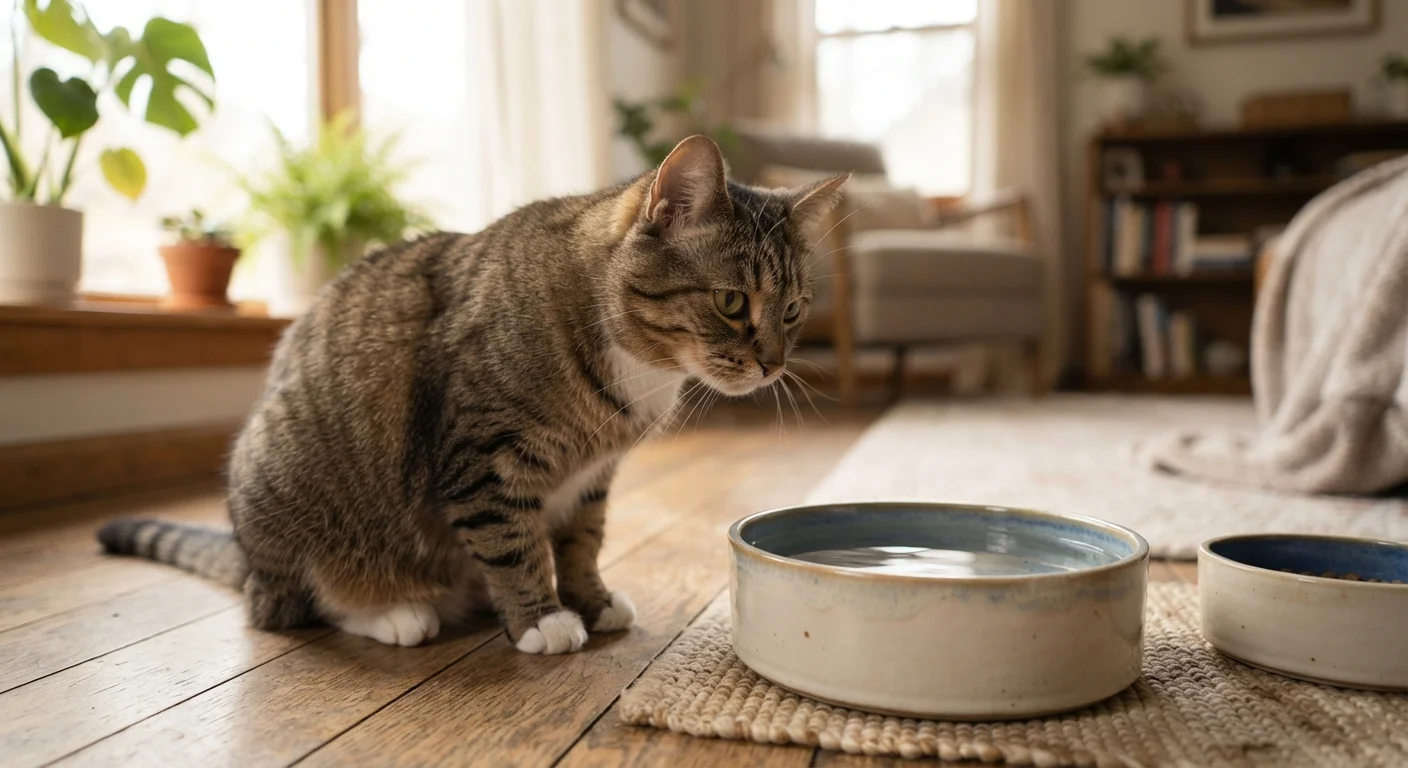
Many cats instinctively avoid drinking water that is placed directly next to their food. In the wild, a food source close to water can signal contamination. Placing water bowls in separate locations around the home - rather than right beside the food dish - often encourages more consistent drinking without any other changes.
The Link Between Diet Format and Fluid Intake
Diet composition is one of the single biggest factors in a cat's daily hydration. Dry kibble contains roughly 8-10% moisture, while canned wet food typically sits between 70-80%. A cat that eats only dry food must drink enough water from a bowl to compensate - but given their weak thirst drive, most don't.
This dietary gap has real health consequences. Cats on predominantly dry diets are statistically more likely to develop urinary crystals, idiopathic cystitis, and chronic kidney disease - conditions strongly associated with low urine volume and concentrated urine. The kidneys depend on adequate fluid to flush waste products and prevent mineral buildup in the urinary tract.
Switching to wet food, even partially, is one of the most evidence-supported ways to increase a cat's daily fluid intake. A cat eating two canned meals per day may already be meeting much of their hydration needs through food alone. Wet food, dry food, and mixed feeding each have genuine trade-offs worth understanding before making changes to your cat's diet.
70-80%
Moisture content in canned wet cat food
Compared to roughly 8-10% in dry kibble, wet food provides a substantially higher proportion of daily fluid through diet alone.
~30-40%
Estimated prevalence of kidney disease in senior cats
Chronic kidney disease is among the most common conditions in cats over age 10, and hydration management is a central component of care, according to veterinary internal medicine literature.
3-4 oz
Approximate water needed per 5 lbs of body weight daily
This general guideline from veterinary nutrition sources includes moisture from all sources - drinking water and food combined.
Practical Ways to Encourage Drinking
For cats remaining on dry food or needing additional fluid intake, environmental strategies can make a meaningful difference. Cats are behaviorally particular about water, and small adjustments often have an outsized effect.
- Use a water fountain. Circulating, filtered water appeals to cats' instinct for fresh, moving water sources. Many cats that ignore still bowls will drink readily from a fountain.
- Separate water from food. Cats often avoid water placed directly beside their food bowl. Positioning water in a different room or across the space can increase voluntarily drinking.
- Offer multiple locations. Multiple water stations throughout the home reduce the effort required and can increase total daily intake, particularly in multi-cat households.
- Consider bowl material. Some cats dislike plastic bowls due to taste or smell. Ceramic or stainless steel options are generally preferred and easier to keep clean.
- Add water to dry food. Mixing a small amount of warm water into kibble is a simple way to increase moisture intake without changing the diet entirely.
Consistency matters more than any single tactic. Keeping bowls clean and water fresh - ideally refreshed daily - removes a common deterrent to drinking.
When to Be Concerned: Signs Worth a Vet Visit
Mild dehydration in cats can be difficult to detect at home. The classic skin-tent test - gently pinching the skin at the scruff and watching how quickly it returns to position - is a rough indicator, but it has limitations and is not a substitute for veterinary assessment.
More reliable signals include changes in litter box output (less frequent urination or unusually concentrated, dark urine), lethargy, reduced appetite, dry or sticky gums, and a coat that looks dull or feels rough to the touch. These signs warrant a prompt veterinary conversation rather than a wait-and-see approach.
At the opposite end, a sudden dramatic increase in thirst is equally important to flag. Conditions including diabetes mellitus and chronic kidney disease can cause excessive water intake (a symptom called polydipsia) and should be ruled out by a vet rather than attributed to weather or diet changes.
Senior cats deserve particular attention here. Kidney disease is significantly more common in cats over ten years of age, and hydration management often becomes a central part of their care. Aging cats have distinct health needs that shift noticeably after age ten, and hydration is one of the earliest areas to address proactively.
This article is for general informational purposes only and does not constitute veterinary advice. If you have concerns about your cat's hydration or health, consult a licensed veterinarian.